


By Alfred Gogi, PhD student, Project Planning and Management
Kenya may be approaching one of the most consequential economic transitions in its modern history. The development of the Turkana oil fields in Lokichar and the planned East Africa Oil Refinery in Lamu could move the country from being predominantly an importer of refined petroleum products to becoming an oil-producing nation, refining and potentially petrochemical-processing economy. Whether this transformation will actually make Kenya an industrialised, high-income country will depend less on the existence of oil and more on how effectively the country converts petroleum wealth into infrastructure, manufacturing, human capital, innovation, technology and productive investment.
The timing is significant. Kenya is currently on course to commence commercial crude oil production from the South Lokichar Basin in Turkana County by December 2026, with first crude oil exports expected through the Port of Mombasa in the first quarter of 2027. The Government’s Petroleum Department indicates that the first phase targets approximately 20,000 barrels per day, rising to 50,000 barrels per day from 2032 following further infrastructure development at the site.
At the other end of the country, Lamu is emerging as a potential downstream petroleum and industrial hub. The proposed Dangote refinery, scheduled for groundbreaking on September 30, 2026, is planned with a headline capacity of 700,000 barrels of crude oil per day and an estimated investment of about $15 billion. The scale of the proposed facility means that its significance extends well beyond petroleum refining.
From oil discovery to an industrial economy
The greatest opportunity for Kenya is not simply to extract crude oil and export it. The real economic transformation would come from establishing an integrated petroleum-industrial value chain.
Turkana oil provides the upstream resource, while Lamu refinery and port can potentially provide the downstream processing, logistics and industrial platform. The combination could stimulate demand for engineering, transportation, construction, equipment maintenance, financial services, information technology, security, accommodation, catering and professional services.
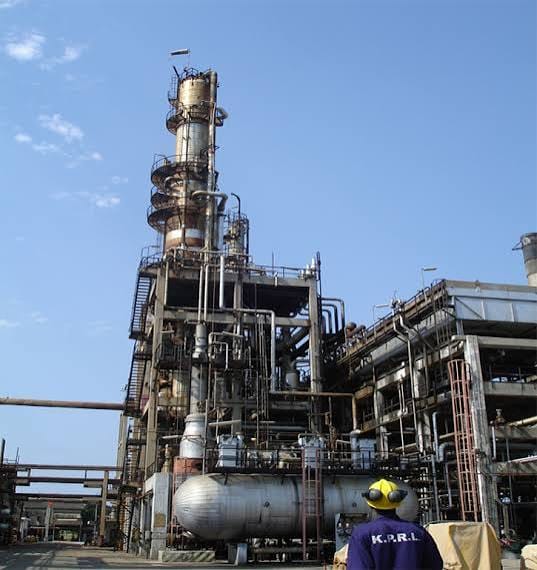
The Lamu refinery could also provide the foundation for petrochemical industries producing products such as plastics, polymers, synthetic fibres, industrial chemicals and other petroleum derivatives. Recent reporting on the project has identified potential clusters around petrochemicals, manufacturing, logistics, warehousing, agro-processing, fertiliser industries and maritime services.
This is where petroleum could become an instrument of industrialisation rather than merely an export commodity. Instead of Kenya exporting crude and importing finished products, a greater proportion of the value chain could potentially be located domestically to create employment opportunities.
Employment and the Kenyan workforce
Employment could be another major benefit. The Turkana oil fields development alone is expected to generate thousands of direct, indirect and induced employment opportunities. Government estimates cited in 2026 documents indicate that the project could generate more than 3,000 jobs during development and production stages.
The Lamu refinery would operate on an entirely different scale. Government officials have cited estimates ranging from 50,000 to 60,000 jobs, particularly during construction and associated economic activities. These figures should be understood as projections rather than guaranteed permanent jobs.
The more important employment effect could, however, occur outside the refinery itself. Thousands of Kenyan enterprises could participate as suppliers of transport, food, accommodation, engineering, construction materials, security, machinery, maintenance, ICT and professional services. The Kenyan higher education sector should also start rolling out programmes that are petroleum mining and refining-based to cater for the huge labour opportunities that are already knocking at our doorstep.
Kenya should therefore establish deliberate local-content programmes to ensure that petroleum expenditure translates into Kenyan businesses, skills and technological capabilities rather than becoming predominantly an import-driven industry.
Infrastructure transformation
Large petroleum investments require roads, pipelines, ports, electricity, water, telecommunications, storage facilities and industrial parks. These investments can therefore create infrastructure that serves the wider economy. It is also good to note that modern industries are technology-based and make extensive use of ICT, such as programmable logic controllers and industrial automation.
Turkana’s petroleum development is already associated with infrastructure requirements, including water systems and transportation facilities. The proposed Lokichar-related infrastructure has also historically been linked to the wider LAPSSET Corridor connecting Turkana with the Kenyan coast.
Lamu is particularly strategically positioned because the refinery would be integrated with the Lamu Port and LAPSSET Corridor. This creates the possibility of an industrial triangle involving oil production in Turkana, transportation corridors across northern Kenya, and refining and export infrastructure at Lamu. Other major towns in this corridor will also develop into cities.
Such connectivity could make northern Kenya increasingly attractive for manufacturing, logistics and regional trade. Investors in Kenya already identify transport, energy, ports, economic zones and industrial parks as key components of Kenya’s industrialisation infrastructure that could sprout up due to these two large projects.
Attracting international investment
A successful Turkana-Lamu petroleum corridor could also change international perceptions of Kenya’s investment potential. A large refinery requires suppliers, financiers, engineering companies, technology providers, logistics operators and manufacturers. Once these companies establish operations around Lamu, they may attract additional investors seeking access to East African markets. Kenya could therefore develop Lamu as a petroleum and petrochemical manufacturing hub serving East and Central Africa rather than merely a domestic fuel-processing centre.
The proposed refinery is already being positioned to serve markets beyond Kenya, including Uganda, Tanzania, Rwanda, Burundi, South Sudan, Ethiopia and the Democratic Republic of Congo. If supported by efficient customs systems, reliable electricity, competitive taxation, skilled labour and good transport infrastructure, Lamu could potentially become an important regional industrial and logistics hub.
Government revenue and economic transformation
Oil production can generate Government revenue through royalties, taxes and the State’s participation in petroleum projects. Kenya’s petroleum framework also provides mechanisms for sharing petroleum revenues between the national Government, counties and local communities.
This creates an important opportunity for Turkana County to develop through oil revenues. Oil revenues should translate into better schools, hospitals, water systems, roads, skills development and enterprise opportunities for local communities, including the development of universities and other tertiary institutions.
The national Government could similarly channel petroleum revenues into productive infrastructure, research and development, technical education and manufacturing rather than primarily financing recurrent expenditures.
Kenya’s current economic base makes this particularly important. The 2026 Economic Survey reports that real GDP grew by 4.6 per cent in 2025, while construction grew by 6.8 per cent and mining and quarrying by 14.9 per cent. Petroleum could add another growth engine, but its greatest contribution would come if it stimulates productivity across the wider economy.