



By Kepher Otieno
Once again, President William Ruto is launching a mega multibillion oil refinery investment project that will transform the economic fortunes in this country, create thousands of jobs and accelerate industrial revolution and growth. Excellent. Carry on, Sir.
There comes a moment when national ambition must become action.
Kenya has talked about industrialisation for decades. We have produced policies, blueprints, conferences and promises about becoming a manufacturing and export powerhouse.
But nations do not industrialise by talking.
They build.
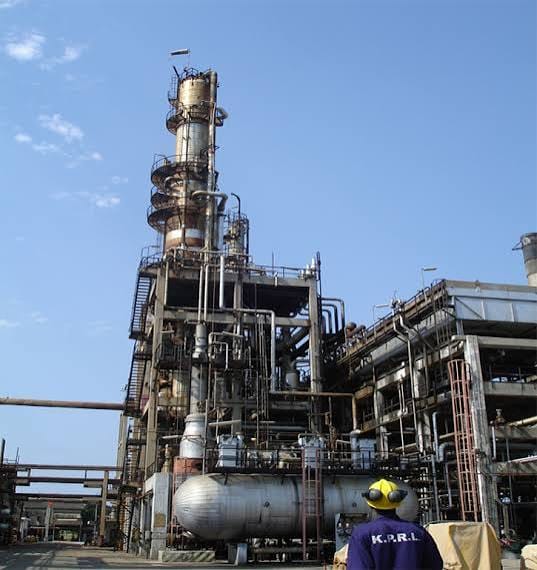
That is why the proposed $16 billion Dangote oil refinery in Lamu, with a planned capacity of 700,000 barrels of crude oil per day, deserves serious national attention.
The sheer truth is that a country that is afraid to build will eventually become a country that is afraid to grow.
That is why President Ruto’s determination to keep Kenya’s major capital projects moving deserves recognition and support.
The message from State House and His Excellency is increasingly clear: Kenya will not surrender its development ambitions every time a big project attracts criticism.
The proposed $16 billion Dangote oil refinery in Lamu is the latest test of that resolve.
At 700,000 barrels per day, the proposed refinery would be an industrial undertaking of extraordinary scale.
It is good to hear that the refinery project is projected to create more than 50,000 jobs and stimulate related industries, including petrochemicals and bitumen, while helping reduce East Africa’s dependence on imported petroleum.
That is not a small investment to be casually dismissed by critics or doom-mongers.
It is precisely the kind of capital formation Kenya needs if it is serious about moving from an economy that primarily consumes and trades to one that produces, processes and exports.
The debate, therefore, should not be whether Kenya should pursue big projects.
It should be whether individual projects make economic sense—and, where they do, how quickly the country can get them built.
There is an important distinction.
Scrutiny is healthy. Paralysis is expensive.
Every serious project should face proper environmental, legal, financial and technical examination. That’s all right.
Investors should be transparent.
Communities should be heard. Public interests must be protected.
But after those tests have been met, Kenya must have the courage to proceed.
The cost of doing nothing is rarely included in the political debate.
When a refinery is not built, Kenya continues importing refined petroleum at hefty costs.
When a road is not expanded, businesses continue paying for congestion.
When a railway is delayed, logistics remain expensive.
When irrigation infrastructure is postponed, farmers remain exposed to the vagaries of rainfall.
Infrastructure is therefore not simply an expenditure item. It is productive capacity.
A road can lower the cost of moving goods. A railway can open markets like the ongoing Standard Gauge Railway, expected to transform the domestic economy of regions it traverses. Very good.
A port like the ongoing development at Kisumu Port can and will, no doubt, expand regional trade.
Reliable electricity can make factories viable. Irrigation can turn idle land into productive farmland.
An industrial plant can create an entire value chain of suppliers, workers, transporters, financiers and service providers.
That is the cost-benefit analysis Kenya must undertake as President Ruto launches the Lamu oil refinery project.
And the Government’s own infrastructure policy recognises that discipline.
The National Treasury CS John Mbadi says public investment and PPP projects are subject to investment-management processes intended to improve transparency, accountability and prudent use of resources. He also says projects should be assessed for their social and economic returns. Mbadi is right.
This is important because Kenya’s infrastructure ambition is enormous.
The Government has proposed a KSh5 trillion, 10-year National Infrastructure Fund programme designed to mobilise long-term capital for roads, energy, water, irrigation and other strategic investments.
President Ruto has also reported more than $2.9 billion in investment deals involving 20 investors, spanning agriculture, manufacturing, ICT, healthcare, energy and real estate, with an expected 63,000 jobs.
So what do Kenyans want? Political rhetoric without substantial economic benefits or politics for expediency? No. Let’s support what’s good for us as a nation.
This is the economic logic Kenya should embrace: public policy should create the conditions for private capital to build productive assets.
And there is another reason to support continuity Ruto is advancing for the common good with his bureaucrats.
The road started by one administration can be completed by another. A port can serve generations.
A railway can outlive political parties. A refinery can anchor an industrial ecosystem long after today’s political arguments have disappeared from the headlines.
That is why the temptation to stop every major project because someone raises a political objection must be resisted.
Critics have a legitimate role. They should interrogate financing, ownership, environmental safeguards, procurement, expected returns and national benefit. Their questions can improve projects.
But criticism cannot become a national development strategy.
Kenya has spent too many decades talking about industrialisation.
The country now needs to build the infrastructure that makes industrialisation possible.
President Ruto’s investment drive should therefore be judged not by whether every Kenyan agrees with every project, but by whether the projects deliver measurable economic value, create productive capacity and expand opportunity.
Where the numbers work, where the safeguards are in place and where the national interest is protected, Kenya should move forward with confidence.
No apologies for ambition. No fear of big capital. No retreat because of pockets of criticism. So I support the President’s decree that he won’t look back. Forward ever. God bless.
Build the roads. Expand the energy system. Modernise the ports. Develop the railways. Irrigate the farms. Attract the factories. And build the refinery.
Because Kenya cannot create a first-class economy by endlessly debating whether it is ready to build one. We must move forward, grow and develop. Aliko Dangote oil refinery project must therefore be given a chance to take off for the common good of Kenyans.
The writer is a senior journalist, consultant and a regular advocate for democracy and good governance in Africa. kepher43@gmail.com