
By Clifford Derrick
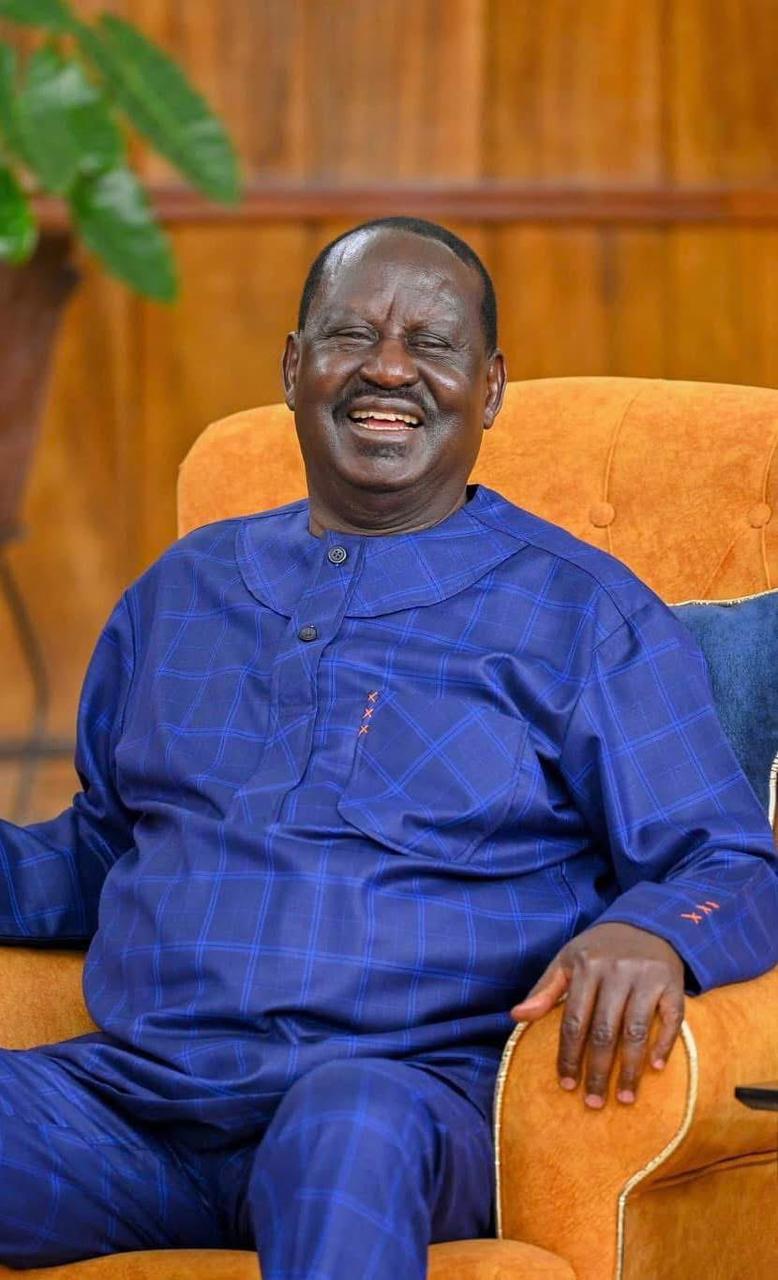
There are men whose lives cannot be contained by their time. And there are a few — very few — whose deaths refuse to die with them. Raila Amolo Odinga, Agwambo, was one such man. The name itself — Agwambo — evokes mystery, awe, and contradiction: the untamed, the unpredictable, the one who arrives when least expected and departs when least understood. He was, as Babafemi Badejo once called him, an enigma in Kenyan politics. And now, almost two weeks after his burial, the enigma deepens.
Since 19 October, humanity has been making a pilgrimage to Kango ka Jaramogi in Bondo — not merely Kenyans, but Africans and admirers from every walk of life. They come by road, by air, in spirit and in tears — from the humble fishermen of Ahero to the elites of Nairobi, from foreign diplomats to ordinary believers in justice. They come to stand before the red soil of his grave, to lay flowers where he now sleeps beside his father, and to whisper things they never said when he could still hear them. And yet, as this river of humanity flows, one cannot help but ask: what do these visits mean?
Why do those who vilified him in life now sanctify him in death? Why do the same voices that once mocked his perseverance now romanticise his vision? Is this a true Damascus moment — where hearts have finally turned towards truth — or is it a performance of mimesis, an attempt to associate with his enduring aura so that sympathy for Raila may transfer to them? Are they going to grieve, or to verify — to confirm that the man they feared, the man they fought, is truly gone? Or perhaps, more unsettlingly, to search the faces of his family for another Raila — another force as unyielding, another mind as lethal to hypocrisy?
Such is the paradox of the sacred and the profane. In life, the sacred provokes the profane; in death, the profane kneels before the sacred. Mircea Eliade wrote that the sacred is that which gives order to chaos — and indeed, Raila’s presence disturbed our comfortable disorder. He disrupted complacency, exposed corruption, and refused to let power sleep in peace. He was the inconvenient conscience of our republic — the man who bore the cross of Kenya’s contradictions, and for that, he was misunderstood, maligned, and mocked. But death, as always, rearranges the hierarchy of meaning. It strips away propaganda and leaves only essence. And essence, like truth, survives slander.
Now, at his graveside, the sacred and the profane have met — in one long, uneasy handshake. The poor, whom he fought for, remain stranded by bus fares they cannot afford from Kano Kolwa to Bondo. The wealthy, whom he fought against, arrive in convoys, bowing with cameras watching, shaking hands with his family while the world documents their sudden reverence. The irony is staggering: those who denied him legitimacy now crave legitimacy in his memory. The men who accused him of chaos now speak of his peace. The politicians who feared his shadow now seek light from his grave. What a theatre of repentance — what a choreography of regret. Believably unbelievable.
Yet perhaps this, too, is part of the sacred drama. For even in death, Agwambo continues to hold a mirror before our souls — to expose our contradictions, to test our sincerity, to remind us how fickle public morality can be. His grave has become a moral classroom, where history whispers: you did not know what you had until it was gone. And maybe this awakening — however belated — is the first step towards national redemption.
But we must not stop at mourning. The tears of opportunists cannot build a nation. True tribute demands transformation — the courage to embody what he lived for. It means confronting our prejudices before they bury another visionary alive. It means learning to disagree without dehumanising, to criticise without destroying, and to honour integrity while it still breathes among us.
Raila Odinga’s life was the theatre where the sacred and the profane wrestled — and the sacred, though wounded, always triumphed. He forgave where others cursed, built bridges where others burned them, and refused to answer hate with hate. He understood that leadership, like architecture, is not a monument of ego but a structure of endurance. And now, as the world continues to visit his resting place, we too must decide: will we visit to remember, or to repeat?
In the end, Agwambo remains what he always was — not a man of power, but a man of purpose. His enemies are left speechless, his admirers are left orphaned, and his spirit walks among us — whispering that freedom is not a gift, but a construction; not an inheritance, but a duty.
Let us, therefore, approach his memory not as spectators, but as builders. Let us not wait until every Agwambo is gone before we recognise the sacred in those we choose to profane.
Jowi! Jowi! Jowi!