

By Reporter
Concerns have been raised over additional fees imposed by some national schools to finance enhanced diets, warning that parents should not be compelled to pay levies that have not been approved by the Ministry of Education.
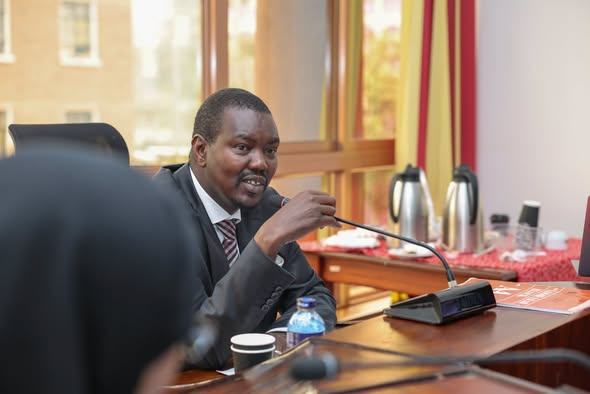
National Assembly Public Investments Committee on Governance and Education questioned the practice of charging parents extra money to provide learners with additional servings of bread, sausages, eggs, chapati and mandazi, instead of relying on the ordinary menus served in many other public schools, where meals such as githeri remain common.
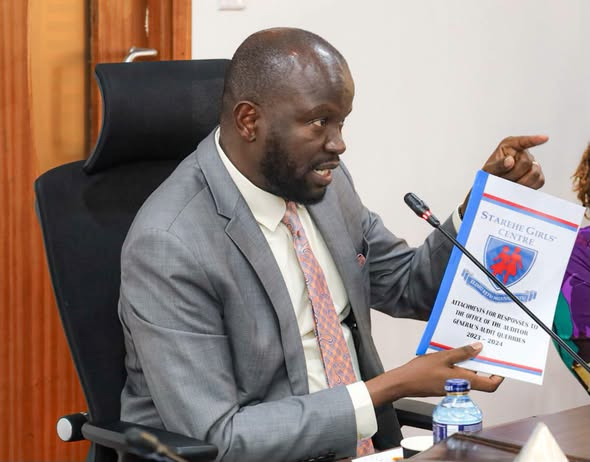
The issue emerged during the committee’s examination of the Auditor-General’s reports covering the financial years 2020/2021 to 2024/2025 for several national schools, including Loreto High School Limuru, Alliance High School, Alliance Girls’ High School, Mang’u High School, Limuru Girls’ School and Kiambu High School on Wednesday, before turning to Kenya High School, Pangani Girls Senior School, Lenana School, Starehe Boys’ Centre and School, Starehe Girls’ Centre and Nairobi School on Thursday.
The committee, chaired by Luanda MP Hon. Dick Maungu, questioned school administrators, including Principals, Senior Principals and Chief Principals, over additional charges imposed through Parents Association support programmes and other arrangements, with the Auditor-General repeatedly noting that some of the charges had not been approved by the Ministry of Education through the County Education Board.
For instance, at Alliance High School, the Auditor-General found that the school charged Ksh68,554 against an approved fee of Ksh53,554 in the 2020/2021 financial year, resulting in an additional Ksh15,000 per student.
For 2021/2022, the school charged Ksh68,554 against the Ministry-approved Ksh45,000, resulting in a variance of Ksh23,554 per student.
The audit report said the charges were contrary to Ministry guidelines, which provide that parents should only meet specified costs, including school uniforms, boarding-related costs reflected in the approved boarding fee structure and lunch for day scholars.
In 2024/2025, the Auditor-General further flagged Ksh42.25 million collected under Alliance High School’s Parents Association support programme.
The report said parents had agreed to contribute Ksh30,792 in 2024 and Ksh26,000 in 2025 to support the school budget, but the additional charges had not been approved by the Ministry through the County Education Board.
Alliance High School Principal Mr David Kamau attributed the charges to rising costs and the desire by parents to maintain the school’s established standards.
“The school has been incurring huge deficits due to market price increase for goods and services consumed in the school,” Mr Kamau said.
He added that the school had “a culture/standards and a lifestyle established over the years” and that parents had insisted on maintaining those standards by financially supporting the institution.
According to Mr Kamau, parents approached the Board of Management through the Parents Association and agreed to establish a kitty to support the school budget. He said the school subsequently wrote to the Ministry of Education over the arrangement.
The Auditor-General, however, maintained that parental or Board of Management approval could not substitute the required authorisation from the Ministry of Education.
The same issue arose at Limuru Girls’ School, where the Auditor-General found that the school charged Ksh73,580 per student against an approved rate of Ksh53,580.
The school had not obtained authorisation from the Ministry before imposing the additional charge, contrary to Regulations 44 and 45 of the Basic Education Regulations, 2015.
Chief Principal Mrs Susan Kariuki explained that the additional funds had been approved during an Annual General Meeting by the Parents Teachers Association and endorsed by the Board of Management.
“The decision to collect additional funds was made during an Annual General Meeting by the Parents Teachers Association and endorsed by the Board of Management,” Ms Kariuki said.
She said the additional funds were intended to address rising food costs, electricity bills and water expenses that could not be covered by the standard fees because of delays in capitation and budget deficits.
Ms Kariuki, however, acknowledged the procedural omission.
“Management acknowledges the procedural omission in failing to obtain written authority from the Cabinet Secretary before implementation,” she said.
She told the committee that the school had subsequently submitted an application to the Ministry of Education seeking approval of the additional levy.
At Kiambu High School, the Auditor-General identified unexplained fee variances for Forms One to Four, with the school’s approved fee standing at Ksh53,554 per student.
The variances ranged from Ksh717 to Ksh7,946 per student.
Principal Mr Joshua Maina Nderitu attributed the additional charges to a development programme involving the construction of two classrooms and a 120-capacity dormitory following the increase in enrolment occasioned by the 100 per cent transition from primary to secondary education.
“The fees variance was due to a development project of two classrooms and a 120-capacity dormitory that were being constructed due to inadequate school infrastructure caused by the 100 per cent transition from primary to secondary school,” Mr Nderitu said.
He said the project had been approved by parents and that the school had obtained approval to impose the additional levy.
“The project played a major role in decongesting the dorms and classrooms,” he said.
But it was Mang’u High School that came under particular scrutiny over charges directly linked to an enhanced diet.
The Auditor-General found that the school charged Ksh46,082 per student under a Parents Association Support Programme in the 2024/2025 financial year without approval from the Ministry of Education through the County Education Board.
The report said the charge was contrary to Government Circular No. MOE.HQS/3/13/3 of June 16, 2021, which sets out what parents are required to pay under the Free Day Secondary Education programme.
Mang’u High School Principal Dr Bernard Mwangi King’ah defended the additional charges, saying the school’s annual budget was presented to parents and the Board of Management for approval before the institution sought authority to raise additional money.
He said the funds were necessary to maintain an “enriched diet” as well as cater for security, technical workshops, co-curricular activities and laboratory requirements.
“The school offers an enriched diet over the year and changing may not go well with the student,” Dr King’ah said.
He said the school’s partially fenced compound required additional security personnel because it was surrounded by a bush and the Witeithie slums.
He also cited the cost of technical workshops and equipment, extensive co-curricular activities and the fact that all students take three science subjects, increasing expenditure on laboratory chemicals and equipment.
However, the Auditor-General said no evidence of the required Ministry approval had been provided.
“Approval by the parents and BOM does not constitute approval by the Ministry of Education,” the audit response states.
The Auditor-General further noted that there was no Ministry or County Education Board approval for the Ksh46,082 charge per student.
The audit reports showed that the practice had persisted at Mang’u over several years.
In 2021, the school charged Ksh18,452 per student under the Parents Association Support Programme; in 2022, it charged Ksh27,006 for Form Ones and Ksh27,054 for students in Forms Two to Four; while in 2023, the charge rose to Ksh33,452 per student.
In each case, the Auditor-General said evidence of approval from the Ministry of Education through the County Education Board had not been provided.
Dr King’ah maintained that the charges supported an enriched menu alongside other school needs.
“The school always prepares an annual budget which is presented to the parents and Board of Management for approval and later always seek to be granted authority to charge some extra money,” he said.
But the Auditor-General said the school had not provided evidence of the required approval.
The committee questioned why schools continued imposing the charges when the Ministry approval required by law had not been demonstrated.
Hon. Maungu said the committee was concerned that additional charges could place an unnecessary financial burden on parents, particularly those struggling to educate their children.
“Schools cannot wake up and introduce additional charges and expect parents to simply comply. There are established procedures that must be followed before any new programme involving parents’ money is introduced,” Mr Maungu said.
He said improving learners’ diets could be a legitimate objective but insisted that such programmes must operate within the law.
“If a school wants to improve the diet of learners, that is a good objective, but it must be done within the law and approved structures,” he said.
“Parents should not be subjected to charges for programmes they have not agreed to or which have not been approved.”
Narok Women Representative Hon. Rebecca Tonkei said better nutrition should not create disparities between learners in public schools.
“We support efforts to improve the nutrition of our children, but we cannot have a situation where students in one school are asked to pay extra for food that other learners receive as part of the normal school programme,” Ms Tonkei said.
She said any decision to introduce additional eggs, bread, sausages, chapati or mandazi should be guided by national standards and approved by the Ministry.
“If there is a need to introduce more eggs, bread, sausages, chapati or mandazi, then the Ministry should determine how such a programme will be funded and implemented. It should not be left to individual schools to decide how much parents should pay,” she said.
Lungalunga MP Chiforomondo Mangale said the committee was concerned about the emergence of different feeding standards within the public education system.
“It is not acceptable to create a situation where students in some schools are eating enhanced meals because their parents can afford additional charges, while learners elsewhere continue with the ordinary school menu,” Hon. Mangale said.
He questioned whether parents should be required to pay extra simply because a school had opted for a more elaborate menu.
“If a school has decided that students should have more bread, sausages, eggs, chapati and mandazi, we need to know who authorised that decision and under what framework. The answer cannot simply be that parents were told to pay,” he said.
Kiminini MP Hon. Maurice Kakai Bissau said MPs were not opposed to better nutrition but wanted schools to observe the law and ensure accountability in the use of parents’ money.
“No one is opposed to giving our children better nutrition. In fact, we all want our learners to eat healthy and balanced meals. The concern is how these programmes are introduced and financed,” Hon. Bissau said.
He added: “A national school cannot become a law unto itself. If there is an additional programme that requires parents to contribute money, there must be a clear approval process and accountability mechanism.”