

By Olendo Simon Okola
Kenya is entering one of the most consequential chapters in its energy and economic history.
For many years, the country’s energy story has largely been told through geothermal power, hydropower, wind and, increasingly, solar. That story is justified. As of June 2025, renewable energy accounted for 80.17 per cent of Kenya’s electricity mix, while installed renewable-energy capacity stood at approximately 2,930 MW. Kenya therefore enters the emerging petroleum era from an unusually strong renewable-energy position.
But another energy story is now taking shape.
In Turkana, the South Lokichar oil development is moving towards commercial production. The approved development plan provides for an initial production plateau of approximately 20,000 barrels of oil per day, before a second phase raises production towards approximately 50,000 barrels per day. Phase I involves 48 production and injection wells in the Ngamia and Amosing fields, while the current development schedule plans for first oil in December 2026.
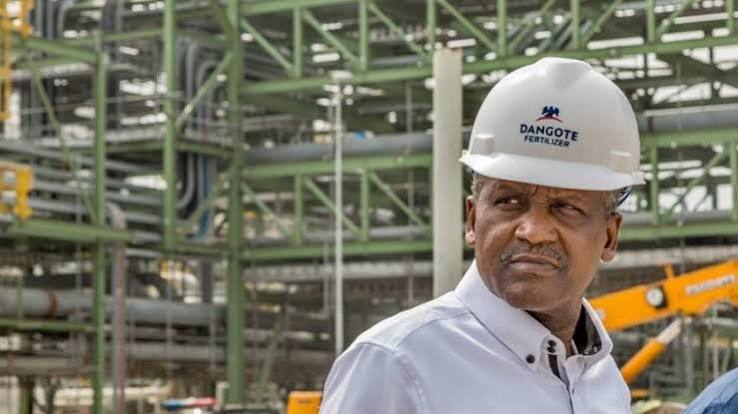
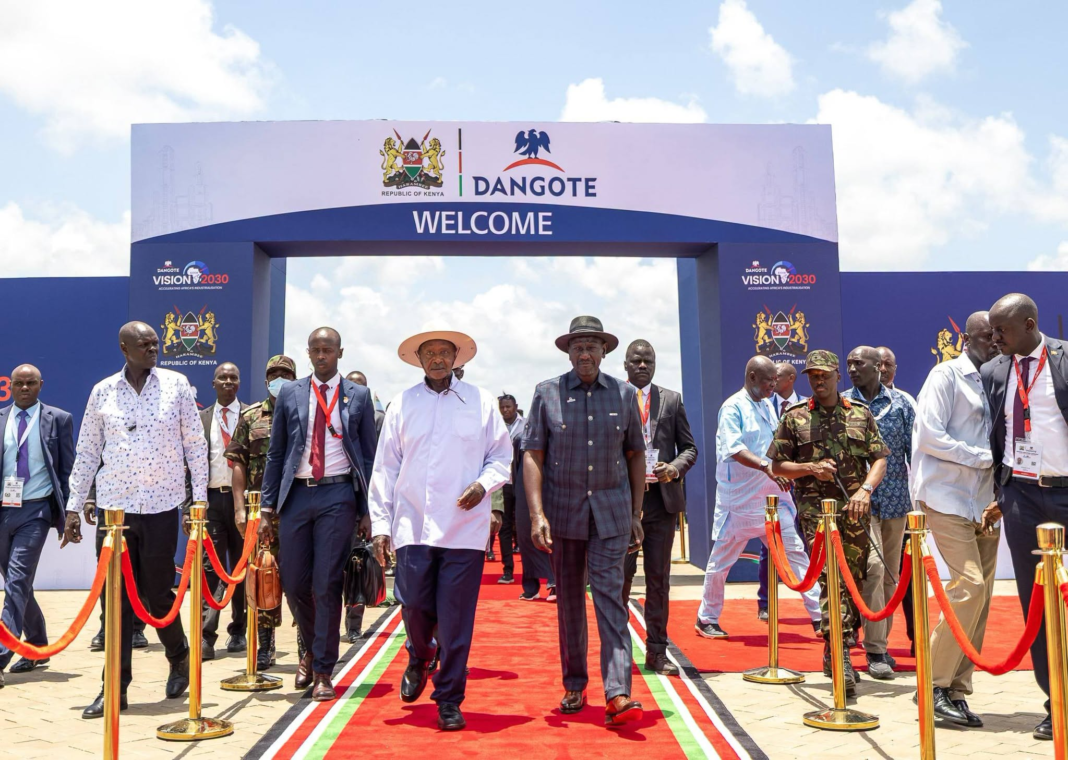
More than 800 kilometres away, on Kenya’s coast, an even larger petroleum proposition is emerging. The Dangote Group is advancing plans for a refinery in Lamu estimated to cost approximately US$16 billion, with proposed refining capacity of around 700,000 barrels per day and completion targeted around 2030.
Those numbers should make us pause.
A 700,000-barrel-per-day refinery would be 35 times larger than Turkana’s planned initial production of 20,000 barrels per day and 14 times larger than the planned Phase II production level of 50,000 barrels per day.
This immediately tells us something important.
The proposed Lamu refinery cannot be understood simply as a refinery for Turkana oil.
Its commercial model would require a much broader crude-supply strategy involving regional and international sources. Indeed, crude availability, infrastructure and financing have already been identified among the significant challenges that the refinery will have to address.
This is why Turkana and Lamu should not be discussed merely as two exciting petroleum projects.
Together, they raise a much bigger question:
How should Kenya manage an emerging petroleum economy while protecting its position as one of Africa’s leading renewable-energy and climate-finance markets?
That, in my view, is where the national conversation now needs to move.
Kenya has a genuine economic reason to rethink petroleum security
It is easy to understand why petroleum security has become an important national issue.
According to the Kenya National Bureau of Statistics, Kenya imported approximately 5.5 million tonnes of petroleum products in 2025, an increase of 12.2 per cent from the previous year. Domestic demand reached approximately 5.7 million tonnes. Despite lower international crude-oil prices during the year, Kenya’s petroleum import bill remained an enormous KSh528.8 billion, although this represented a decline from KSh575.5 billion in 2024.
More than half a trillion shillings leaving the economy annually to pay for petroleum imports is not a small matter.
It creates foreign-exchange exposure, links domestic energy costs to global supply disruptions and places petroleum security firmly within Kenya’s broader economic strategy.
A competitive refining industry could potentially reduce some dependence on imported refined products while supporting logistics, petrochemicals, manufacturing, storage, engineering and other industrial activities.
However, we should be careful not to jump from that observation to the conclusion that a refinery automatically means cheaper fuel.
It does not.
The final cost of petroleum products will still depend on the price of crude oil, refinery efficiency, utilisation rates, financing costs, exchange rates, transportation, storage, taxation and margins.
The more useful question is therefore not simply whether Kenya should refine petroleum locally.
The real question is:
Can a refinery of this size remain commercially competitive under realistic crude-supply, financing and market conditions?
That is a project-bankability question.
And in today’s world, project bankability can no longer be separated from climate and transition risk.
The numbers reveal an important strategic mismatch
The difference between the scale of Turkana production and the proposed Lamu refinery deserves considerably more attention.
Phase I of South Lokichar is designed around approximately 20,000 barrels per day, increasing to about 50,000 barrels per day under Phase II. The proposed Lamu facility, on the other hand, is designed around approximately 700,000 barrels per day.
This is not necessarily a weakness. It simply means we should understand the projects correctly.
South Lokichar is primarily an upstream oil-development project. Lamu would be a large regional refining platform whose economics would depend on access to substantially more crude than Kenya currently plans to produce domestically.
The initial evacuation strategy for Turkana oil also illustrates this point. Government plans envisage moving early crude by road and subsequently rail to the Kenya Petroleum Refineries Limited facilities and exporting it through Kipevu Oil Terminal II. The proposed Lokichar-Lamu crude pipeline remains a longer-term possibility rather than the initial evacuation route.
That is an important distinction for investors and policymakers.
We should therefore resist the temptation to treat Turkana and Lamu as one vertically integrated project.
Each needs its own assessment of capital requirements, markets, infrastructure, environmental risks, financing structures and long-term competitiveness.
Kenya also has a US$56 billion climate-finance challenge
The petroleum conversation becomes even more interesting when placed alongside Kenya’s climate commitments.
Kenya’s Second Nationally Determined Contribution commits the country to reducing greenhouse-gas emissions by 35 per cent by 2035 relative to a business-as-usual scenario of 215 million tonnes of carbon dioxide equivalent. This translates into an intended abatement of approximately 75.25 million tonnes of CO₂ equivalent.
Delivering Kenya’s climate ambitions will not be cheap.
The NDC Partnership estimates that implementation will require access to approximately US$56 billion in finance, alongside significant capacity-building requirements.
Therein lies one of Kenya’s most fascinating policy challenges.
On one hand, we are considering multi-billion-dollar investments in petroleum infrastructure.
On the other, we require tens of billions of dollars to finance climate mitigation, adaptation and resilience.
These realities do not automatically contradict each other.
But neither should we pretend that they have nothing to do with one another.
International climate funds, development-finance institutions, institutional investors and commercial banks are increasingly examining carbon exposure, transition risk and long-term climate strategies when making investment decisions.
Kenya will therefore need to demonstrate not only that individual petroleum projects are financially viable, but also how the country’s petroleum strategy fits within its broader economic and climate-transition pathway.
Climate risk is now financial risk
Twenty years ago, a major petroleum investment might have been evaluated primarily through the size of its reserves, expected production, capital expenditure, operating costs and projected oil prices.
Today that would be incomplete.
Consider a refinery expected to operate for perhaps three or four decades.
Its financial model cannot reasonably ignore the possibility that the energy system of the 2040s and 2050s will look different from that of 2026.
What happens if electric mobility expands faster than anticipated?
What happens if fuel-efficiency standards significantly reduce petroleum demand?
What happens if lenders become increasingly reluctant to finance carbon-intensive assets?
What happens if carbon-related costs increase?
What happens if regional crude supplies fail to materialise at the expected volumes and prices?
And what happens if the refinery operates significantly below its designed capacity?
These are not environmental questions sitting outside the financial model.
They affect cash flows, debt-service capacity, profitability and ultimately the value of the investment.
Climate risk has become financial risk.
This is why Kenya should begin applying what I would describe as climate-adjusted bankability to large infrastructure investments.
The question should not simply be whether a project is bankable under today’s assumptions. We should ask whether it remains bankable under different future oil-price, technology, carbon, financing and demand scenarios.
Kenya needs a petroleum-to-transition strategy
The larger opportunity is to stop treating petroleum development and climate policy as separate conversations.
Kenya needs a deliberate petroleum-to-transition strategy.
The principle behind such a strategy is straightforward: the country should maximise the economic benefits of its petroleum assets today while using those benefits to strengthen the economy it will need tomorrow.
That begins with how future revenues are used.
Natural-resource discoveries do not automatically create prosperous economies. What matters is what governments and societies do with the revenues they generate.
Kenya should therefore consider how part of future public petroleum revenues could be channelled into productive investments that will continue generating value long after individual oil fields have declined.
These could include renewable-energy generation, electricity transmission, climate adaptation, water infrastructure, green industrialisation, research and innovation and technical skills.
A finite natural resource should, wherever possible, help finance assets with much longer economic lives.
The measure of success should therefore not simply be how much oil Kenya eventually produces.
It should also be what Kenya has built with the proceeds.
Kenya should protect its climate-finance credibility
There is another distinction that will become increasingly important.
Conventional petroleum development should not be presented as climate finance.
Trying to blur that boundary would create unnecessary credibility problems.
Instead, Kenya should maintain a clear separation between commercial petroleum investment and investments legitimately eligible for climate finance.
Climate finance should continue to support renewable energy, grid strengthening, energy storage, electric mobility, clean cooking, climate-smart agriculture, adaptation, water security and other qualifying climate investments.
The petroleum industry should, meanwhile, demonstrate its own commercial viability and meet robust environmental, social and governance standards.
Handled properly, this separation could actually strengthen Kenya’s position.
It would demonstrate that the country understands the difference between financing development and financing climate action, while ensuring that the two support a coherent long-term economic strategy.
Communities must become part of the bankability equation
The South Lokichar development covers six oil fields — Amosing, Ngamia, Twiga, Ekales, Agete and Etom — across approximately 1,500 hectares in what are now Blocks T6 and T7.
But projects of this magnitude cannot be evaluated only through engineering and financial models.
Land access, water rights, compensation, livelihoods, employment, environmental management and local participation can have direct financial consequences.
The South Lokichar development schedule itself recognises land access, water rights, stakeholder engagement, environmental approvals, compensation and project finance as critical requirements for meeting the planned development timetable.
This is a powerful reminder that community engagement is not simply corporate social responsibility.
It is part of project bankability.
A technically sound project can still become financially distressed if disputes, compensation problems, environmental litigation or lack of community trust cause repeated delays.
The same principle will apply in Lamu, where a major industrial investment will have to coexist with sensitive coastal ecosystems, local livelihoods and the internationally recognised heritage landscape surrounding Lamu Old Town. The proposed refinery is already confronting environmental and legal concerns that could affect implementation.
This is why social licence should be treated as an economic asset rather than a public-relations exercise.
Kenya needs world-class environmental and carbon measurement
Kenya also has an opportunity to establish a strong Measurement, Reporting and Verification framework for its petroleum sector from the beginning.
This should include methane emissions, flaring, water use, energy consumption, waste management, ecosystem impacts and other material environmental indicators.
Reliable data will matter increasingly because investors are becoming more interested not merely in how much petroleum a country produces but in the carbon and environmental intensity of that production.
Independent and credible reporting could therefore strengthen transparency, regulatory oversight and investor confidence.
Environmental performance and financial performance are increasingly connected.
Infrastructure should survive the oil era
Another question deserves attention.
What happens to infrastructure built for petroleum if global or regional oil markets change substantially in the future?
Kenya should seek, wherever technically and economically feasible, to ensure that roads, ports, storage facilities, industrial parks, electricity infrastructure and logistics corridors constructed around petroleum development have wider economic uses.
This can be described as infrastructure optionality.
Infrastructure is less vulnerable to transition risk when it can serve several industries rather than depending permanently on one commodity.
The infrastructure emerging around Lamu, for example, should ultimately strengthen Kenya’s logistics, manufacturing, trade and industrial capabilities regardless of what the petroleum market looks like decades from now.
The opportunity surrounding the oil may be bigger than the oil itself
This is perhaps the most important point.
Turkana’s opportunity is not only petroleum.
The region also requires water infrastructure, renewable energy, climate-resilient livelihoods, skills, local enterprise development, transport infrastructure and ecosystem restoration.
Many of these investments could potentially attract private finance, development finance, blended finance and climate finance.
The same applies in Lamu.
A US$16 billion refinery should not be viewed in isolation from the economic ecosystem around it. There are potential opportunities in logistics, renewable energy, industrial development, skills, environmental management, the blue economy and resilient infrastructure.
This is where climate-finance thinking becomes particularly valuable.
Rather than seeing petroleum development and climate investment as competing agendas, Kenya can ask how different pools of capital can be mobilised for different components of a much broader national development strategy.
Kenya should undertake a Petroleum–Climate Finance Compatibility Assessment
Given the scale of what is emerging, Kenya would benefit from a comprehensive Petroleum–Climate Finance Compatibility Assessment.
Such an assessment would examine whether major petroleum investments remain commercially viable under different oil-price, demand, exchange-rate, financing, technology and carbon scenarios.
It would examine their implications for Kenya’s NDC and long-term emissions trajectory.
It would assess possible effects on access to international climate finance, development-finance institutions, green and sustainable financing instruments and ESG-sensitive capital.
It would also identify government exposure through guarantees, infrastructure obligations, equity participation and other contingent liabilities.
Equally importantly, it would examine community and environmental risks and consider mechanisms through which future petroleum revenues might help finance Kenya’s longer-term transition.
This kind of integrated assessment would allow government to see the petroleum sector not as an isolated energy project, but as part of a much broader financing and economic transformation agenda.
The real question is bigger than oil
Kenya does not necessarily have to choose between becoming an oil producer and remaining a climate-finance leader.
But the two will not automatically coexist successfully.
Their compatibility will have to be designed.
Turkana and Lamu therefore represent something much larger than petroleum development.
They will test Kenya’s ability to integrate energy security, project finance, climate finance, environmental governance, community development and industrial policy.
If we approach this moment narrowly, Kenya may simply become another producer and processor of petroleum.
If we approach it strategically, petroleum revenues, infrastructure and investment could become part of a much larger national economic transition.
The most important question facing Kenya is therefore not simply how many barrels we can produce or how many barrels we can refine.
It is this:
How can Kenya use today’s petroleum opportunity to build tomorrow’s resilient, competitive and increasingly low-carbon economy?
That is the conversation Kenya should now be having.
Olendo Simon Okola is a Climate Finance and Project Bankability Specialist and Founder and Lead Consultant at Agenda Beyond Borders. His work focuses on climate-finance readiness, project bankability, financing strategies, institutional capacity, project development and climate-investment advisory. www.agendabeyondborders.org