

By Sam Weya
Restoring Nairobi’s River System
The three main rivers flowing through the city are:
• Nairobi River
• Ngong River
• Mathare River
They form a natural drainage network running across Nairobi before joining the Athi River system.
Historically these rivers:
• Carried storm water out of the city
• Had wetlands that absorbed floods
• Supported biodiversity
Today many sections are:
• Polluted with sewage and waste
• Encroached by settlements
• Narrowed or blocked by construction
This greatly increases flooding during heavy rain.
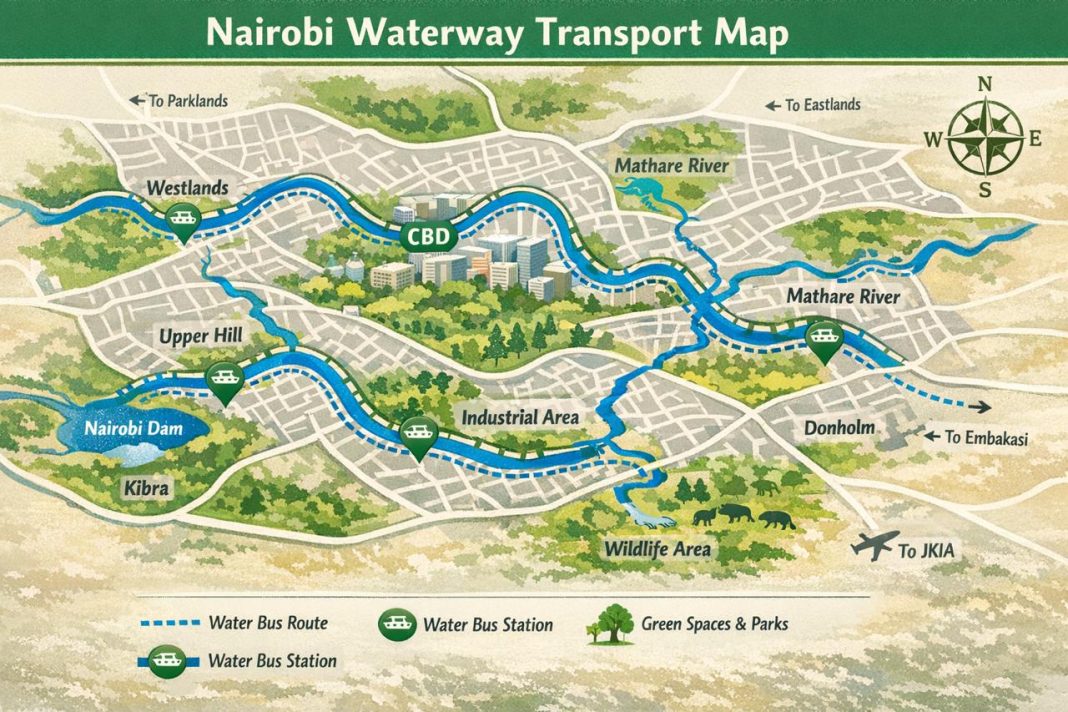
Concept: Nairobi Urban Waterway Transport
If restored, these rivers could support a multi-purpose water corridor with:
- Flood Control
• Widening and dredging rivers
• Restoring wetlands along banks
• Creating flood retention basins
This would dramatically reduce flooding in areas like Industrial Area, South B, and parts of Eastlands.
- Water Transport
Small electric boats or water buses could operate along sections of the rivers.
Possible corridors:
• Industrial Area → CBD
• Eastlands → City Centre
• Kibra → Upper Hill
This could reduce road congestion.
- Recreation and Tourism
Riverbanks could include:
• Walking and cycling paths
• Parks and green corridors
• Cafés and waterfront markets
• Urban forests
This would transform large parts of Nairobi’s environment.
- Pollution Control
A river restoration program would include:
• Sewer interception systems
• Wastewater treatment
• Strict industrial discharge control
Cities That Did This Successfully
Several cities had rivers that were once polluted and restored them.
• Cheonggyecheon Stream – Seoul removed a highway and restored the stream, dramatically improving flooding control and tourism.
• Singapore River – once polluted, now a clean transport and tourism corridor.
• Bangkok Canal Network – canals are used for public transport.
Nairobi could follow a similar model adapted to African cities.
Major Challenges Nairobi Would Face
1. Relocation of settlements along riverbanks.
2. Industrial pollution from factories upstream.
3. Large capital investment (likely billions of KSh).
4. Strong governance needed to prevent re-encroachment.
But the long-term benefits could include:
• Reduced flooding
• Cleaner city environment
• New tourism economy
• Alternative transport system
Interesting fact:
Nairobi’s three rivers together run over 60 km through the metropolitan area, meaning a full restoration could create one of the largest urban green corridors in Africa.
The writer is a former Alego MP