

By Dr Ida Odinga
When a nation loses a figure of Late Former Premier Rt. Raila Odinga’s magnitude, it faces a choice that reveals more about its character than any election ever could.
It can grieve, celebrate, then gradually allow the ideas that defined that life to dissolve into the comfortable amnesia that has swallowed too many African legacies before this one.
Or it can build something.
The University of Nairobi has chosen to build something.
The Raila Odinga Center for Democracy, set for official launch in the second week of October, is not a monument.
Monuments are for people who want to remember without being inconvenienced by the thing they are remembering.
This is an institution, and the distinction matters enormously.
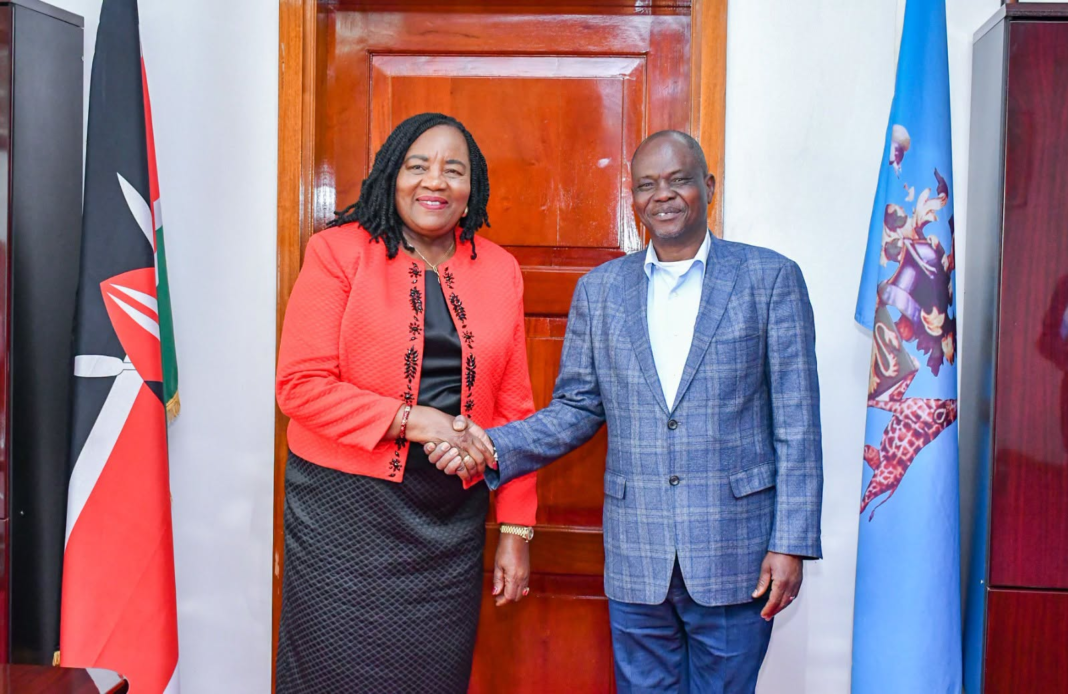
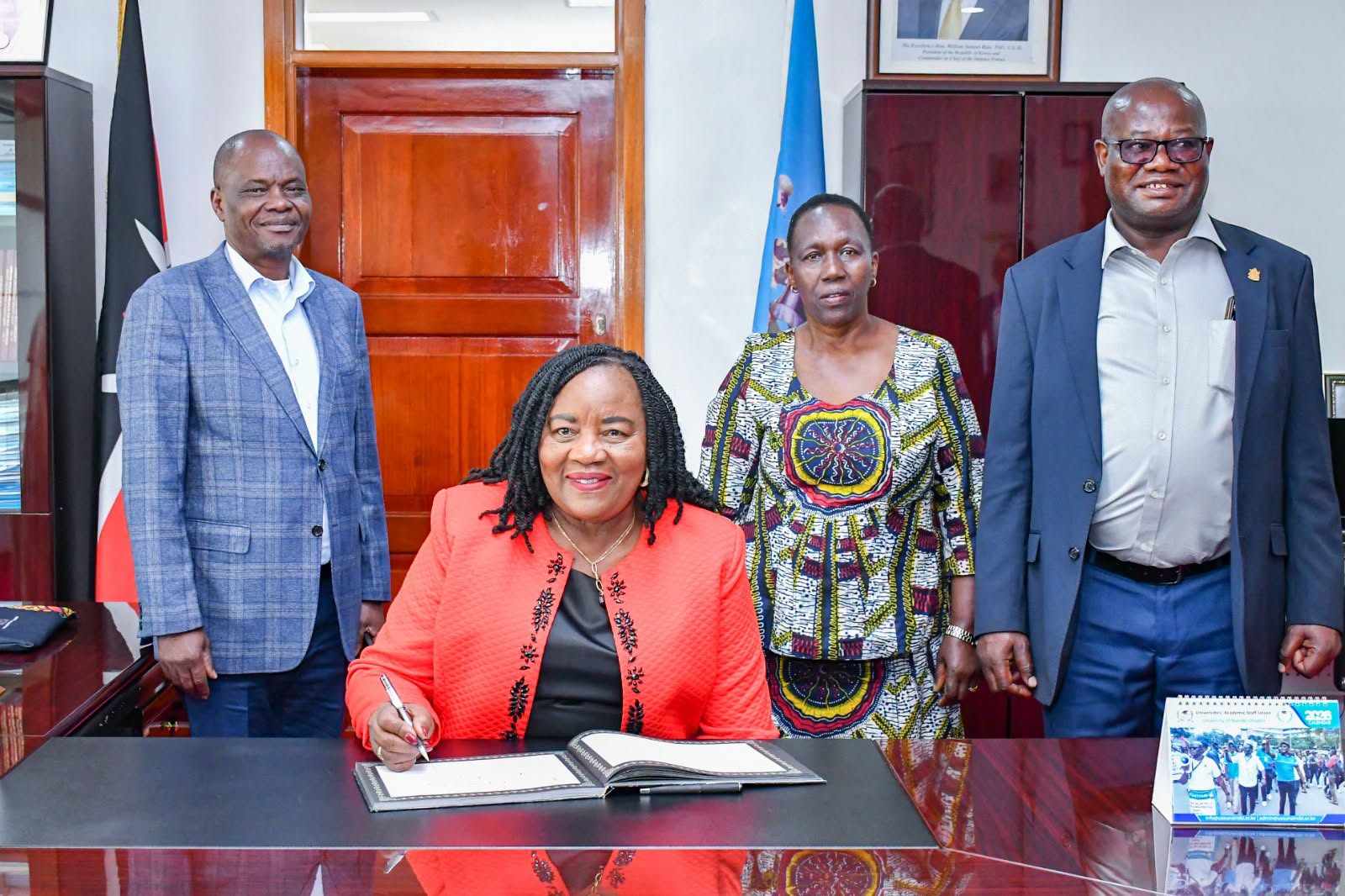
Today, Ambassador Dr Ida Odinga E.G.H. paid a courtesy call to the office of Vice Chancellor Prof. Eng. Ayub Gitau, and what unfolded in that meeting deserves far wider attention than it will receive from those still preoccupied with the politics of the moment. She did not arrive to be consoled or commemorated.
She arrived as a principal, carrying a specific and urgent agenda, which is to ensure that the hardest questions her husband spent a lifetime asking are not buried alongside him.
Her invitation to the public lecture that will accompany the centre’s launch was not a formality.
It was a direct challenge issued to scholars, policymakers, citizens, and the full breadth of African intellectual and civic life.
She asked them to come not to applaud, not to mourn again in public, but to think, to argue, and to produce something worthy of the democratic tradition this centre is being erected to advance.
What she said beyond that invitation is the part of this story that demands to travel.
Mama Ida told scholars, plainly and without restraint, to disagree with Raila Odinga. Openly. Rigorously. On record. She said the centre must be the ground on which a generation learns the difficult and essential art of political disagreement without mutual destruction.
She called for assumptions to be challenged and for stereotypes to be broken, not as exercises in rhetoric but as prerequisites for the clarity that genuine democratic work demands.
She was unambiguous that, above all else, the centre must belong to young people, to those who did not live the struggle but who will inherit its unresolved business.
There is something rare and quietly extraordinary about a woman entrusted with a man’s legacy who responds by inviting the world to interrogate it.
That is not grief performing itself in public. That is intellectual honesty of the kind that democratic institutions are supposed to model and almost never do.
Vice Chancellor Prof. Ayub Gitau provided the structural counterpart to that moral vision.
The centre will offer non-degree executive programmes designed for leaders and public policy developers from across the African continent.
It will establish formal partnerships with African institutions and global organisations committed to democratic governance.
It will award scholarships and inaugurate Democracy Awards recognising leaders whose impact has extended beyond their own borders and their own political lifetimes.
Over a carefully planned three-year period, it will undertake the full institutionalisation of Raila’s democratic papers, pursue multilateral grant funding, and pilot the executive programmes that will serve the next generation of those shaping public life on this continent.
The infrastructure is in its final phase.
The operational framework is in place. What remains is the human question of whether those this centre is designed to serve will arrive at its doors with the intellectual seriousness the moment requires.
That question is not rhetorical. Africa has an uncomfortable pattern of celebrating its democratic champions in death more lavishly than it championed their ideas in life, then watching those same ideas return as problems a generation later because no institution was ever built to process them properly.
The Raila Odinga Center for Democracy is a deliberate and concrete argument against that pattern. It is a wager, placed in infrastructure and curriculum and award, that ideas outlast the individuals who gave them their first and loudest voice, provided someone builds a proper house for them.
October, and the public lecture that opens this institution to the world, will offer an early indication of whether Kenya and the broader African intellectual community are prepared to accept the terms of that wager.
The centre is ready. The question now is whether the continent is.