
Home Blog Page 20

DP Kindiki to Gachagua: I will spill the beans

0

By Anderson Ojwang

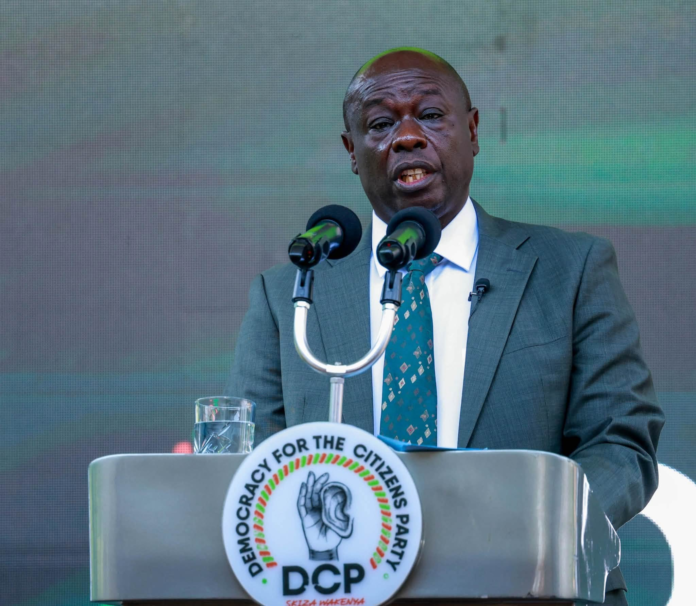
Deputy President Kithure Kindiki took the war with DCP leader Rigathi Gachagua to the doorstep with a threat to spill the beans over his impeachment.

Kindiki said he tried severally to help Gachagua avoid being impeached, but he refused to listen to him.

“Don’t push me, or else I will spill the beans. How I tried to save you not to be impeached, but you didn’t listen to me. I came to you severally, when I was the Interior Cabinet Secretary, and I told you to cooperate with the President. Be honest to him, but you refused to listen,” he said.

Support

Recently, Kindiki said for the two years Gachagua was in office, he supported him.

“For two years Gachagua was in office as Deputy President, I was Cabinet Secretary for Internal Security, and not any single day in those two years did I undermine him,” he said.

But Gachagua dismissed Kindiki, saying he sabotaged his fight against alcoholism in Mt Kenya.
“I have seen Kindiki saying he has no problem with me and that when I was in office, he respected me. That we only differed after he left. How did you respect me? The day I finished alcoholism in the region, you acted on the contrary,” he said.

Kindiki said he supported Gachagua while he was Deputy President and he was never engaged in politics.

“I supported him 100 percent. I was very busy with my ministry and never engaged in politics. The Cabinet Secretary for Internal Security is a focused docket. For the two years, I was living in the forest. For two years, I was your junior while you were in government. Not a single day did I abuse you,” he said.

Gachagua asked: “How did you respect me while you undermined my duty to finish alcoholism in Mt Kenya? Even if you have a problem with Ruto, stay there,” he said.

Blood relations

He said the blood relationship and advice from the elders was the reason behind his reference to Gachagua as brother.

“Not that I liked you too much, but you have a sense of arrogance and self-entitlement. I have tried to like you, but I don’t know what kind of a human being you are.”

“You said I should not call you my brother. I want to tell you this, Mr Rigathi: it is not upon you to tell me how I will call you. It is not your business. It is my business. You will not determine how I will call you. I don’t call you my brother because I like you or because I fear you. I do so because the elders from Gikuyu, Mbeere, Embu, and Meru told me that our community is one and that you are my brother by blood and not by choice. If you hear me call you my brother, it is not because I fear or like you. I have tried to like you, but you look down upon people,” he said.

Recently, Kindiki told Gachagua that the unity of the region was paramount and they needed to treat one another with respect, devoid of abuses.

“My dear brother Rigathi Gachagua, I am not asking you to join the government because you left. I pray for you in the role you are currently playing. But do it with respect. Let us not cause division in Mt Kenya. I will not abuse you because you are my brother, and you too don’t abuse me,” he said.

But Gachagua dismissed the overture, saying it was culturally wrong to “kill your brother and take his wife.”

“Do not call me your brother because even if you are someone’s brother, can you kill him and take his wife? You say one is your brother but you killed him and took his wife,” he said.

Disloyal

Kindiki said Gachagua was disloyal and disrespectful to his boss, President William Ruto, and that was why he was impeached.

“You looked down on your boss, everyone including your brother. How can only one man be the right man in the world? That nature of yours is what made you be impeached. I told you. I don’t want to be like you. Be loyal and respectful to your boss so that tomorrow when you become the president, you will be treated likewise. But you looked down on me and told me I don’t know what I was saying,” he said.

Cold

Kindiki said Gachagua was in political cold and that was the reason for his bitterness.

“Currently, you are making noise outside the government. I want to ask you, my brother Rigathi: for me, several people do not understand me. I say they only saw me in the night and not during the day. That disrespect you have, Rigathi, I promise you will be embarrassed,” he said.
The law professor is taking his fight with Gachagua into the political bar, and it is going to get murkier and more interesting as Kindiki fights for his DP slot and control of the mountain.

Welcome home

Earlier, Gachagua had claimed that Kindiki was being subjected to the same mistreatment he went through before he was impeached.

He told Kindiki that he was welcome back home in the political formation that Mt Kenya has shifted to.

But Kindiki declined the overtures, saying he had built the party and cannot walk away and will be President Ruto’s running mate.
The verdict: Wanga in a make-or-tear situation as Linda Mwananchi invades

0

By Anderson Ojwang

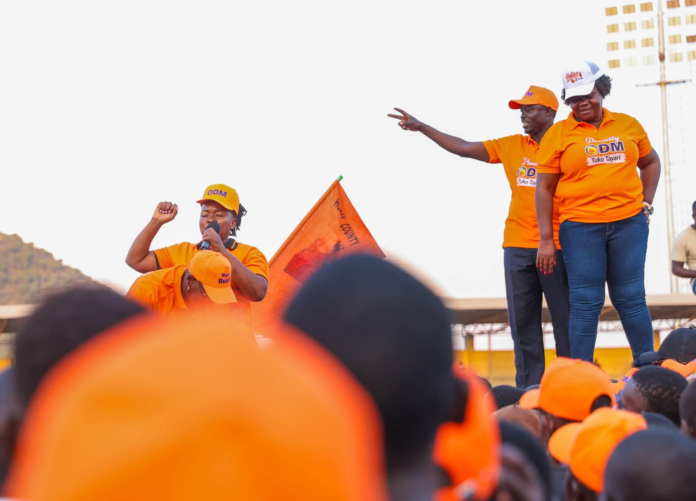
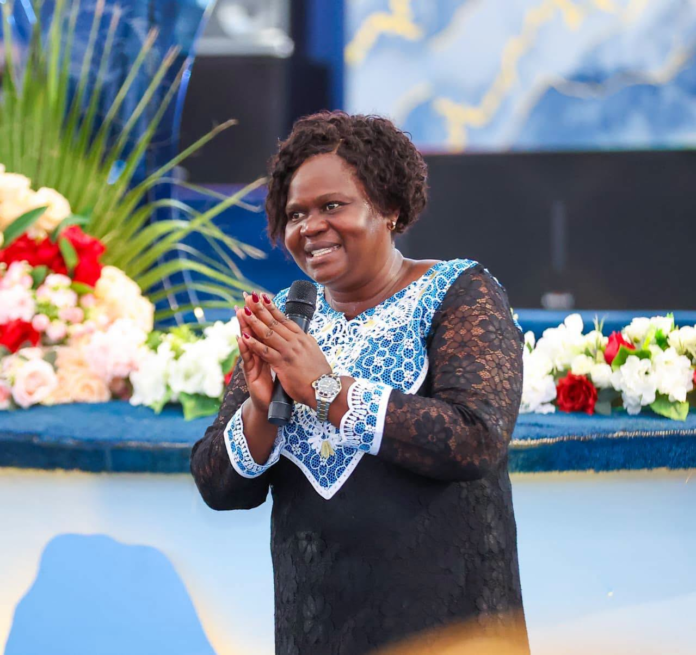
Today is the verdict day for Orange Democratic Movement (ODM) National Chairperson and Homa Bay Governor Gladys Wanga.

It is a make-or-tear situation for the daughter of Wangaya, as it is the first time her political acuity and career come to a real test. A test of where rubber meets the road and a bare-knuckle engagement.

A double-edged sword for the former Kisumu Girls head girl when she comes face to face with seasoned street politicians baying for her political soul and out to dim her shining light.

That is why Wanga went out in full force to appeal to the residents not to turn up in large numbers for the rally, as it would annoy President William Ruto of the broad-based coalition.

“Do not look for money from those people. If you are hungry, call me and I will send you money to eat. Do not attend the rally in huge numbers as it will annoy President Ruto,” she pleaded.

Date

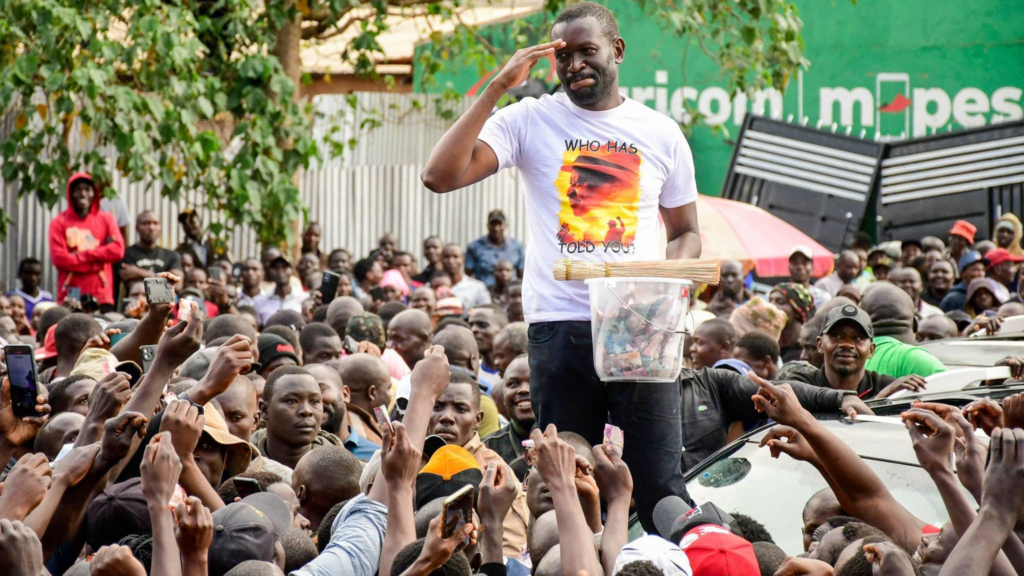
Wanga finally has a date with the former Mageuzi leader and Siaya Governor James Orengo. For long, the two leaders have been shadow boxing. Today, it is the day of a show of might and superiority. Who will carry the day?

Orengo, a hardened shrew and master of street politics, finally has a date with the scheming and ambitious daughter of former Kisumu councilor the late Nyasuna.

Similarly, from Orengo, Wanga faces off with the Nyalenda slum-born Embakasi East MP Babu Owino.

Owino, an alumnus of Kisumu Boys and former Nairobi University student leader, will finally test the former and first Kenyatta University woman student Secretary General of the organisation.

Babu in 2024 gave Wanga a taste of his salt during her thanksgiving ceremony in her Kochia Village for her appointment as ODM Chairperson.

The crowd demanded that Babu speak, and he went with the crowd, which forced ODM Director of Elections Junet Mohammed to castigate him for allegedly trying to grab the mantle from Raila Odinga while he was still alive.

The politically cheeky, calculative, and financially muscled Caroli Omondi is a nightmare for Wanga.

Linda Mwananchi will attend the mass service in Suba South, Caroli’s backyard, where he had camped most of the week.

That is where Cabinet Secretary for Treasury John Mbadi comes from and is the immediate former area MP. Mbadi and Caroli have no lost love between them.

Wanga for the last one week camped in Suba South, rallying the residents against attending the Linda Mwananchi rally.

“I thought as MPs from Homa Bay we would work together, but Caroli has refused and is undermining Mbadi. Do not attend the rally. Go to your businesses,” she said.

For the last two weeks, Homa Bay County witnessed a money windfall from the Governor and her team as they traversed the region to de-campaign the rally.

The immediate former Secretary General Edwin Sifuna is finally invading Wanga’s backyard to touch base and seek support from the late Raila’s political bedroom.

Sifuna’s encroachment into what was seen as emerging President Ruto’s bedroom in Nyanza could be a nightmare for Wanga, a key ally to the President and one of the architects of Sifuna’s sacking.

It is a date of the hunter and the hunted, with the latter on a revenge mission to rewrite the story of when the hunter becomes the hunted.

Make

Wanga must do all within her power to ensure the rally fails. In her pursuit of queenpin and community leadership, this is the first litmus test on her political career in the absence of former Prime Minister the late Raila Odinga.

This explains why Homa Bay MP Opondo Kaluma declared that Linda Mwananchi were not allowed in the town and that they were to conduct night searches for supporters of the group who had checked into hotels and homes.

“From now going forward, we are giving command that any person saying ‘one term’ should be dealt with. We are going to ransack hotels and homes where they are hiding,” Kaluma said.

Kaluma warned business owners of dire consequences for hosting members of Linda Mwananchi in their facilities.

“If you are a hotel owner in Homa Bay Constituency, you must know the people who have slept in your hotel. We will deal with that person and even the hotel,” he said.

Kaluma said the county leadership and the entire leadership had given directions.

“My people, I came to talk to the youths to protect us now that we have been invaded by the enemy. I have finished arrangements with your leadership. Fuel is provided. From here we move to Imbo, Rodi, and Homa Bay. Our party is ODM. It is President Ruto’s second term,” he said.

A vote of no confidence

A successful rally would be a vote of no confidence in Wanga and may trigger a negative reaction in the broad-based coalition. A successful rally may dilute her power and take the gubernatorial battle a notch higher.

Already Wanga has to contend with the rebelling greater Karachuonyo, who have openly opposed her regime and control over 40 percent of Homa Bay County’s vote.

Already, greater Rachuonyo has produced a candidate in immediate former Deputy Governor Joseph Oyugi Magwanga.

For Sifuna, Orengo, Babu, and Caroli, it will be a pregnant statement and a nip in the bud of Wanga’s political territory.

Babu wrote: “On August 16th, Homa Bay will not simply host a rally… It will welcome home one of its own. WE ARE COMING!!”

Orengo on Friday wrote: “Walisema Homabay ni no-go zone! Tell me where we are right now? Homabay. Leo ilikuwa mic check tu, Sunday ndio tuned in na watu wa Asego Kanyada. Itakuwa faya sana!”

Sifuna wrote: “Omabei… kale ka dance ketu time imefika… niliwaambia nitawaonyesha ma chuom… hii inaitwa Osiri Beach, Nyandiwa… tuonane asubuhi!”

The Facade of “Empowerment”: Why Handouts and Slogans Are Keeping Nyanza Impoverished

0

By Odiwuor Alala

Every political season, a familiar ritual unfolds across the towns and villages of Nyanza. High-end convoys arrive amid clouds of dust, loudspeakers blare party slogans, and crowds of mothers and young people gather in the blistering sun. They are told it is an “Empowerment Drive.”

Hours of dancing, sycophancy, and political posturing culminate in a dramatic spectacle: cash drawn from bags, brown envelopes handed to group leaders, and grand declarations that the community has been uplifted.

Yet, when the dust settles and the politicians retreat to their air-conditioned boardrooms, the reality sets in. After a long day of lost productivity, individual mothers and youth walk away with barely KES 500 to KES 1,000 each.

Tokenism is not development; it is political patronage disguised as charity. Handing an unemployed youth or a struggling trader one thousand shillings does not launch an enterprise—it barely covers a day’s groceries, while leaving the systemic machinery of poverty entirely untouched.

The Anatomy of the Farce

The prevailing “empowerment” model across the region is structurally flawed and fundamentally exploitative.

1. The Math of Mockery

In an economy where the cost of raw materials, transport, and basic utilities is steadily rising, the idea that a micro-handout of KES 1,000 serves as “seed capital” is an insult to economic reality. It cannot buy a single bag of stock for a vegetable vendor, pay for a trading licence, or purchase basic tools for a technician.

2. The Opportunity Cost of Wasted Labour

To receive these handouts, women and youth are often required to assemble early in the morning and remain seated for six to eight hours. That represents an entire lost workday—hours that could have been spent tilling land, tending stalls, fishing, or running small businesses. The community loses economic output just to become background props for political photo-ops.

3. Deliberate Dependency

True empowerment creates self-reliance; tokenism creates subservience. When financial survival is tied to the benevolence of an individual politician rather than stable institutions, the electorate is kept perpetually needy—and therefore easily mobilised during campaign seasons.

Real Empowerment: A Practical Blueprint

To transition from the theatre of handouts to genuine economic prosperity, Nyanza must pivot toward structural, sustainable interventions.

1. Capitalise Production, Not Consumption

Real economic empowerment provides assets of production rather than temporary liquidity.

  • Asset Financing: Instead of handing KES 100,000 in loose cash to a youth group, political and community leaders should facilitate access to tangible machinery—such as grain-milling machines, solar-powered fish dryers, modern brick-making equipment, or sewing workshops.
  • Value-Chain Infrastructure: The region is endowed with agriculture and fishing, yet post-harvest losses keep producers poor. Investing in cold-storage hubs along the Lake Victoria beaches and establishing processing facilities for mangoes, sugarcane, and tomatoes creates sustainable jobs and keeps capital circulating locally.

2. Strengthen Established Chamas and SACCOs

Informal financial groups (chamas and table-banking circles) are the lifeblood of rural economies.

  • Revolving Credit Funds: Rather than one-off cash drops, funds should be deposited into verified community SACCOs as low-interest, revolving loan schemes.
  • Institutional Credit History: When women borrow and repay within their groups, they build a credit score, qualifying them for larger financing from commercial banks and development funds.

3. Pair Capital with Financial and Technical Literacy

Money without business acumen is quickly dissipated. No empowerment initiative should distribute capital without an accompanying training curriculum.

  • Practical Business Training: Programmes should cover basic bookkeeping, pricing strategies, cash-flow management, and digital marketing.
  • Vocational Upskilling: Partnering with local Technical and Vocational Education and Training (TVET) institutions ensures that youth receive industry-relevant certifications in welding, plumbing, agribusiness, and ICT alongside funding.

4. Policy-Driven County Interventions

Elected leaders must be held accountable for legislation and executive action, not personal philanthropy.

  • Market Access and Aggregation: County governments must build modern, secure, and sanitary market spaces with reliable water, electricity, and childcare facilities for traders.
  • Ring-Fenced Procurement: Enforce laws that mandate 30% of public procurement tenders go directly to verified local youth- and women-led enterprises, ensuring consistent commercial demand.

The political class will continue these performative displays for as long as the electorate accepts them as legitimate development.

The people of Nyanza must reject the indignity of waiting all day for loose change. It is time to demand sustainable systems, fair markets, and genuine investment. Empowerment is not a gift bestowed by a politician from a podium—it is the right to economic infrastructure, viable opportunities, and the tools to build lasting wealth.

Do unto others what you expect to be done unto you, as the past catches up with Gachagua

0

By Anderson Ojwang

Rigathi Gachagua, when he was in office as the Deputy President, wielded power, promised, and taunted then opposition leader the late Raila Odinga and the opposition. He promised to unleash violence to tame and quell any form of protests and asked President William Ruto to task him with handling the demonstrators and Raila.

Gachagua could arrive in the office at dawn with a sole aim: to tame the demos and Raila, a mania that became his forte.

Then Deputy President Gachagua even bragged that his people of Mt Kenya were not goons and do not destroy properties.

For him, the ODM demonstrators were an eyesore to the country and its economy and must be extinguished at all cost.

At functions where he shared a podium with Raila, he demonised the opposition leader and claimed that he was the country’s main trouble, who must be handled with utmost care.

The Nakuru ghost

On July 14th, 2023, at a function in Nakuru County, Gachagua threatened and declared to Raila that enough was enough, that the government would no longer tolerate him.

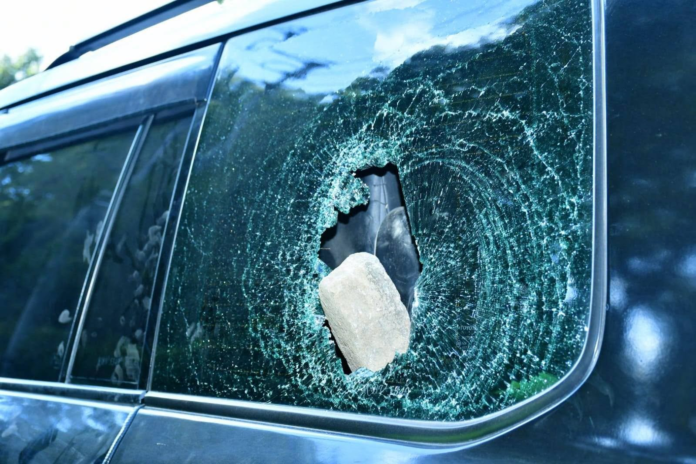
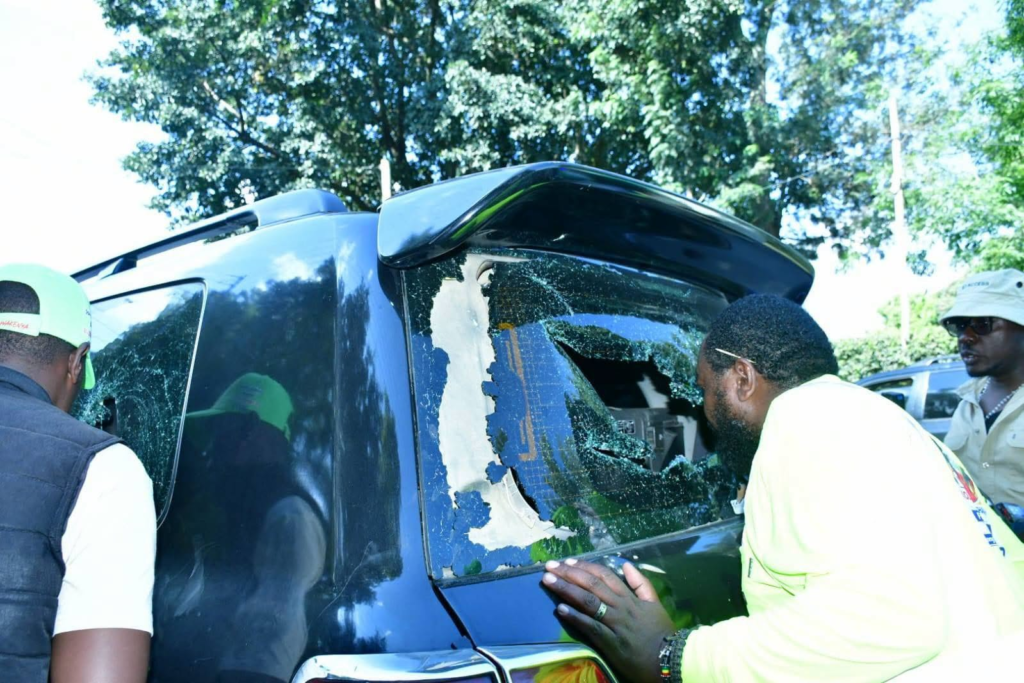
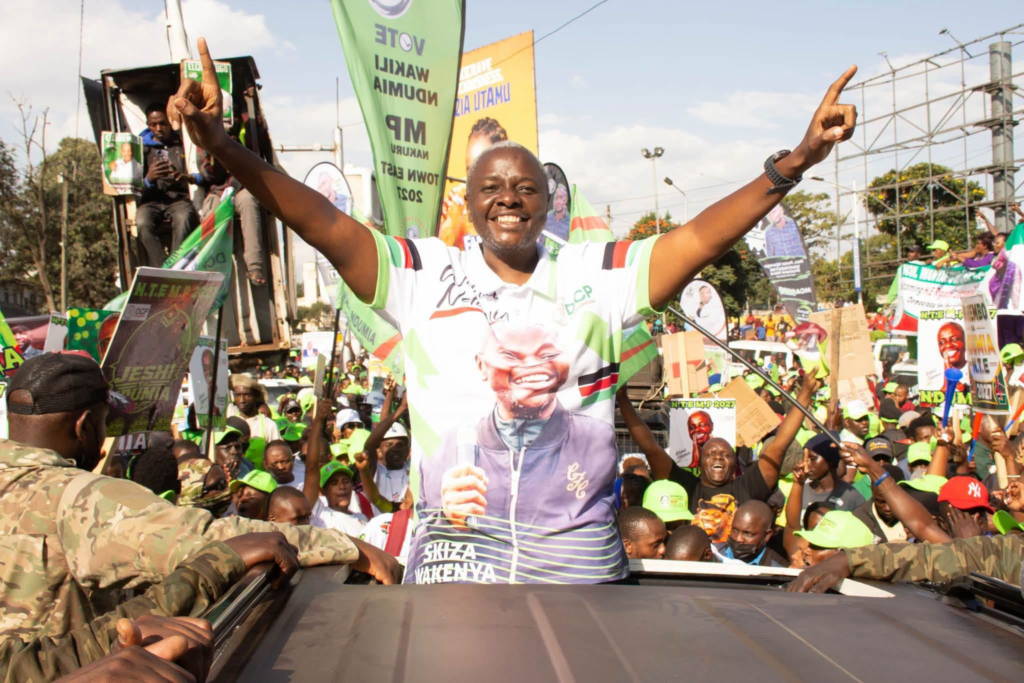
Ironically, on Friday, in Nakuru, Gachagua was served a dose of his own poison after goons attacked and destroyed vehicles in his convoy.

Gachagua then said the government would no longer turn a blind eye to the demos which have been marred by chaos, violence, destruction of property, and death.

“As a government, we have said enough is enough. Raila Odinga hatakubaliwa tena, under any arrangement, to cause violence, deaths and destruction of property. It will not happen; we have a responsibility as a government to protect the lives and properties of Kenyans. Ile itakuwa wacha ikuwe kwa sababu mtu mmoja hawezi sumbua watu miaka 40. Haiwezekani. How much blood do you want to shed in this country so you can be satisfied?” he said then.

On Friday, goons attacked Gachagua’s convoy and he blamed the government for failing to protect Kenyans.

“When Mr William Ruto and Mr Kipchumba Murkomen said goons would not be allowed anywhere in the country, it was just another lie, the usual lip service and political posturing. They cannot do without goons. But there will be no escape route for this dictatorial regime,” he wrote.

Gachagua claimed the goons were being unleashed on him and the opposition out of what he termed as fear of competition.

“They think that the only way to stop competition after being abandoned by Kenyans is through the use of violence against opponents and the employment of goons,” he claimed.

Goons attacked Gachagua’s convoy at Kaptembwa, in Nakuru Town West Constituency, with axes, rocks, and other crude weapons.

But ODM Minority Leader in the National Assembly, Junet Mohammed, this week accused Gachagua of tormenting Raila and the ODM fraternity during the demos.

Junet claimed that Gachagua was the one who plotted to assassinate Raila during the demonstrations and would arrive in his office in the morning to monitor Raila’s movements.

“Gachagua is the same man who said his disagreement with President William Ruto began when the President and Raila started engaging. The same man today wants to tell us about Raila,” he said.

Attack on Kenyatta farm

The Kenyatta family farm in Ruiru was attacked during the 2023 demos by goons who looted and destroyed properties.

Goons invaded retired President Uhuru Kenyatta’s family estate on the Eastern bypass, cut down trees, and stole livestock.

While the goons were invading the Kenyatta family property, another group riding on motorcycles attacked the Raila Odinga family company, East Africa Spectre, in Embakasi, Nairobi, and pelted the building with stones, breaking windowpanes.

National Assembly Leader of Majority Kimani Ichung’wah, then alleged that Uhuru was sponsoring the demonstrations and warned that Nairobi residents were ready to “defend their property”.

“If you want to be respected, you must also respect other people and their properties. If you don’t, we will invade your large tracts of land and allocate them to the landless. And that is my message to none other than Uhuru Kenyatta,” Ichung’wah said.

On Wednesday, Ichung’wah changed the tune and accused Gachagua as being the ‘father’ of goons and having plotted the attack on the founding President the late Mzee Jomo Kenyatta’s family farm in Ruiru.

“I have said this several times: that Gachagua was behind the goons who attacked Kenyatta’s farm in Ruiru. I sat with Gachagua in Harambee Annex when he plotted the attack. I challenge him to deny it,” he claimed.

Do unto others what you expect them to do unto you

For Gachagua, the absence of the trappings of power has finally dawned on him the kind of sacrifices the opposition goes through to stabilise the country.

The incident of goon attacks is a testimony of the sacrifices the freedom fighters persevered to make Kenya a better place.

JOOTRH Board meets the minimum requirements for Level 6, outlines measures to strengthen systems

0

By Hope Barbra

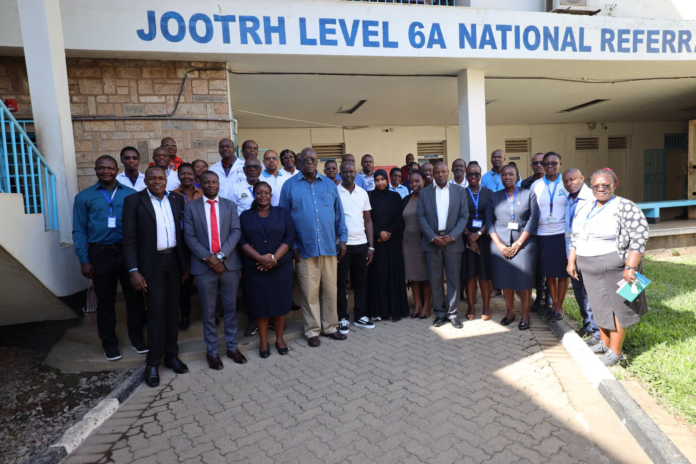
Jaramogi Oginga Odinga Teaching and Referral Hospital (JOOTRH) has attained the minimum requirements for Level 6A and now seeks to sustain and improve on those gains.

The Board’s Chairman, Dr Olango Onudi, said the hospital was shifting to outlining measures aimed at strengthening staff systems, specialised services, and long-term planning.

“After attaining Level 6A status, we are now proving what the new status can deliver for patients,” he said.

Speaking during the Board’s introduction session to staff, Dr Olango said the hospital’s elevation was a milestone to better health services in the region.

The Chairman challenged the staff and management to maintain the gains so far achieved while enhancing service delivery and performance.

Dr Olango said the Board has already made key resolutions, among them the absorption of staff into the hospital’s new structure. Others include the approval for the introduction and maintenance of a staff pension scheme.

“Management has been tasked with implementing the pension resolution, with the Board expected to follow up on its progress,” he said.

Dr Olango said they have developed a five-year strategic plan. The Board expects the management to translate the strategic plan into annual work plans, targets, and actions across departments.

“The strategic plan was intended to give every unit a clear understanding of its priorities and contribution to the hospital’s broader direction,” he said.

He said the Board and hospital were committed towards the welfare of patients.

“A stronger workforce system and clearer institutional priorities are intended to support more reliable and specialised care,” he said.

Dr Olango called for JOOTRH to build capacity to provide services expected of a Level 6 facility, including reducing unnecessary referrals for services that can be delivered within the hospital.

Representative of the Principal Secretary for Medical Services, Dr Norbert Abuya, Deputy Director of Medical Services at the Ministry of Health, said the new status must translate into expanded services and patient-centred care.

He highlighted key areas of focus to include patient safety, clean and safe environments, referral and counter-referral systems, waiting times, and length of stay.

Dr Abuya said the Board and hospital leadership cannot achieve the strategic direction without the contribution of staff across departments.

He said the priorities must be translated into individual workstations.

JOOTRH CEO, Dr Joshua Clinton Okise, is expected to lead the implementation of the Board’s resolutions, while staff across departments will be central to turning the strategic direction into measurable improvements.

Dr Olango said the Board’s role was to provide policy and strategic direction, while management implements the resolutions and government policies.

Other Board members present included Dr Zablon Mokua, Ms Grace Essendi, Mr Elias Mokono, and Riyaq Ahmed, who joined the engagement with staff as the Board outlined its priorities for the hospital’s next phase.

The Board’s engagement with staff comes as JOOTRH begins consolidating its Level 6A status.

The Trojan Horse in the Opposition: Why Gachagua Remains Ruto’s Greatest Asset

0

By odiwuor Alala

Moses Kuria’s political commentary often divides opinion, but his recent assertion that former Deputy President Rigathi Gachagua might still be operating under an unwritten arrangement with President William Ruto is beginning to look less like a wild conspiracy and more like an astute reading of the game.

Look at the political landscape. How else do you explain a politician who claims to lead the charge against the current administration, yet spends virtually all his energy alienating potential allies, issuing reckless broadsides, and fracturing the very coalition required to mount a serious challenge in 2027?

Instead of building bridges, Gachagua has transformed himself into the opposition’s biggest strategic liability. His political behaviour reads like a masterclass in self-sabotage—or, if Kuria is right, a calculated strategy to ensure the opposition remains hopelessly divided.

The Cynicism of Rebranding

The most glaring absurdity in Gachagua’s post-deputy presidency persona is his sudden, opportunistic invoking of Raila Amolo Odinga.

For years, Gachagua built his entire political identity on fierce anti-Raila rhetoric. He was the chief architect of the “shareholder” doctrine—a narrative explicitly designed to lock out opposition strongholds from state resources and vilify the Luo community’s historical struggle for democratic inclusion. To watch him now drop Baba’s name in a bid to manufacture legitimacy is not just political opportunism; it is an insult to the intelligence of the electorate.

You cannot spend years treating an entire region as political persona non grata and then expect them to rally behind your grievances the moment you fall out of favour with the state.

The Unbridgeable Rift with Nyanza

If Gachagua believes his anti-Ruto posturing will earn him a sympathetic ear in Nyanza, he has miscalculated catastrophically.

The Luo nation has a long, documented memory. The region’s political consciousness is built on a legacy of principle, sacrifice, and ideological clarity. It will not be mobilised by a brand of politics rooted purely in personal bitterness and ethnic entitlement.

In fact, Gachagua’s lingering hostility toward anyone with a Luo name makes him radioactive in the region. For any Luo leader with genuine political ambitions, aligning with Gachagua is not a strategic gamble—it is outright political suicide. You cannot lead a national movement while harbouring visible disdain for a major pillar of the nation’s political identity.

When the time comes to vote, Nyanza’s stance will be unmistakable. The electorate will not merely be voting against the economic policies of the current administration; they will be actively voting against the divisive, tribal bigotry that Gachagua represents.

The Opposition’s Ultimate Dilemma

Whether Gachagua is operating under a secret deal with Ruto or simply consumed by his own unchecked ambitions, the net outcome is identical: President Ruto wins.

A scattered, infighting opposition that allows itself to be dragged down by Gachagua’s baggage cannot offer a credible alternative to the nation. Until the anti-government forces recognise that Gachagua’s brand of politics is an insurmountable obstacle to national unity, they will remain trapped in a game where the house always wins.

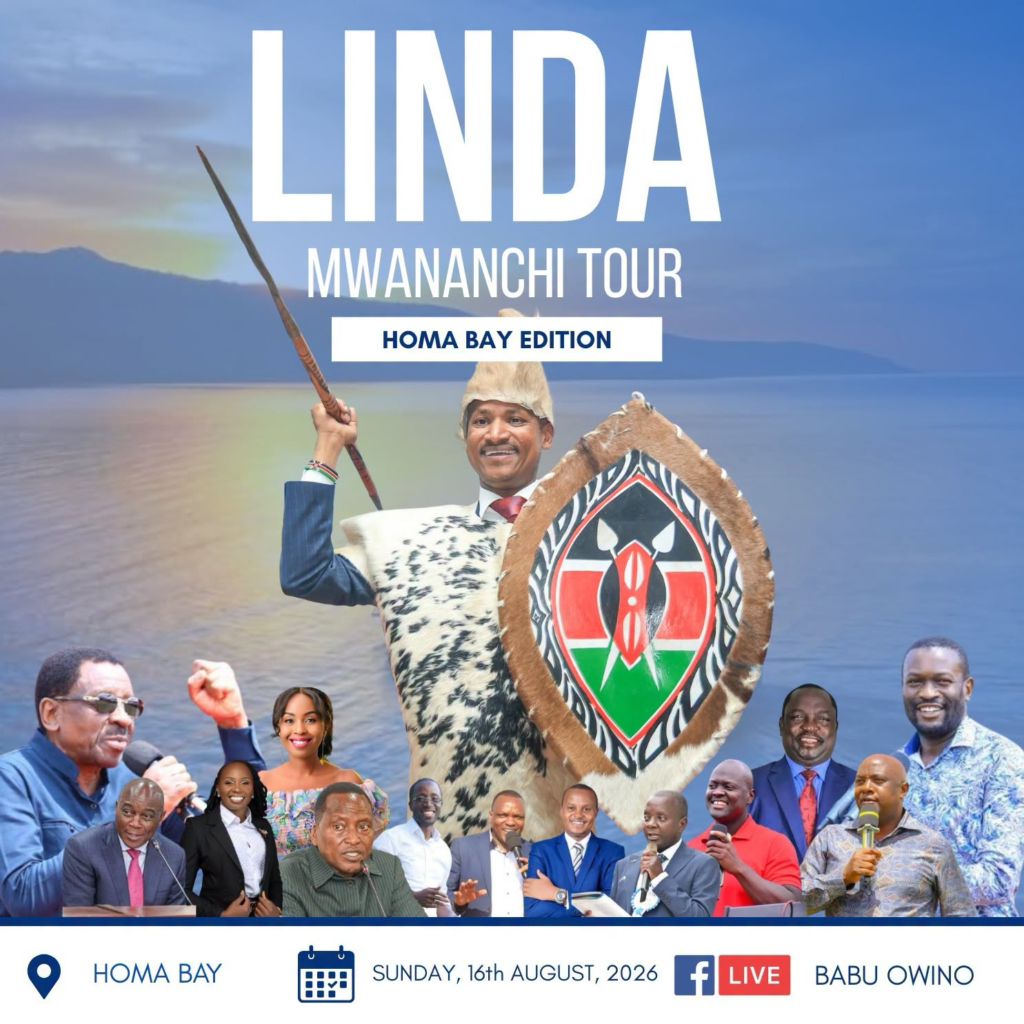
The hunter becomes the hunted: Wanga finally faces off with Linda Mwananchi, another repeat of the Kisumu rally mistake

0

By Anderson Ojwang

When the hunter called and ruled the jungle, making kills and enjoying the moment of the hunt until the tides changed.

Now the hunter is the hunted and is running amok in a panic mode. The dice is cast as the hunter is now a common enemy.

This is the scenario unfolding for Homa Bay Governor Gladys Wanga. Wanga has dominated the political landscape, calling the shots and rising fast to become a determinant and dominant figure.

From a greenhorn politician, she climbed the ladder to become the first woman Governor from Western Kenya, the first woman ODM Chairperson, and the force behind the party fallout.

Wanga for over one decade has ruled politics and gained the trust of former ODM party leader, the late Raila Odinga, and the current party leader Dr Oburu Oginga.

The Kisumu mistake

Ahead of the Linda Mwananchi rally in Kisumu, the ODM brigades warned and mobilised the residents to boycott the event.

The ODM fraternity and the broad-based alliance held a series of meetings, including with the boda boda sector, and even occupied Kisumu International Airport.

ODM leaders including MP Sam Atandi and former MP Fred Ouda warned the Linda Mwananchi brigades of dire consequences. The youths even attacked Linda Mwananchi co-principal and Vihiga Senator Godfrey Osotsi at a Kisumu hotel.

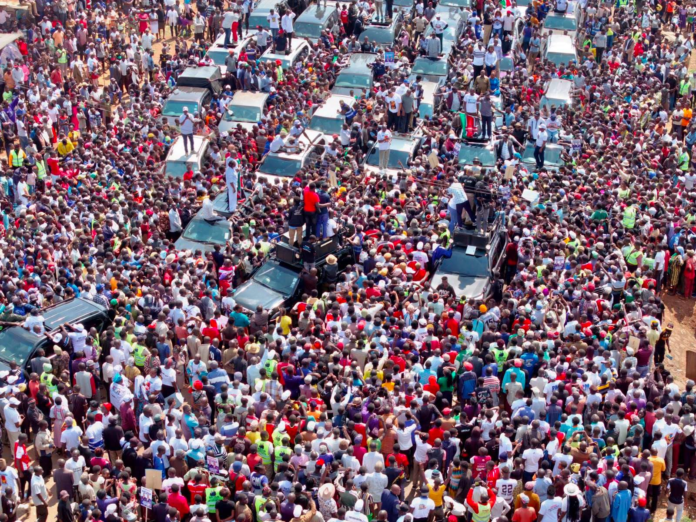
The rally developed into an organic moment with a huge turnout.

Currently, Wanga is playing a similar script which became a cropper and could be inadvertently mobilising the residents to attend the rally.

Tides turn

In ODM, two factions emerged: Linda Ground, spearheaded by Wanga, which died at an infant stage before they reverted to the old ODM name; and Linda Mwananchi of the immediate former Secretary Edwin Sifuna, Siaya Governor James Orengo, and Embakasi East MP Babu Owino.

The latest opinion poll shows that Linda Mwananchi’s approval rating is at 74 percent while Linda Ground is at 23 percent.

Wanga led the call for the sacking of Sifuna and was part of the architect who presided over the power transition of ODM leadership while Raila’s body was still airborne.

The rally

Tension and panic have for the last two weeks become part and parcel of Homa Bay County. Wanga and her team have panicked and have been traversing the region mobilising residents not to attend the Sunday rally.

Wanga had camped in Suba South Constituency, the home turf of MP Caroli Omondi, to urge residents to ignore the ODM ‘rebels’ when they hold their rally.

“We thought Omondi would work with us as Homa Bay leaders to support the appointment of Treasury Cabinet Secretary John Mbadi. Leaders agreed to end all their personal differences except Omondi. Never listen to Omondi and the Linda Mwananchi team because they don’t have an agenda. They are coming to Homa Bay to use infrastructure being financed by the government and claim that the national leadership has failed,” Wanga said.

Attack

The Linda Mwananchi coordinators were attacked by local party youths after they had presented notification to the police.

Linda Mwananchi brigades on Wednesday at a press conference claimed of a plot by Wanga and her team to unleash violence on them.

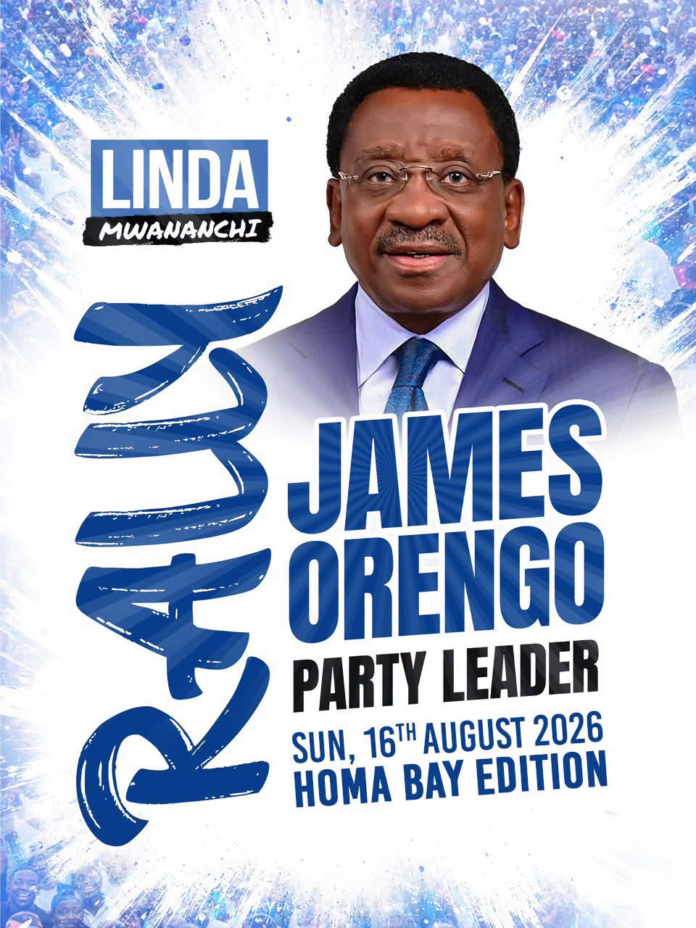
Babu has accused Wanga and Homa Bay Town MP Peter Kaluma of allegedly plotting to disrupt the Linda Mwananchi caravan’s rally in Homa Bay County on Sunday, August 16, 2026.

Owino claimed the leaders, together with an MCA, held a meeting late Tuesday night where they allegedly discussed mobilising goons to attack supporters of the opposition movement during the planned rally.

Owino warned that the alleged mobilisation could trigger violence and called on security agencies to protect residents and participants attending the political events.

Orengo also claimed of a plot by Wanga and her team to harm them during the rally.

“I am fully aware that I’m the main target for the much-planned political violence being organised and fully funded by the state through our very own elected leaders and politicians from Homa Bay County during the Linda Mwananchi Homa Rally on Sunday, August 16, 2026. Based on the intelligence reports, we must tell Kenyans and beloved supporters that various meetings have been held in hotels and public places to organise how to violently disrupt our peaceful rally,” he wrote.

Orengo said they will not be scared by the planned violence against them.

“It is shameful that some selfish leaders who receive handouts from the state have bought crude weapons such as rungus, pangas, and knives for a section of youths to cause chaos during the rally. This must stop. Despite all this planned violence against us, the rally will go on, and nobody will create a Chinese Wall in Nyanza. The truth is that the region is ‘One Term,’ and this will be proven come 2027 general elections. Sisi tutajilinde,” he wrote.

But Wanga, in a press statement, denied the allegations and instead said Linda Mwananchi were welcome to the county to hold their rally.

“Homa Bay is open to every political persuasion. We do not believe in declaring regions ‘out of bounds’ or denying fellow Kenyans the opportunity to engage citizens because of their political affiliation,” Wanga wrote.

But Kaluma said they will face off with the opponents on Sunday and banned the use of the word “one term” in the county as it was provocation to violence.

Sifuna’s ghost

On Sunday, Sifuna’s ghost will be in Wanga’s backyard. A bad dream for the governor, a possible humiliation if the rally is a success, or victory for her if it fails.

This is the Wanga dilemma as she tries to stabilise the ship amid rebellion from the electorate over what they termed as dismal performance.

Will Sifuna be welcomed in Homa Bay, and if yes, what would be the message to Wanga from the electorate?

Jaramogi Oginga Odinga Teaching and Referral Hospital undertakes public participation for upgrade and expansion

0

By Hope Barbra

Jaramogi Oginga Odinga Teaching and Referral Hospital (JOOTRH) will undertake public participation on the Environmental and Social Impact Assessment (ESIA).

The public participation will inform Kisumu residents, stakeholders, and members of the public about the Environmental and Social Impact Assessment (ESIA) Public Participation Meetings on the proposed expansion and upgrading of the hospital.

The proposed project seeks to transform JOOTRH into a modern 2,000-bed Level 6A Referral Hospital.

The first phase comprises a 250-bed Trauma and Critical Care Wing, and members of the public are invited to participate.

“We invited residents to attend, learn more about the proposed project, and share their views, comments, concerns, and recommendations as part of the ESIA process. Your voice matters in shaping the future of healthcare in Kisumu and the wider Lake Region,” read the statement.

Mental health study

JOOTRH has also welcomed a proposal for the NeuroGAP2 Mental Health Study.

JOOTRH welcomed a proposal to conduct the Neuropsychiatric Genetics of African Populations (NeuroGAP2) study in Kisumu, with discussions focusing on how the research can support better understanding of mental health conditions.

Recently, the research team, led by Prof. Lukoye Atwoli of Aga Khan University Medical College East Africa and including Dr Linnet Ongeri of KEMRI, met JOOTRH Chief Executive Officer Dr Joshua Clinton Okise and later held discussions with the hospital’s mental health teams and other relevant staff.

Dr Okise said mental health was an important part of healthcare and should receive attention alongside other health needs. He also stressed the importance of staff wellness, noting that the wellbeing of healthcare workers matters in supporting quality patient care.

The proposed NeuroGAP2 study will look at the genetic factors linked to psychotic disorders among African populations, particularly schizophrenia and bipolar disorder.

The researchers also want to better understand the mental health services available, where patients seek care, and the challenges they face along their care journey.

The team was exploring JOOTRH and Kisumu County Referral Hospital (KCRH) as possible study sites.

Discussions also focused on community and ethical issues that may need to be considered when conducting mental health and genetic research in Kisumu.

The study would involve adults with psychotic disorders and control participants. Participants would undergo mental health assessments and provide saliva samples for genetic testing. The researchers have also outlined measures to ensure participants understand the study and are able to give informed consent.

The proposed study could also provide opportunities for training in genetics, psychiatry, epidemiology, and informatics, while supporting local research skills.

NeuroGAP2 is still at the proposal and planning stage, with feedback from JOOTRH and county teams expected to help shape the study before the necessary approvals are sought.

Heart camp

The hospital is set to hold its inaugural Open Heart Surgical Camp from 14th–20th September 2026.

The camp will target patients with:

  • Valvular stenosis
  • Valvular insufficiency
  • Adult congenital heart disease
  • Cardiac tumours

Screening is ongoing every Monday, Tuesday, and Friday at the Consultants’ Clinic.

Surgical Camp: 14th–20th September 2026.

How Kisumu City overcame cartels to be the cleanest city in the country

0

By Hope Barbra

Waste management has been a nightmare for most cities and municipalities in the country.

Waste management is one of the biggest nightmares in the country and the most controversial, with cartels calling the shots.

It is the best-rewarding venture, and those in it have been minting millions of shillings.

Kisumu City took a new path to resolve the waste management crisis to make it one of the cleanest cities in East Africa.

Previously, Kisumu City outsourced waste management services at Sh75 million a year. But the city was still dirty.

Kisumu City Manager Mr Abala Wanga said with the support of the Governor Prof. Anyang’ Nyong’o, they opted to discontinue the outsourcing of the service.

“We decided to take over the service of waste management and recruited the 500 employees of the service provider. We paid the salary arrears they had and entered into a contract with them, and that has been the turnaround,” he said.

Abala said from the direct procurement and contract award, they were able to save the City Sh25 million from the Sh75 million paid to the contractor.

Abala said the cleaners are expected to work at night, and this has ensured the cleanliness of the city.

Abala spoke during the benchmarking by Embu Municipality in Kisumu.

Abala said outsourcing of waste management services was a source of unreliable service and that is why the government should take over the management of waste services.

CEC for Lands, Mining, Physical Planning, Housing and Urban Development, Raymond Kinyua, said the waste management system in Kisumu City was the way to go.

“We are impressed by the unpopular move to manage your own waste. It has paid dividends, and this is the route we will take in future,” he said.

He said they were impressed by the planning of Kisumu City and the general cleanliness.

Reasons why Kisumu City is the cleanest

  • There is regular waste collection by local groups, and officials and county teams clear trash from the central business district on a daily basis.
  • Recycling programmes by dedicated youth and community welfare groups turn plastic waste into useful products.
  • Better infrastructure – paved walkways, cabro-paved lanes, and improved drainage systems – keep mud and loose dirt off main roads.
  • Top-ranked towns are Kisumu, Kericho and Nakuru.

Will Migori and Homa Bay align to Orengo’s national agenda?

0

By Billy Mijungu

Over the last few days, James Orengo has been meeting elected leaders from Mandera and Mombasa, continuously building a national platform for the Linda Mwananchi brigade. As the party leader, he understands his responsibility. He knows that a national political movement cannot be built from one region, one community, or one political tradition. It must be deliberately constructed across Kenya.

To underscore how confident he is, while mobilisation for the Migori and Homa Bay circuit is firmly on course, preparations are already in high gear for the forthcoming Meru visit. In many ways, Meru could feel like a homecoming for Orengo because of the deep relationships he has cultivated there over decades. It is another indication that the political conversation is moving beyond traditional ethnic and regional boundaries.

With Linda Mwananchi enjoying upwards of 60 percent backing in Kisumu and Siaya, the next political frontier is clearly Homa Bay and Migori. What emerges from Homa Bay will be particularly significant because virtually every major national political conversation involving the broad-based arrangement has some connection to the county. Its leaders and political class have been deeply involved in the national administration, while figures such as Gladys Wanga, Raymond Omollo, and John Mbadi, among others, have helped shape the county’s national political influence.

Ni Mbaya! You could say.

But beneath the political calculations lies a much bigger question. Is it time for the Luo community to cast its political lot differently and more deliberately?

This is a community that understands pain, sweat, success and recovery. Its political history has largely been shaped by adversity. Yet adversity has also produced resilience, political consciousness, and an extraordinary ability to reinvent itself.

Something is happening in Homa Bay, just as it happened in Kisumu. Luos cannot be permanently told what they can or cannot do politically. The days when political instructions were simply handed down from the top and expected to be obeyed without question are changing.

Honourable Peter Kaluma and Otieno Ogindo have added fresh energy to the conversation by urging Linda Mwananchi adherents not to turn up and defend their political space. Every time influential local leaders speak badly about the future, the political ground shifts. Support moves. Conversations change. Previously unquestioned assumptions begin to collapse.

That is precisely why Migori and Homa Bay matter.

If Orengo succeeds in connecting the aspirations of these two counties with his wider national agenda, Linda Mwananchi could cease being viewed merely with half the Luos but likely all, and become a more serious national platform defended from the lake.

The question is no longer whether Homa Bay and Migori will be part of the conversation. The question is whether they will help shape it.