
Home Blog Page 205

The oldest surviving grand child to the Legendary Gor Mahia dies aged 107

0

By Anderson Ojwang

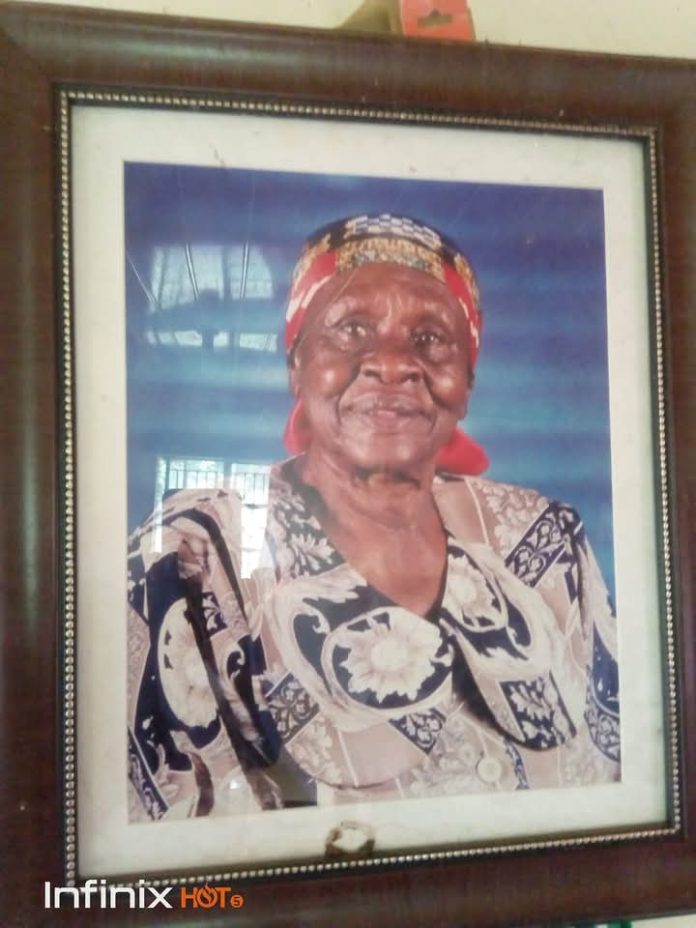
The oldest surviving grandchild to the legendary Gor Ogalo Mahia has died aged 107 in Kanjira, Rachuonyo West sub-county of Homa Bay County.

Gor Mahia was a respected seer, medicine and chief in Kanyamwa and was revered by the Luo community and from his name, Kenya’s top club Gor Mahia Football Club draws its name.

The late Truphosa Nyangaya Okeche died on January 5th 2025, hot on the heels of the demise of her great-granddaughter Fiona Neraah Amayo on 31st December 2024, who was a second-year student at Masinde Muliro University.

Fiona was the daughter of the late Jack Sawo, who was formerly one of the drivers to former Prime Minister Raila Odinga and later personal Assistant to Kisumu Women Representative Ruth Odinga.

According to the grandson Jack Okeche, Nyangaya was born on 23rd June 1918, in Gem of Rangwe constituency, to the first area chief the late Okello Ager, who became the area chief in 1920.

Okelo married Gor’s daughter Omusi and was blessed with nine children. While Gor had eleven wives who bore him 10 sons, just as history would have it, Truphosa was married at the tender age of 14 years but went back to school to study as was required by the Catholic church for 10 years before she could give birth.

Her marriage negotiations for Truphosa were led by the legendary Ojijo wuon Oteko, Lie imbo. Elly Daniel Ojijo Oteko was an African freedom fighter who fought for human and economic rights during the colonial era. He was born in 1894 and died in 1944 under mysterious circumstances. Oteko used education as his weapon against oppression and named his homestead “America“. 

The club was formally established on 17 February 1968 as a merger of Luo Union and Luo Sports Club and won the national league at the first time of asking. Some of its original leaders were politicians the late Tom Joseph Mboya and the late Jaramogi Oginga Odinga.


However, the club was founded much earlier, in 1915, and participated intermittently in local tournaments in Western Kenya. Various groups used this name at different times. Gor Mahia Football Club have won the Kenyan Premier League for a record 21 times, and have also won the FKF President’s Cup a record a record 11 times.

It is the first and only team from Kenya to win an African continental title to date, having won the African Cup Winners in 1987 after previously reaching the final in 1979.

Interestingly, the Gor Mahia team always pays homage to the Gor shrine in Kanyamwala in Ndhiwa of Homa Bay county.

Chairman of the Luo Council of Elders, Ker Odunga Randa said the death of the only surviving grandchild to the legend was sad and a big loss to the community.

Odungi said they have visited Gor’s home with former Prime Minister Raila Odinga on various accounts and the family remains important history of the community.

“Gor’s name has been a unifying factor to the community and I call upon the community leaders and members to support the family at this trying moment.” Oketche appealed to the government and leaders to support the burial arrangement for Gor’s granddaughter to get a befitting send-off.
570 needy students benefit from clan education kitty in Rangwe constituency

0

By Reporter

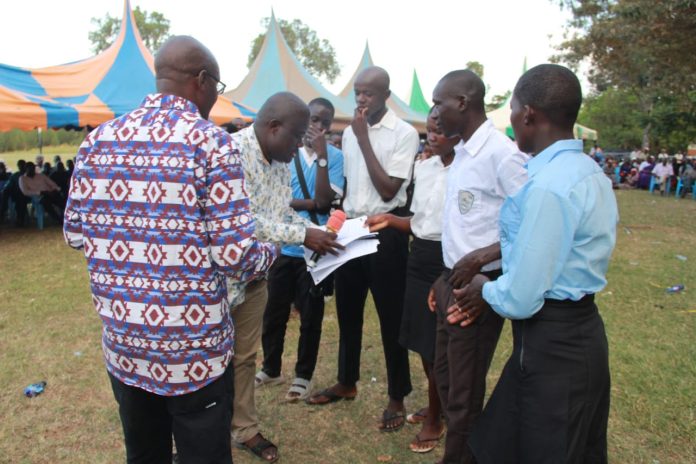
Parents of 570 needy students from the Kowili clan had a reason to smile after the education kitty paid school fees for their children.

The clan had earlier raised raised sh3.3million that was later distributed to the needy students from the community.

The Kowili clan members in Kochia ward, Rangwe constituency came up with the initiative after they realized the high rate of dropout by students as a result of lack of school fees.

Through an organization called Kowili Education Recovery, the sole agenda was to transform the community through education.

On Sunday, the community distributed cheques to 576 students at Ligisa Secondary School.

Kowili Education Recovery chairman Kennedy Ogindo said the students got money between Sh5,000 and Sh41,000 depending on the magnitude of their needs.

“The monies were given after thorough and transparent vetting of students to enable us to get the neediest. We came up with the criterion for allocating diverse amounts of money to the students based on their needs,” Ogindo said.

The majority of students learn in secondary schools but a few of them pursue their studies at tertiary colleges and universities.

“We want to uplift the standards of education of our children. Most of them are bright but can’t achieve their academic abilities due to lack of money,” he said.

During their funds drive, the chairman said members contribute funds according to their abilities and this has enabled the kitty to grow.

Committee members Tom Ong’ondo, Geoffrey Otieno and Ronald Oyugi told students to embrace good morals in their academic endeavours.

They challenged the beneficiaries to be disciplined and take seriously their studies.

“Let students demonstrate a high level of discipline and avoid posting any defamatory material in social media because this can land them in jail,” Ong’ondo said.

The students were instead urged to use digital technology only in a manner that improves their academic abilities.

“The use of social media can enable one to improve academic standards. But let our children avoid using social media to insult people,” he added.

The students were advised to work hard and remember to fight poverty in their families.

Otieno urged the students to shun peer pressure that may ruin their future as they study.

“We’ve seen cases where university students dupe their parents that they are studying yet their studies are hot air. Let them stick to their studies to achieve the objectives of this initiative,” Otieno said.

“The best way to empower a community is through education. This project will transform this community,” Oyugi said.

Parents led by Milca Adhiambo said the initiative relieved them from difficulties in educating their children.

“I was in a financial quagmire and my child could not go to school. May this programme continue,” Adhiambo said.

Revealed: Why  President Ruto was installed as a Luo elder by Ker

0

By Anderson Ojwang

Behind-the-scenes discussions by the Luo Council of Elders and the political class in Nyanza arrived and agreed to make President William Ruto and Ugandan President Yoweri Museveni Luo Elders.

According to Ker  Mzee Odungi Randa during an interview, the decision to install President Ruto as Luo elder was in line with the Luo and African  Culture and practices on defending and appreciating good neighbours and allies.

“ President Ruto has shown overtures to the Luo Community and currently he is facing a battle of his life from his political backyard of Mt Kenya.

So when he came to us when he is in dire need. Do we chase him away or help him?  As in the Luo culture and practices, you protect and cushion that person from his adversaries.

If you look at the Luo migration, we protected several communities and kings. This is what we are also doing to President Ruto.

It is also up to President Ruto to fulfil his promises to the Luo community and to guarantee opportunities to the community in his government.

The community has no reason not to support President Ruto if he fulfils what the people have asked of him. The ball is in his court to win over the community and make it his political bloc.” he said.

Randa also revealed that at Jaramogi Oginga Mausoleum, he had a private discussion with President Ruto, President Museveni and former Prime Minister Raila Odinga on the matters of peace and relationship.

“As Ker, we had a candid discussion with the three leaders and I impressed upon them on the need for peaceful co-existence and good neighborhood.

I told President Ruto that the incessant killings along Sondu must be arrested and the two communities must continue to co-exist peacefully.

We cannot afford to be burying people from both sides every now and again and the President was in agreement and promised to act.

I also pleaded with President Museveni to create enabling fishing environment for Kenyans fishermen in Lake Victoria and to end the act of rampant arrests of the fishermen and destruction of their fishing gears.

I implored upon the two leaders on the importance of peace and that was the symbolic message in the fly whisk, in which all of them agreed to initiate and ensure peace in the region,” he said.

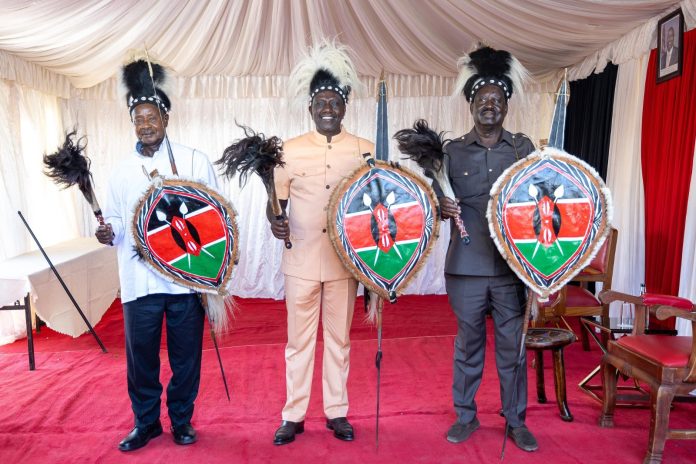
During the Piny Luo festival in Siaya which brought together  Luos from East and Central Africa, President Ruto and his Ugandan counterpart were installed as Luo Elders.

During the ceremony, Ruto and Museveni were given spears, shields and fly whisks, and were then adorned in Luo caps of leadership and authority.

President Ruto and his counterpart were also taken to Got Ramogi cultural shrines by the Luo Council of Elders and were accompanied by Raila and other leaders from the region.

Ramogi Hills has always occupied a special place in the history of the Luo. The name Ramogi is not only equated to the hill as a physical feature— it is the name of the forefather of the Luo people.

Ramogi is believed to have settled on the hill when he emigrated from Sudan, hence the name Got-Ramogi (Ramogi’s Hill).

-Situated in East Yimbo on the north-eastern shores of the Lake Victoria basin, Got-Ramogi is a hill of multiple purposes. For the archaeologist, it is a historical site rich in traditional artefacts which tell of a people’s early life.

Another unique site in the forest is Rapogi (sharpening stone) which is said to have belonged to Ramogi and was used to sharpen spears before the community went to war or during hunting expeditions.

President Ruto posted on his X handle formerly Twitter “ Got Ramogi epitomizes the deep spiritual roots and traditions that we share as a region. We will keep preserving such heritage to further our unity and drive economic prosperity in East Africa.

At Got Ramogi, the cradle of the Luo community, with President Yoweri Kaguta Museveni, African Union Commission Chairperson candidate Raila Odinga and a host of Governors, Siaya County.”

Former Nyakach MP Ochieng Daima said the decision by the Luo Council of Elders to install President Ruto as an elder was timely and in line with the Culture of defending allies.

“President Ruto is currently under storm from Mt Kenya leaders led by impeached deputy President Rigathi Gachagua. If he turns to us for support, what stops us from shielding him? We as a community are not at war with him and after all, he has accommodated some of our community members in his broad-based government.

The Luo as a community is a forgiving people who are not driven by revenge. The Luo as a community respect the institution of leadership and support the disadvantaged persons.

That is what the community is known for.   I support the council and we look forward to a symbiotic engagement between President Ruto and the Luo community,” he said.

President Ruto has continued with his political charm in Western Kenya while the Murima is nearing an implosion with political leaders in the region ungloving for a bare-knuckle attack.

Earlier before the Piny Luo Festival, Ruto was in Homa Bay for the Governor Gladys Wanga Genowa Football tournament where he was joined by former Prime Minister Raila Odinga for the event.

President Ruto hosted the New Year dance in Kisii State Lodge where he had the opportunity to share and interact with leaders and residents from the region who attended the party.

President Ruto is currently supporting Raila’s AU chairperson bid and appointed John Mbadi as Treasury and Economic Planning cabinet secretary, Mr. Opiyo Wandayi as the Energy Minister and Mrs. Dorcas Oduor as the Attorney General.

President Ruto has promised various development goodies to Nyanza in the hope of wooing them into his political circle.

The Three Faces of ODM and Jubilee: Kenya’s Political Circus

0

By Billy Mijungu

Kenya’s political landscape has always been a spectacle, but the current state of ODM and Jubilee parties reveals an unprecedented level of chaos. These once-mighty institutions, symbols of unity and purpose, are now fractured entities defined by power struggles, opportunism, and ever-shifting alliances.

ODM, a party synonymous with resistance and reform, now wears three contradictory faces. Its first face is one of collaboration with President William Ruto. Former party leaders, citing national unity, have aligned themselves with the government, abandoning ODM’s legacy of opposition. This shift has baffled many, raising questions about the party’s ideological direction.

The second face of ODM, led by Edwin Sifuna, clings to the party’s traditional role as a staunch government critic. Sifuna’s spirited resistance seeks to uphold ODM’s identity, but his efforts are increasingly isolated as internal rifts deepen. The party’s internal cohesion, once its strength, has been undermined by infighting and divergent strategies.

The third face of ODM is its internal turmoil. Under James Orengo, a faction has turned inward, engaging in bitter disputes over leadership and resources. At the same time, Babu Owino leads a breakaway group that disregards both the party’s internal conflicts and its broader political battles, leaving ODM disjointed and unable to project a unified voice.

Jubilee’s story is just as fragmented. Initially, under former President Uhuru Kenyatta, Jubilee took a strong anti-Ruto stance. However, this position has softened, with Jubilee recently submitting names for Cabinet nominees in a gesture of cooperation with Ruto’s government. This shift marks a significant departure from its earlier rhetoric, leaving many questioning Jubilee’s core principles.

Despite Uhuru’s pivot, not all Jubilee factions have followed suit. Jeremiah Kioni remains a vocal critic of Ruto, maintaining the party’s opposition stance, albeit with diminishing influence. Meanwhile, former allies of Ruto, such as Ferdinand Waititu and Kimani Ngunjiri, have also turned against him. Their criticism, however, lacks the coherence needed to galvanize meaningful opposition.

Then there is Rigathi Gachagua, who has emerged as the most formidable opposition figure against Ruto from central Kenya. Having been politically deposed within the ruling coalition, Gachagua has embraced his new role as a vocal critic of the administration he once supported. His influence among central Kenya’s electorate and his ability to rally disenchanted former allies make him a key player in shaping the region’s political future.

Compounding this political disarray is the peculiar triangle involving Uhuru Kenyatta, Rigathi Gachagua, and Kalonzo Musyoka. Uhuru speaks to Kalonzo, and Gachagua speaks to Kalonzo, but Uhuru and Gachagua remain estranged. This dynamic underscores the mistrust and personal rivalries that define Kenya’s political elite, where alliances are dictated by convenience rather than principle.

Elsewhere, Musalia Mudavadi remains a riddle. Despite holding a key position in Ruto’s government, Mudavadi’s silence on critical issues leaves many questioning his influence. His Maragoli Mafia, feeling perpetually sidelined, continues its tradition of quietly retreating rather than asserting its position. Moses Wetangula, ever the political pragmatist, is likely to align himself with whichever faction guarantees his speakership, prioritizing personal gain over ideological consistency.

Kenya’s political arena has become a theatre of disunity and opportunism, with ODM and Jubilee offering no clear direction. For the ordinary citizen, this state of affairs is deeply disheartening. Instead of leadership that addresses the country’s pressing challenges, Kenyans are left to witness a circus where personal ambition takes precedence over public service.

In this wild, weird Kenya, one truth remains: the politics of survival has replaced the politics of vision, and the nation continues to pay the price for its leaders’ unrelenting pursuit of power.

Facebook X Instagram TikTok LinkedIn
@BillyMijungu #Forward #TusongeMbele

President Museveni to Luos: Be Wealth Creators and Employers for Prosperity

0

By Anderson Ojwang

The age-long unity among the Luo community should now transition from only a political agenda to an economic one through the creation of wealth and employment opportunities.

The just concluded Piny Luo festival in Siaya, which brought community members across East and Central Africa, to showcase its socio-economic and political prowess, became a wake-up call for the community to dive into a new economic dispensation.

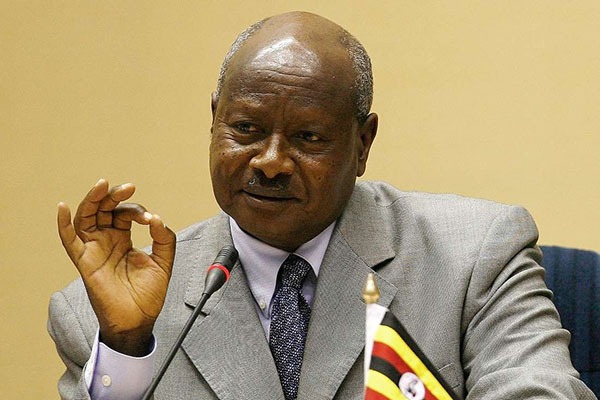
The message was capped by Ugandan President Yoweri Museveni who was the Chief Guest at the event, who challenged the community and its leadership to explore and exploit the four sectors of the economy to create wealth and employment opportunities.

“ I was invited to the Luo East Africa meeting by President William Ruto and former Prime Minister Raila Odinga. This unity is a good move and we envisage it for East and Central Africa to develop economically. You people are good, you play football, that is good. But we must be wealth creators.

It’s good to be in sports but we need to understand the east Africa market and its economy. I am a farmer, I am in agriculture, I look for market and Ugandan market is not enough.

I have seen several youths, I want to educate them on wealth and employment creation and where they come from. There is always a problem with the poor. They do not know where wealth comes from.

In Uganda, we have four sectors where wealth comes from and through it we are able to create employment. Wealth, where does wealth come from? The poor do not know where wealth comes from.

The four sectors that wealth comes from in Uganda are Agriculture, Business, Service, and Technology (Computers). Sports and hotels are service sectors among others.

People talk about employment and where does it come from? It comes from the wealth creators who employ people.

In Africa, I hear people talk about employment but they do not say where employment comes from. Employment comes from the wealthy.

The wealth is mine but I employ people and they get work. So you people, it is good you play football and we are happy. But you must remember about life. Life is not only about football or sports, we must create wealth in order to create employment.

So where do the wealth and employment opportunities come from? I have told you about the four sectors. In any sector that you venture into, you will be able to create wealth.

All these sectors require a market. The Kenyan market is not enough that is why we are discussing the East Africa market.

You need to understand the importance of the East Africa market; For instance, the United States of America (USA), has economic strength mainly because of the large market.

In their neighbourhood, there is Latin America. They have vast wealth but live in abject poverty. The reason is that they do not have an adequate market.

I cannot come here and fail to talk about economic dispensation and independence. I am a wealth creator back at home, I am in Agriculture and keep commercial livestock.

I am in dairy farming just like the Kenyan Maasai. I grow bananas. I have to look for a market. The Ugandan market helps me but it is not enough, that is why I am saying as East Africa, Let us unite to get a bigger market.

That is why I am grateful to witness the Luo festival, it is a vehicle to build a united East Africa and Central Africa,” he said. The poverty index in Nyanza, Kenya varies by the percentage of households below different income levels: 

 Percentage of poor households: 94.0%
 Percentage of poorer households: 77.2%
 Percentage of poorest households: 47.3%

Nyanza is one of the most deprived regions in Kenya, with poverty indices ranging from 38% to 49%. The region has seen a decline in formal sector and industrial activities, which has led to unemployment, poor education, and poverty.

The collapse of Kisumu Cotton Mills (KICOMI) eventually led to the death of cotton farming in Nyanza which was one of the main revenue earners for the region.

Equally, the sugar cane sector has for the last four decades been on the death knell until the recent initiative by President Ruto that has witnessed a resurgence in the sector.

Matriarch and former Karachuonyo MP Mama Phoebe Asiyo said President Museveni’s advice was timely and that the community should use its unity for economic empowerment.

“The Piny Luo festival was a positive move but now we must translate it into an economic agenda to create wealth and riches for the community. It is time we dedicated our strength and knowledge to an economic agenda,” she said.

Mama Asiyo who spoke to Western Insight from the USA said the Luo unity had propelled the community to greater heights in politics and that it was time to usher the economic agenda in the unity to
make it wealth and employment creators.

Mama Asiyo challenged the governors, professionals and leaders from Nyanza to take up the leading role in the re-engineering of the region’s economic agenda for prosperity.

Raila recently declared that he had vacated Kenya’s political scene for Africa, where he contesting the African Union chairperson seat in an election that is scheduled for February this year.

After the fallout between the founding President the late Mzee Jomo Kenyatta and his deputy the late Jaramogi Oginga Odinga, the Luo community became marginalized by the subsequent government and became at the heart of the country’s opposition politics.

KNCHR chairperson,Roseline Odede dies aftershort illness

0

By Anderson Ojwang

The chairperson of the Kenya Commission of Human Rights (KNCHR) Mrs. Roselyn Adhiambo Odhiambo Odede is dead.

Mrs. Odede died on Friday 3rd after a short illness according to the press statement released by the Commission’s Vice Chairperson Dr Raymond Nyeris.

“Her untimely death is a big blow to the Commission and Nation at large, as a Commission we had the privilege of serving with Roseline Odede as the chairperson at the helm of KNCHR’ s leadership ,” he said.

During this period of mourning, we send our message of condolences and heartfelt sympathies to the family, friends and all those who knew Roseline. May the memories of her exceptional services bring comfort and strength in this difficult time,” he said.

Odede, an Advocate of the High Court, was the former Judges and Magistrates Vetting Board Vice-Chairperson.

Odede was instrumental in mentoring upcoming lawyers mostly from North Rift and top advocates from the region owe their success to her and her law firm.

In January 2017, then President Uhuru Kenyatta appointed Wafula Chebukati as the chairperson of the Independent Electoral and Boundaries Commission (IEBC), though it was rumoured that Odede had emerged top in the interviews, but was not selected.

“It is true that I was interviewed and emerged with the highest score.

I cannot tell why I was not picked, anything I state would be merely speculative. I am aware the chairperson is picked by the president from two names forwarded to him, so it is not a given that the top-performing candidate gets the job.

I am also a strong believer, and I asked God that if it is His will, I would get the opportunity, so I believe it was not God’s will for me,” she told The Standard in an interview in early 2017.

Boost to fish farmers as LBDA modern fish hatchery plant to begin operation in March

0

By Anderson Ojwang


Lake Basin Development Authority (LBDA) has taken a bold step to revolutionize fish farming in the Lake Victoria region through the construction of a modern hatchery plant in Kisumu.

The Managing Director Mr. Wycliff Ochiaga said the modern hatchery plant at Kibos ITTC has an annual production of 12 million fingerlings that will go a long way in boosting fish farming in the lake region.

“The completion of the modern hatchery plant at Kibos ITTC, with a production capacity of 12 million fingerlings annually effective March 2025, will revolutionize fish farming in our region,” he said.

In his New Year speech, Ochiaga said LBDA’s strategic partnerships with educational institutions have further enhanced innovation and knowledge dissemination in aquaculture.

Fingerling farming is a key part of fish cage farming in Lake Victoria, where fish farmers demand more fingerlings to stock their cages: 


The demand for fingerlings has increased as cage fish farming has become more popular in the region. 
The Kenya Marine and Fisheries Research Institute (KMFRI) estimates that there are over 6,000 fish cages on the Kenyan side of Lake Victoria, and each cage can produce one ton of fish per year.

“The year 2024 has been a testament to our collective resilience, innovation, and unwavering commitment to the transformative agenda of the Lake Basin Development Authority (LBDA),” he said.

In the spirit of our national ethos, we have made significant strides in various sectors. Similarly, the MD said LBDA was supporting rice farmers through the state-of-the-art rice mill commissioned in August 2024, which has increased milling capacity by 30%, improving livelihoods and ensuring food security.

The new mill has a capacity of 4 tons per hour, fully pneumatic compared to the old mill which was fully mechanical, with an installation capacity of 3.5 tons per hour that had reduced to an average of 0.87 tons per hour at the time of replacement.

The first machine at the mill was installed in the year 1196 with an installation capacity of 3.5 tons per hour which translates to 24,000 metric tons per month.

The milling capacity had significantly reduced over the year to an average of 0.87 tons per hour due to continuous wear and tear, depreciation, lack of spares and outdated technology which rendered the machine very inefficient.

Ochiaga said the Authority has actively participated in national efforts to increase tree cover by planting over 200,000 trees and implementing 15 water projects in schools and communities to ensure access to clean water and promote environmental stewardship.

“We have strengthened collaborations with various stakeholders and this has enhanced our capacity to deliver on our mandate. We have showcased our achievements through various platforms, reaching a huge audience, highlighting the impact of our work in sectors such as Rice farming, Fish farming and beekeeping,” he said.

Ochiaga said LBDA has also faced some teething challenges that has negated full achievement of their agenda.

He said despite modernizing the processing plant, the Ndhiwa beekeeping project has experienced slower-than-expected uptake.

“ I encourage the need for increased community engagement and support to fully realize the potential of this initiative, We will intensify community outreach and support to boost participation in the Ndhiwa beekeeping initiative, ensuring that the modernized processing plant operates at full capacity, ” he said.

He said erratic weather patterns have impacted negatively on the agricultural production and water availability, necessitating adaptive strategies to ensure sustainability.

“We are committed to enhancing the skills and well-being of our staff through targeted training programs and welfare initiatives, recognizing that our people are our greatest asset. Leveraging technology to improve efficiency, monitor projects, and engage stakeholders effectively will be a cornerstone of our strategy,” he said.

Relief for Homa Bay parents as County Government releases Sh.215M for Scholarship

0

By Habil Onyango


A section of Homa Bay parents have a reason to smile after the County Government released Sh.215million Fins to fly education scholarship fund on Friday.

The fund is set to benefit 480 needy but brighter students who are proceeding to form two and three in various Secondary Schools across the Country.

This comes at a time when the Schools are set for re-opening next week.

The initiative which was initiated three years ago, caters for the students by paying their full school fees, a whole year shopping and pocket money.

Speaking when she presided over the distribution of the distribution of the funds, Homa Bay Governor Gladys Wanga said that they have decided to distribute the funds early enough to allow all the students to get back to school in time without any itch.
 

She said her government will continue to support the beneficiaries by paying for their school fees and providing other basic needs up to the University level.

The Governor said that as a County Government, they made a deliberate decision that will ensure that no brighter and needy students will be left out of going to school.

“The Fins to swim Scholarship fund caters for the needy and brighter students whom some are total orphans, partial orphans or those whose parents can not cater for their School fees and provide for other basic needs,” said Wanga.

“This year we are distributing the funds to the first and the second cohort who are currently joining form two and three respectively,” she said.

The Governor however revealed that this year there will be no new beneficiaries joining form one due to the introduction of Curriculum Based Curriculum since no pupil sat for the Kenya Certificate of Primary Education last year.

Wanga however assured the parents that next year they will enrol another 240 pupils from all the 40 wards across the County who will be joining the Secondary level.

“I am very happy that the Lord has taken care of all our students who benefitted from the program for the gift of life and good health,” said Wanga.

According to Wanga, the selection of the beneficiaries is done through an open and accountable process through village clusters at the village level which ensures that the most needy learners get an opportunity to benefit from the kitty.


Wanga however advised the students to ensure that they remain focused in their studies, respectful, dutiful, responsible, considerate, kind and compassionate.


“I want to advise you to take the opportunity to make something greater out of your lives, even when we are gone you are the ones who will have an opportunity to hold other needy but needy student’s hand in your generation,” advised Wanga.

The beneficiaries were selected from some of the learners who scored 350 marks in their KCPE with six students being selected from each of the 40 wards each year.

“You are among the best students in our County and your target should be a B+ and above, no short of that since while in school there is nothing you people lack and there will be the time you will be sent home for school fees, the only thing is to focus on your studies,” said Wanga.

During the occasion, the Governor rewarded a number of students who featured in the top 10 in the last examinations.

A part from the scholarship fund Wanga revealed that they are continuing with the distribution of ward bursary funds at the tune of Sh215M in all 40 wards ahead of the re-opening of Schools to benefit other students.

The bursary is set to benefit other students who are in various day and boarding Secondary Schools who might have not succeeded in getting the scholarship.


“We are committed and focused on assuring that every student in Homa Bay is accorded an opportunity to pursue their dreams through education,” said Wanga.

“During my tenure as the County Governor, no child will miss an opportunity to go to school for lack of School fees, not under my watch,” she said.

Odede’s Arrest

0

How the Colonial Chief betrayed Odede to detention

By Anderson Ojwang

The history of Kenya’s political struggle for independence witnessed sacrifices from patriots who laid their lives for the country.

Among them was the late Fanuel Walter Odede, fondly nicknamed Rachilo by his peers.

He was an alumnus of the prestigious Maseno School and a veterinary lecturer at Maseno College.

Odede was among the pioneer students of Maseno school and was prominent in the provision of education to Africans during the colonial period.

He attended school in Maseno, moving on to Alliance High School where he qualified to attend Makerere
College. He graduated with a degree in Veterinary Science.

Odede became a major political player and became a cog within the Kenya Africa Union (KAU) and a close
associate of Mzee Jomo Kenyatta.

He formed the Kenya African Union, along with Joseph Murumbi and Pio Pinto.

After the arrest of Kenyatta and subsequent detention in 1952, where he became among the Kapenguria Six arrested and charged with masterminding the anti-colonial Mau Uprising, a new leader of KAU had to be found.

In the new leadership structure, Odede became the KAU acting chairman while Kenyatta was still in
detention and continued to propagate the ideals of KAU countrywide.

Odede took over the leadership of KAU in an acting capacity but he too was arrested on March 8, 1953,
again on suspicions of sympathizing with the Mau Mau.

KAU was eventually banned on June 8, 1953, eight months into the Emergency. Nairobi lawyer Mr. Patrick Ouya says Odede and the colonial paramount chief Gedion Magak were close friends and the friendship was in public knowledge.

Mr. Ouya a relative of the late Chief Magak says the colonial government had declared a crackdown on KAU officials and members and Odede was on the run to avoid arrest and sought asylum from his friends.

Chief Magak invited Odede to his home and promised him that he could meet some leaders and have a political conversation with them

“But little did Odede know that his friend had tricked him and informed the administrators of his would-be presence in his home. So when Odede arrived and stayed for a few hours a contingent of police officers arrived, surrounded the home, and arrested him,” he says.

Chairman of Luo Council of Elders Mzee Odungi Randa says with the detention of Kenyatta and other
members of KAIU, Odede took over the leadership and crisscrossed the country to promote the ideals
and ideology of the organization.

“Rachilo was a close friend of Kenyatta and a pillar in KAU. That is why he became the acting chairperson of the organization,” he says

But for Odede, his trip to Nyanza, Oyugis was his Waterloo as he was allegedly betrayed by the paramount chief Gedion Magak to the colonial administrator based in Kisii.

The paramount chiefs were collaborators and informers of the colonial administration and through
this, the late Chief Magak allegedly betrayed Odede to the Colonial administrator and he was arrested.

Although protesting his innocence—a view shared by later historians—he was detained. He remained imprisoned at Kwale and Maralal until 1957 and was then held in restriction in Samburu until 1960.

He was highly regarded by British constituents and was considered to be a moderate African leader. He was opposed to violence and hoped for interracial harmony.

Luo’s Reboot Cultural Celebrations , It’s a Renaissance like no other.

0

By Billy Mijungu

December has, and perhaps always will be, a month of profound significance for the Luo community. It is a time when Luos across the globe congregate unapologetically and with great zeal for familial, cultural, religious, and professional reconnection. Whether in homesteads by Lake Victoria or in bustling urban centres worldwide, December is our month of togetherness.

The past year has showcased an inspiring cultural renaissance, with events that have reaffirmed the Luo spirit and heritage. The Luo-Abasuba Rusinga Festival, a jewel of our cultural calendar, set the tone with its vibrant celebration of art, music, and oral histories. Hot on its heels came Sigand Nyi Nam, the storytelling frame that brought to life the mythical and historical narratives of the Daughters of the Lake. The festivities crescendoed with the Piny Luo Festival in Siaya, a spectacular gathering that celebrated the essence of Luo identity.

Looking ahead, Migori will host the next edition of the Piny Luo Festival, a responsibility that requires robust preparation. It is my hope that Migori will rise to the occasion, perhaps even boasting a modern stadium worthy of such a monumental event.

Beyond the festivities, this recent wave of cultural consolidation marks a poignant moment of reflection. It harks back to the days of the Luo Union, established under the stewardship of Jaramogi Oginga Odinga. The Union was not merely a cultural hub but also an economic engine that unified Luos across Africa and beyond. Today, as we revel in our shared heritage, it is worth pondering: Are we fully harnessing the potential of these gatherings to drive socio-economic transformation?

This is our fault line, our Achilles’ heel. Cultural celebrations, while essential, should be more than an end in themselves. They must evolve into platforms for economic empowerment, innovation, and collective growth. The Luo Union’s legacy offers a blueprint we cannot afford to ignore.

As Kenyans, the resurgence of Luo cultural pride is a clarion call. It challenges us to envision similar gatherings for all 54 ethnic groups in Kenya, a mosaic of celebrations that could redefine our national identity. Imagine the strength and unity this could foster, not just within our communities but across the entire nation.

The Luos have lit the torch. It is now upon us all to carry it forward, to reboot our cultural frameworks, and to chart a collective future that blends tradition with progress. Let this be the beginning of a cultural renaissance, not just for the Luo but for Kenya as a whole.

The writer is a political commentator.