
Home Blog Page 211

Kenya ripe for KSH500 Billion Diaspora Bond says Mudavadi

0
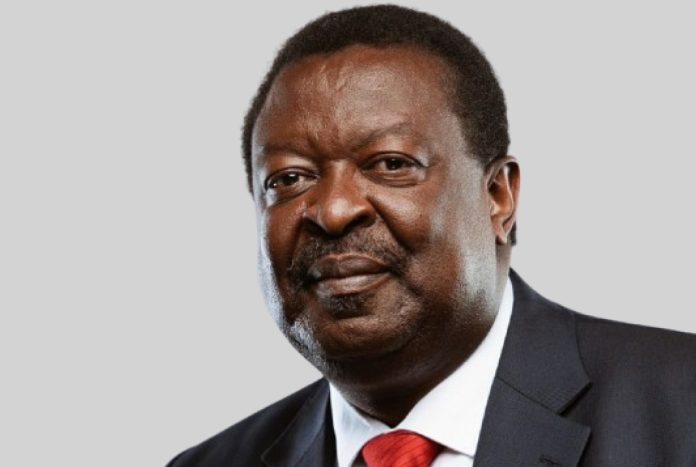
Musalia Mudavadi Prime Cabinet Secretary of

By OPCS Press Service

Prime Cabinet Secretary Musalia Mudavadi has said Kenya is now ready for a Diaspora bond to fund large infrastructural projects, such as constructing a new airport at Jomo Kenyatta International Airport (JKIA).

Mudavadi noted that the government could raise up to Sh500 billion from the Diaspora bond, which could fund a complete overhaul of the international airport at approximately Sh300 billion, with another Sh200 billion allocated to other significant infrastructural projects.

Speaking during Diaspora Day at KICC, Mudavadi said the Diaspora bond had been utilised successfully by other countries for their national projects and emphasised that it was time for Kenya to adopt the same approach for its cost-intensive initiatives.

“With Sh500 billion that we can raise from the Diaspora, we can either build a new airport at Sh260 billion to about Sh300 billion, or we can decide to expand a dual road to connect with Uganda or even extend the Standard Gauge Railways (SGR),” said Mudavadi.

The Prime Cabinet Secretary noted that the Indian Diaspora bond was oversubscribed by $5 billion a few years ago, and Israel had raised up to $50 billion over time to build its economy.

Mudavadi also disclosed that the government was working on the Diaspora bond with technical support from the World Bank’s Multilateral Investment Guarantee Agency (MIGA).

“This instrument will offer Kenyans abroad a secure investment while diversifying the source of financing for government projects. While providing a competitive return on investment, the bond will help Kenya to systematically move away from costly foreign loans to support its infrastructure and other capital development projects,” said Mudavadi.

Additionally, as Cabinet Secretary for Foreign and Diaspora Affairs, Mudavadi stated that the government’s focus on the Diaspora was informed by their growing contribution to Kenya’s socio-economic development, mainly through remittances, investment, and knowledge transfer.

“In the first 10 months of this year, remittances increased to a record $4 billion (over Sh520 billion), which is a remarkable increase of 17.8 percent compared to the $3.46 billion received during the same period in 2023,” said Mudavadi.

The Prime Cabinet Secretary highlighted that the growth in remittances cemented their position as Kenya’s largest foreign exchange earner, exceeding the combined earnings from coffee, tea, horticulture, and tourism. He projected that remittances could grow to Sh1 trillion by 2027.

Mudavadi also addressed the perception among Kenyan youth regarding President Ruto’s international travels, stating that the success of Diaspora remittances should clarify the importance of such engagements.

“Kenya does not live in isolation; we must always engage with the rest of the world. By 2027, we are even projecting a rise to Sh1 trillion in Diaspora remittances. This money has and will continue to help us stabilise the value of the shilling. The remittances, alongside government interventions, have already brought the dollar down from Sh169 to now Sh129,” said Mudavadi.

He acknowledged the sacrifices of Kenyans abroad who diligently send money home, directly impacting sectors such as education, healthcare, small business enterprises, housing, gender equality, rural development, and poverty alleviation.

“We can enhance this contribution, particularly if we reduce the cost of remitting money from an average of six percent to the Sustainable Development Goals target of three percent. I wish to assure you that the government will work with all stakeholders to align with the SDG’s universal value of ‘Leave No One Behind.’ Our primary goal is to achieve inclusivity and deepen access to affordable digital remittance and financial services,” he said.

Another key focus of government engagement with the Diaspora, Mudavadi said, is knowledge and skills transfer, enabling the country to benefit from initiatives that support the Bottom-Up Economic Transformation Agenda priorities and Kenya Vision 2030.

The Prime Cabinet Secretary further stated that President William Ruto’s administration was implementing the Global Labour Market Strategy to secure quality job placements for Kenyans abroad. This includes deliberate efforts to engage other countries through bilateral labour agreements and MOUs to expand opportunities, particularly for the youth.

“As we do this, we are committed to enhancing our capacity to offer timely and effective consular services, ensuring the rights of every Kenyan outside our borders are protected. I can confirm our readiness to do exactly this. The State Department for Diaspora Affairs has officers on call 24/7 to address Kenyan Diaspora issues and concerns,” said Mudavadi.

Dr Roseline Njogu, Principal Secretary for the State Department for Diaspora Affairs, stated that there are over four million Kenyans in the Diaspora and emphasised their commitment to increasing this number.

“Our interest is to ensure that we have more Kenyans across the world and that they are safe, going about their lives knowing that the government cares for every Kenyan life,” said Ms Njogu.
Why Kenya Must Merge All Education Funding Under One Docket

0

By Gabriel Riako

Education is the foundation of Kenya’s development, yet our approach to funding it remains disjointed. Constituency Development Funds (CDF), county bursaries, and national scholarships all operate independently, often overlapping, duplicating efforts, or worse, leaving deserving students without any support. It’s time for Kenya to streamline these resources under one centralized docket to ensure fairness, transparency, and efficiency.

Take a moment to think about how fragmented the current system is. A student in one constituency might receive funding from multiple sources, while another in a neighbouring county struggles to find even one bursary. This inequity isn’t due to a lack of resources but poor coordination. Centralizing educational funding would help Kenya create a more equitable system where resources are allocated based on actual needs, not geography or political connections.

The current structure is riddled with inefficiencies. Parents are forced to navigate a maze of application processes, each with its own rules and deadlines. This burden disproportionately affects families in rural or marginalized areas who already face barriers to accessing information. A single application process under a unified system would ease this strain, ensuring all students have an equal chance to benefit.

Corruption and mismanagement are also rampant in the fragmented system. How many times have we heard of bursaries going to the well-connected instead of the needy? A centralized body with standardized procedures for auditing and reporting would help close these loopholes. Transparency and accountability would be strengthened, restoring public confidence in how educational funds are managed.

Furthermore, merging education funding would allow the government to take a holistic approach to the sector. Education doesn’t exist in isolation; it requires investment in infrastructure, teacher training, and curriculum development. A unified funding system would align resources with national education priorities, ensuring every shilling contributes to the bigger picture.

Critics may argue that such a move is logistically complex and politically risky. Yes, it will require strong political will, legislation, and stakeholder engagement. But the benefits far outweigh the challenges. Imagine a Kenya where no student is left behind because of where they were born or who they know.

As the country works to implement the Competency-Based Curriculum (CBC), the need for cohesive planning and funding has never been more urgent. Fragmented funding systems cannot support the infrastructure, teacher training, and materials required for such a comprehensive reform.

The call to merge education funding isn’t just about money—it’s about fairness, opportunity, and the future of our children. It’s about ensuring every Kenyan child, regardless of background, has the chance to succeed.

The time to act is now. Kenya must bring all education funding under one docket, not only to simplify processes but to ensure we deliver on the promise of quality education for all. Let’s stop wasting resources on inefficiencies and instead invest in a brighter, more equitable future for our nation.

Gabriel Riako is a passionate advocate for education reform in Kenya.

Farmers in Migori County to Benefit from Solar-Powered Drip Irrigation Kits

0
Lake Region Development Programme (LRDP), Child Fund, and Solar Powered Water Drip Energy (Spowdi).

By  Erick Otieno

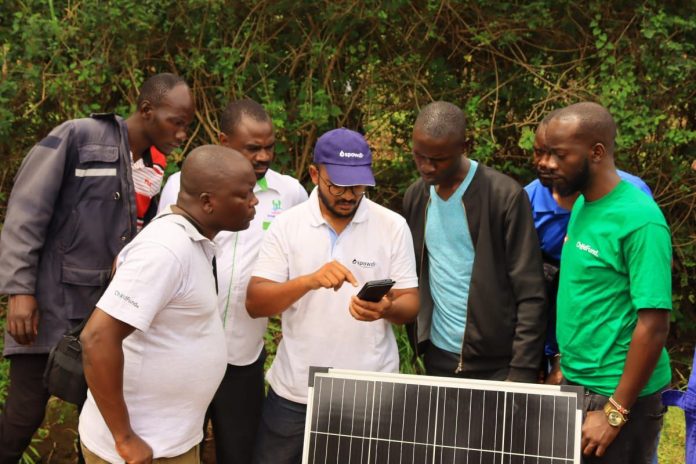
Farmers in Migori County have a reason to smile following a collaborative initiative by the Lake Region Development Programme (LRDP), Child Fund, and Solar Powered Water Drip Energy (Spowdi).

The organizations have introduced an innovative solar-powered irrigation kit designed to enhance food security among smallholder farmers.

The new technology, which relies solely on solar energy, was piloted last week in Nyamosense Komosoko Ward in Kuria West and North Kadem Ward in Nyatike Sub-County.

Speaking during the launch, Mr. Harish Reddy, a Spowdi associate from Sweden, assured farmers that the irrigation system is user-friendly and affordable. “This technology requires only sunlight to operate. Farmers only need a water source deeper than five meters where the motor will be submerged and powered using solar panels,” he explained.

Mr. Peter Shikuku, the Chief Executive Officer of LRDP, emphasized the transformative potential of the irrigation kit. “This system will not only ensure food security for smallholder farmers but also enable them to produce surplus for sale in the market,” he noted.

The kits, which are tailored for drip irrigation, are especially effective for high-value horticultural crops such as kales, cabbages, tomatoes, and watermelons. Pioneer farmers from the two wards have already received the kits for use on their farms.

Child Fund, a key partner in the project, is funding LRDP’s activities, which include economic empowerment, education, livelihood transformation, and adolescent health. LRDP operates in Migori, Kisii, Nyamira, Siaya, and Homa Bay, among other counties in the Lake Region Economic Bloc.

The solar-powered irrigation kits will retail at Ksh. 130,000, providing a sustainable and eco-friendly solution for irrigation.

This initiative is expected to boost agricultural productivity and improve the livelihoods of smallholder farmers in Migori County and beyond.

KCB opens first-ever bank branch in Kendu Bay town to spur development 

0
KCB opens first-ever bank branch in Kendu Bay town

By Hope Barbra

After six decades without a commercial bank, Kendu Bay will finally witness Kenya Commercial Bank’s move to open a branch in the area. 

After lobbying from the local politicians from Rachuonyo North and West sub-counties and the larger Homa Bay county, KCB has taken up the challenge to open the first branch in the area. 

Local investors have constructed premises in anticipation of a future commercial bank opening in the area, and the opening of the branch is sweet news to them. 

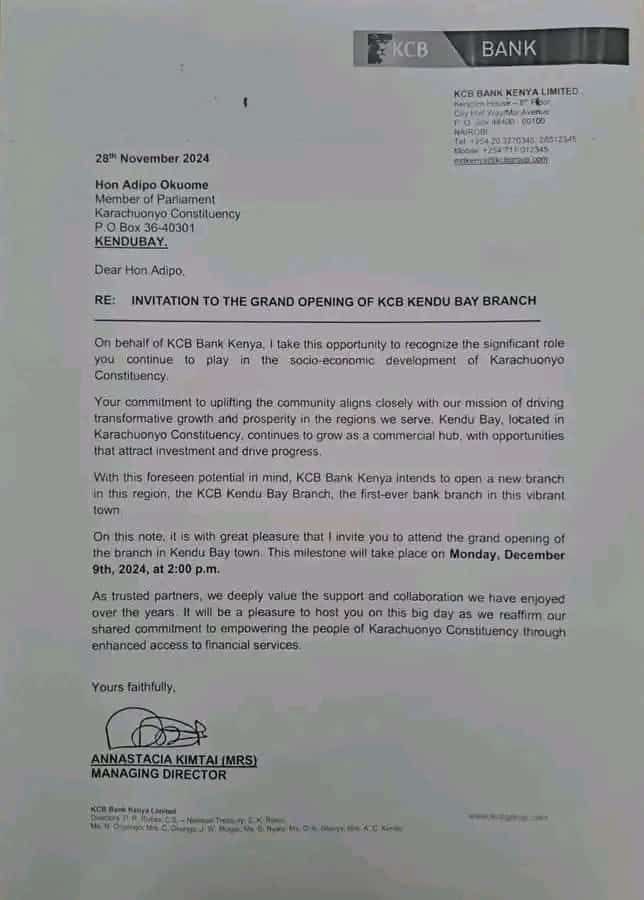
In an invitation to the area Mp Adipo Okuome by the KCB management, of their intention to open a KCB branch in Kendu Bay. 

KCB managing director  Mrs Annatacia Kimtai said Kendu Bay has potential and has continued to grow as a commercial hub in the region. 

“With the foreseen potential in mind, KCB Bank Kenya intends to open a new branch in this region, the KCB Kendu Bay Branch, the first-ever bank branch in this vibrant town,” she said. 

The branch will be officially opened on 9th December 2024 when it will begin to serve the residents 

Residents and business communities in the area welcomed the opening of the first-ever bank branch terming it as a milestone. 

They said the bank will stir new economic activities and will build confidence in investors to invest in the area. 

Kendu Bay and larger Karachuonyo have witnessed significant economic development in the recent past and the opening of a bank branch is an addictive to the growth. 

Kendu Bay-based women leader Rosemary Ashley Ochuka said the opening of the bank in Kendu Bay was long overdue and a wonderful Christmas gift to the residents 

“Finally, the local business persons, residents and investors have a bank within the reach. This will go a long way to open up the region. We will come KCB to Kendu Bay”  she said

Migori County Government Expands Executive Team for Enhanced Service Delivery

0
Governor Dr George Mbogo Ochilo Ayacko

By Erick Otieno

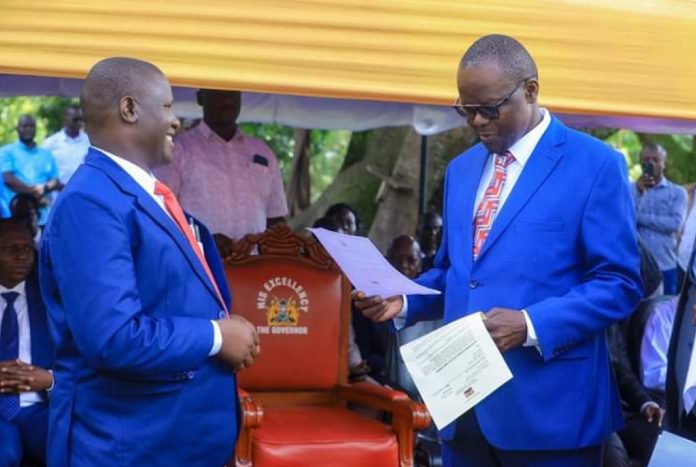
The Migori County Government, under the leadership of Governor Dr George Mbogo Ochilo Ayacko, has taken a bold step to strengthen its capacity for service delivery by appointing new executives to key government positions.

The announcement was made during a ceremony held at the Governor’s official residence in Migori, where the newly appointed leaders were officially sworn in.

In his address, Governor Ayacko emphasised his administration’s unwavering commitment to improving the lives of Migori residents through robust and innovative service delivery strategies.

“Our top priority is to ensure that every resident of Migori County benefits from effective governance and impactful development initiatives. The appointments we are making today reflect our dedication to building a government that works for the people,” said the Governor.

The new team includes:

  1. Mr Silas Owuor Onyango – County Executive Committee Member (CECM) for Water and Energy.
  2. Mr Samwel Keboreko Marwa (Nyabasi West) – Chief Officer for Cooperative Development and Marketing.
  3. Mr Keya Madafu Isaac (South Kanyamkago) – Chief Officer for Agricultural Development.
  4. Mr Gershon Okoth Njoga (South Kamagambo) – Chief Officer for Roads and Transport.
  5. Mr Nicholas Ngabiya Rioba (Tagare Ward) – Chief Officer for Monitoring and Evaluation.
  6. Mr Collins Oduogo Oyugi (Kwa Ward) – Chief Officer for Public Works and Infrastructure Development.

The appointments reflect a balanced representation across the county, ensuring inclusivity and a shared vision for growth. Each appointee is tasked with steering critical departments that will shape the future of the county.

Governor Ayacko was joined at the event by Deputy Governor Dr Mahiri Gimunta, County Public Service Board Chair Eng David Ochola, and several Members of the County Assembly (MCAs), who lauded the Governor’s choices as reflective of professionalism and dedication to public service.

The newly appointed officials pledged to deliver on their mandates, promising to bring transformative changes to their respective departments. “We are ready to roll up our sleeves and work tirelessly to ensure the vision of Governor Ayacko’s administration is realised,” said Mr Silas Owuor Onyango, the new CECM for Water and Energy.

This expansion of the county’s executive team marks a renewed focus on key development areas such as water, energy, infrastructure, agriculture, and monitoring and evaluation. The move is expected to enhance efficiency in governance and accelerate the county’s development agenda.

The people of Migori County now look forward to seeing tangible results from the newly empowered leadership as they work together to transform the county into a hub of prosperity and opportunity.

Mbadi: I had to avoid falling to ‘pre-independence leadership mistake’ by Jaramogi

0
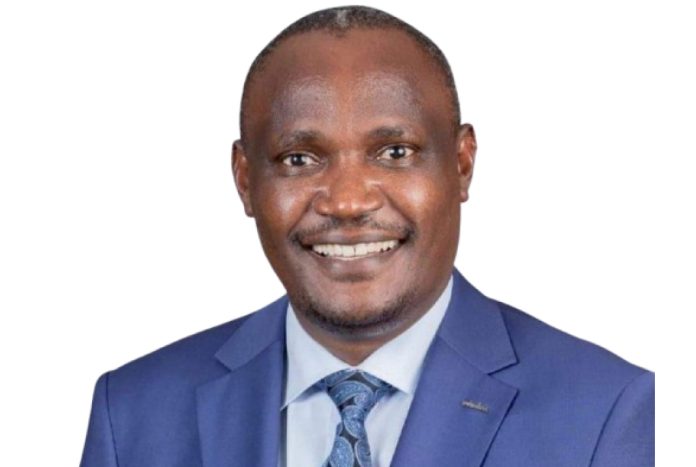
Hon. John Mbadi Cabinet Secretary (CS) for The National Treasury and Economic Planning

By Anderson Ojwang

The ghost of a pre-independence decision by the late Jaramogi Oginga Odinga regarding the country’s leadership has resurfaced in discussions surrounding the formation of a broad-based government between President William Ruto and opposition leader Raila Odinga.

In their negotiations, President Ruto and Raila agreed to allocate the position of Cabinet Secretary for Treasury and Economic Planning to the Orange Democratic Movement (ODM), specifically to the Nyanza region.

The role was offered to the then ODM National Chairman, John Ngongo Mbadi, who was deemed the most suitable candidate. The two leaders informed him of their intention to appoint him as Cabinet Secretary, a position that holds significant national importance.

Speaking at a function in Nyando, Mbadi recounted, “First, I want to address the people of Nyando and the Luo community. When Raila and Ruto spoke to me, they said, ‘Mbadi, we want to appoint you to the Executive, and specifically to Finance.’

There are two reasons I accepted this appointment. First, I had a personal reflection. In the Luo community, there is a story often told: Jaramogi Oginga Odinga was reportedly offered the presidency by the colonialists as Kenya approached independence. However, he declined, insisting it be given to Kenyatta, believing his (Jaramogi’s) time would come later.

To this day, we are still waiting for that presidency, and it has yet to come. Even now, we hold great respect for Jaramogi for his contributions to the nation. However, we mourn the decision, acknowledging that it might have been a mistake. Had he taken the leadership at independence, Kenya’s history might have been different.

I did not want to be part of the group the Luo community would blame for refusing a leadership opportunity. Since 1963, the Luo community has never held the Ministry of Finance, the granary of the nation. If I, John Mbadi, am offered the position and I refuse, no way! I said I would not decline. I want to be the CS.”

However, Nairobi-based advocate Patrick Ouya disagreed with Mbadi’s perspective. He argued that Jaramogi was a principled politician who was not driven by the allure of power, which is why the Luo community remains respected to this day.

“Jaramogi did not seek power through shortcuts but rather through clear and well-defined structures. The current generation of politicians is transactional and self-centred,” Ouya remarked. He described Jaramogi as a man of virtue who sacrificed his ambitions for the greater good of the nation.

The late Mzee Jomo Kenyatta became Kenya’s founding father, with Jaramogi Oginga Odinga serving as the first Vice President. However, the two later fell out. Oginga resigned from government and founded the Kenya People’s Union (KPU), which marked the beginning of the Luo community’s journey in opposition and subsequent marginalisation.

Jaramogi played a pivotal role in the repeal of Section 2A of the Constitution and was a founding member of Ford. However, Ford split into two factions: Ford Kenya, led by Jaramogi, and Ford Asili, led by the late Kenneth Matiba, in 1992.

President Daniel Moi won the 1992 elections, with Matiba coming second, Mwai Kibaki third, and Jaramogi fourth. Notably, Jaramogi returned to Parliament for the first time since his resignation.

Raila Odinga succeeded Jaramogi and has since made five bids for the presidency—in 1997, 2007, 2013, 2017, and 2022—but has not secured the seat. Recently, Raila exited local politics to vie for the position of Chairperson of the African Union, with the support of the government. He handed over party leadership to Kisumu Governor Prof Peter Anyang’ Nyong’o.

Mbadi justified the community’s decision to join the government, saying, “Let me tell you, my people, being in government is not a bad thing. Recently, when I spoke with the President, he asked me, ‘Mbadi, what strategies can we use to create employment?’

The number of youths graduating from colleges is immense, and the government cannot employ them all. Instead, it must create an enabling environment for industries to emerge and generate job opportunities.

I told him we need to strategise on the development of industries, particularly special economic zones. The President agreed and directed that sufficient funds be allocated in the upcoming budget to continue the special economic zone project in Kisumu at Kibos.”

Mbadi emphasised the Luo community’s significant contributions to national development, urging fairness in the distribution of resources. However, he expressed disappointment at the community’s marginalisation during resource allocation, often being given the least.

“It is time to ensure fairness in the distribution of the national cake and to put an end to skewed resource allocation,” he concluded.

Acting KSB CEO Jude Chesire elected as vice Chairman of the International Sugar Organisation. (ISO), in London.

0
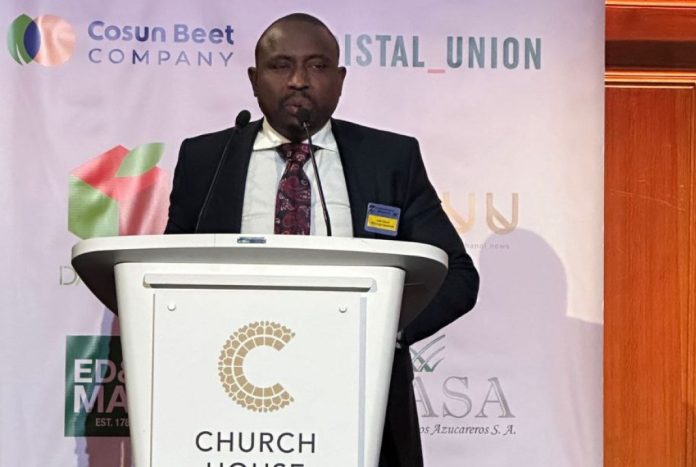
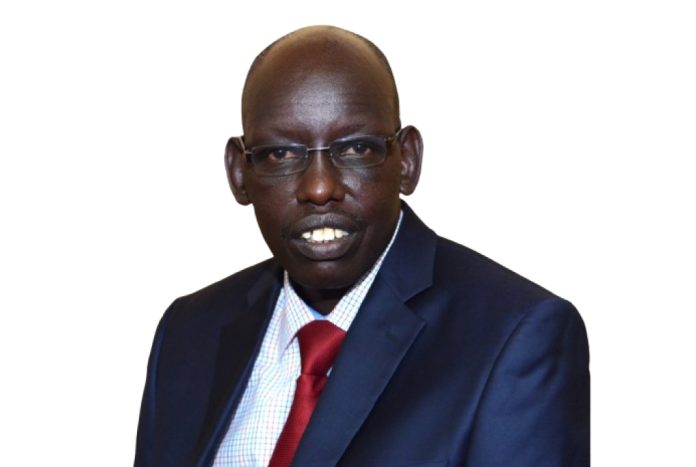
The Acting CEO of the Kenya Sugar Board, Jude Chesire

By Reporter 

The Acting CEO of the Kenya Sugar Board, Mr Jude Chesire, has made history by being elected Vice Chairman of the Council of the International Sugar Organization (ISO) in London.

Mr Chesire was selected during the Council meeting held on 29 November 2024 at Canada Square, Canary Wharf, London. The meeting was attended by leading global experts in the sugar industry.

This marks the first time that Kenya and Africa have held such a prestigious position since the establishment of the ISO in 1968.

The ISO also elected Mr Edgar Herrera from Costa Rica as Chairman of the organisation, succeeding Mr Sanjiv Chopra from India, who previously held the position.

With this election, Mr Chesire is also poised to become Chairman of the ISO Council in 2026, further solidifying Kenya’s and Africa’s influence in the global sugar sector.

The ISO Council, which serves as the highest decision-making body in the world sugar sector, consists of 114 member countries, including major sugar producers such as Brazil, India, the EU, Thailand, the UK, South Africa, and Australia.

Collectively, these countries produce 165 million tonnes of sugar and hundreds of millions of tonnes of ethanol annually.

This new leadership role provides Kenya and Africa with a unique opportunity to shape the future of the global sugar industry, particularly in making critical decisions on sugar pricing, trade policies, and sustainable practices in sugar and ethanol production.

Mr Chesire’s appointment places Kenya in a strategic position to influence key decisions in the global sugar industry.

His leadership will enable him to contribute to essential deliberations on global sugar prices, helping to prevent market distortions and ensuring better control over the import and export of sugar.

This development significantly enhances Kenya’s influence on the international stage.

“I am elated and deeply grateful to the ISO Council. I never expected this, and I thank God for the honour bestowed upon me and my country,” said Mr Chesire.

The Vice Chairman of the ISO Council plays a critical role in the governance of the International Sugar Organization (ISO).

The government closes down 348 boarding sections of primary schools that have failed safety standards

0
Dr. Belio Kipsang, CBS
Principal Secretary, State Department for Basic Education Dr. Belio Kipsang, CBS

By Anderson Ojwang

The government has directed the closure of all 348 boarding sections of primary schools that have failed to comply with safety measures.

In a circular issued by the Permanent Secretary, State Department of Basic Education, Dr Bellio Kipsang instructed regional, county, and sub-county directors of education to close institutions found to have contravened the safety measures.

“An assessment exercise to determine the level of compliance with safety standards in all boarding primary schools in the country was conducted in September and October 2024.

The assessment established that some institutions had grossly contravened the Safety Standards Manual for Schools in Kenya (2008).

Furthermore, these institutions failed to adhere to the standards prescribed in the Registration Guidelines for Basic Education Institutions (2021).

A total of 348 institutions assessed were consequently not approved to host boarding learners.

The purpose of this circular is, therefore, to direct you to close the boarding sections of schools within your jurisdiction that have not been approved, as per the attached list.

Reopening of the boarding sections should be strictly subject to a pre-registration process.

You are required to ensure that affected parents are informed in good time to make alternative arrangements for their children,” read the circular from the PS, dated 27 November 2024.

In the Central region, Kiambu County recorded the highest number of affected schools, with 13, followed by Murang’a with five, Nyandarua with three, and Kirinyaga with two.

In the Eastern region, Kitui led with 24 affected schools, followed by Tharaka Nithi with 19, Machakos with 16, Meru with 11, Makueni with 10, and Embu with seven.

In the Coast region, Kwale had seven affected schools, Tana River had five, while Mombasa and Taita Taveta each had two, and Kilifi recorded one.

In the Nairobi region, 48 schools were closed.

In the North Eastern region, 11 schools were affected in Garissa.

In the Nyanza region, Kisii County had 18 schools closed, Kisumu had eight, and Migori had five.

In the Western region, Bungoma County had eight cases, Busia had five, and Kakamega had three schools affected.

In the Rift Valley region, Kericho County led with 27 affected schools, followed by Uasin Gishu with 20, and Nandi and Narok, each with 11. Nakuru recorded six cases. Other affected counties in the region included Bomet (8), Elgeyo-Marakwet (7), Trans Nzoia (7), Narok (3), Kajiado (3), Laikipia (3), and Baringo (1).

Last September, 18 boys tragically lost their lives, and 27 others were injured after a fire razed a dormitory at Hillside Endarasha in Nyeri County, Central region.

ACK Maseno East Diocese gets new bishop

0
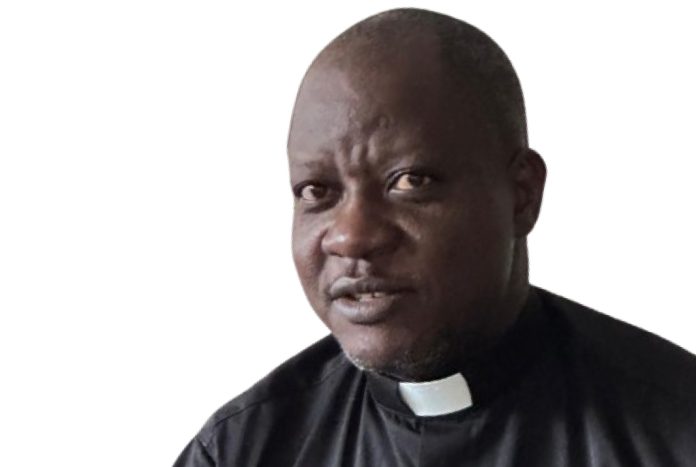
Reverend CPA Benard Enos Otieno Owuor

By Reporter

In a historic and momentous decision, Reverend CPA Benard Enos Otieno Owuor has been elected as the new Bishop-elect of the Maseno East Diocese.

In a recent election, which witnessed a spirited contest between three esteemed candidates, Owuor emerged as the victor.

The election process, conducted under the guidance of the Anglican Church of Kenya Provincial Constitution, saw The Ven. Hannington Oluoch Ondiek and The Ven. Benard Okullo also seeking God’s will to serve in this higher calling.

The keenly awaited results were met with joy and celebration as Rev. Owuor received the majority vote, securing his appointment as the new spiritual leader of the See of Maseno East.

The bishop polls were presided over by the Most Rev. Dr Jackson Ole Sapit, ACK Archbishop, assisted by Tom Onyango, Provincial Chancellor, and Charles Dulo, Diocesan Chancellor assisting the Provincial Chancellor.

“The elections are over, and now we are called upon to forget the polls and concentrate on building the Lord’s sanctuary,” said Archbishop Ole Sapit.

He wished the new Bishop-elect success in his higher calling.

“Now go and serve all with humility, without bias. Be the epitome of unity in the church. Bring everyone together to rise above the elections and support the Lord,” said Archbishop Ole Sapit.

Rev. Owuor, who brings a wealth of experience in both ministry and accounting, has served in various capacities within the Church and the community.

His vision for the diocese focuses on spiritual growth, community development, and unity within the church.

Owuor’s election marks the beginning of a new chapter for the Maseno East Diocese. He will succeed the outgoing bishop, the Rt. Rev. Dr Joshua Owiti, during a time of exciting opportunities and challenges for the Church and the country at large.

The election process was characterised by prayer, unity, and a commitment to God’s will, with all the candidates demonstrating remarkable leadership, humility, and dedication to the Church’s mission under the guidance of Archbishop Ole Sapit.

As the Diocese looks forward to a fresh season of leadership under Bishop-elect Owuor, prayers and support from the faithful will be crucial in helping the new bishop lead with wisdom, integrity, and compassion.

The Ven. Hannington Oluoch Ondiek and the Ven. Benard Okullo, despite their defeat, were praised for their grace and commitment to the mission of the Church.

Their ongoing roles and contributions will continue to be valued within the diocese.

The consecration and enthronement of the new bishop are eagerly anticipated by the members of the Maseno East Diocese, who are excited to welcome Reverend Owuor into his new role.

ODM and UDA infights a catch for President Ruto’s 2027 political matrix

0

By Anderson Ojwang

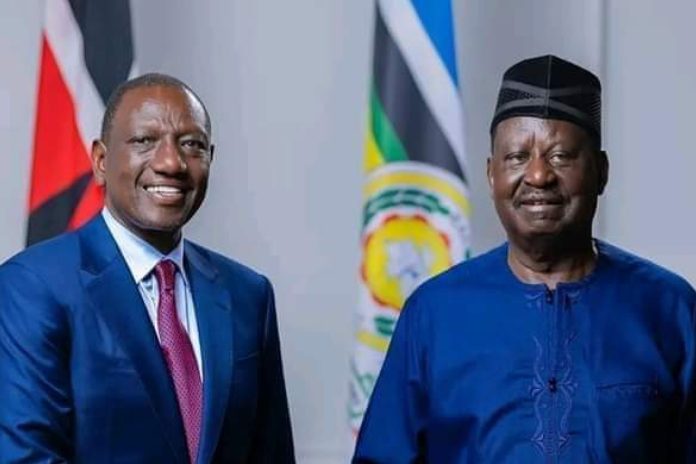
The political bromance between President William Ruto and former Prime Minister Raila Odinga is facing an acid test in Nyanza as wrangles and infighting between the Orange Democratic Movement (ODM) and the United Democratic Alliance (UDA) intensify and turn bare-knuckle.

While President Ruto and Raila might be reading from the same script, their representatives have embarked on a fierce battle of supremacy that could affect the 2027 political agenda. The suspicion and fear surrounding the 2027 general elections are so entrenched that ODM has yet to integrate members of Parliament who shifted to support President Ruto before the formation of the Broad-Based Government.

In a recent viral clip, Kisumu Senator Prof. Tom Ojienda was allegedly removed from an ODM roundtable discussion attended by Raila over claims that he was no longer a party member after opting to work with President Ruto.

ODM National Chairperson Gladys Wanga recently stated that the rebels were welcome back but must be vetted and cleansed before reintegration into the fold. “The ODM party leadership has relaxed its firm stance against the perceived rebel Members of Parliament, who were sanctioned after a meeting with President William Ruto in February 2023. The rebel MPs are now welcome back to the party, but must be effectively vetted and subjected to proper political cleansing,” Governor Wanga said during a recent reunion party in Bondo hosted by Raila.

Raila had in 2020 called for the punishment of renegade MPs who worked with President Ruto, leading to disciplinary actions against legislators including Prof. Ojienda, Caroli Omondi (Suba South), Elisha Odhiambo (Gem), Mark Nyamita (Uriri), Paul Abuor (Rongo), Felix Jalang’o Odiwuor (Lang’ata), and Gideon Ochanda (Bondo).

ODM’s National Executive Committee expelled five of these MPs after the party determined their actions went against the official party position. Interestingly, Ojienda and Nyamita have expressed interest in the gubernatorial seats for Kisumu and Migori, respectively, and have launched campaigns that have unsettled the regime.

Siaya Governor James Orengo said at the same function that the rebel MPs were welcome but must take a back seat when returning to the party. Migori Governor Ochilo Ayacko emphasised the need to strengthen the ODM party, reiterating that it must remain strong despite its working relationship with the Kenya Kwanza administration.

Chairman of the Lake Victoria South Water Works and Development Board, Mr Odoyo Owidi, remarked that after successful UDA elections in Nyanza—a first for an opposition party in the region—the ODM brigade became alarmed and embarked on a supremacy battle with UDA lieutenants on the ground. “The fear of the 2027 general elections, where the battlefield may be open and electorates allowed to elect leaders of their choice, is what is creating the infighting. Those who have relied on the party ticket are in panic mode and are creating baseless fights,” he said.

Odoyo wondered why Wanga and other ODM leaders were fighting UDA while the immediate former top party leadership had been appointed to the government and were supporting President Ruto’s 2027 bid. “The supremacy battle is not healthy for President Ruto’s 2027 agenda. ODM must accept the changing political dynamics in the country and be ready to accommodate opponents in its backyard. Nothing is static, and change can never be stopped. Our agenda is to give President Ruto the much-needed vote in 2027,” he added.

Governor Orengo recently called on ODM to move out of the Broad-Based Government, warning that it was making the party unpopular and could have severe consequences in the 2027 general elections. Orengo had earlier criticised the idea of ODM joining President William Ruto’s administration, terming it “an abomination, a disaster, and something that cannot work.”

Speaking at the burial of the late Oloo Aringo, Orengo said, “I want to believe that members in parliament and those in government will learn from Aringo, and when something is wrong, you must say it is wrong. We are being made dirty by swine because we have sacrificed.”

MP Ongondo Were has maintained that ODM cannot merge with and work under UDA, emphasising that Nyanza remains ODM’s stronghold.

Meanwhile, Odoyo Owidi dismissed ODM leaders as individuals pursuing personal interests rather than the community’s welfare. “The fear of losing elections in a fair competition is causing ODM MPs sleepless nights. They know that without the party and Raila, they are crippled politically. That is why they have started petty wars to hoodwink voters,” he said.