
Home Blog Page 215

Babu Owino is emerging from the shadows to claim the political table

0
Babu Owino

By Anderson Ojwang

Last week marked a political milestone for Embakasi East MP Babu Owino, which could positively impact his future political journey in the emerging political realignment.

Babu not only braved the hostile local and national political waters but also received a positive mention from a young American lad for his public endorsement of Republican Presidential candidate Donald Trump. Trump went on to win the election by defeating Democratic candidate Kamala Harris.

In a video clip that went viral on several social media platforms, the lad said, “Babu Owino, Embakasi East. It is an honour and pleasure that you have publicly endorsed President Donald Trump. That a foreign leader, who could make Kenya great one day, once again endorsed Donald Trump. Babu, I personally would love to meet you, though this may not happen, to do an interview. Thank you, Babu Owino, for endorsing Donald Trump.”

Babu, in his response on X (formerly Twitter), replied, saying, “A big thank you to the Americans who accepted and appreciated my endorsement for President Trump. When I go to America, I will for sure meet this gentleman who changed his mind to vote for Trump after I publicly endorsed Trump. Embakasi East Republic to the world.”

Babu had gone against the grain with the majority of political elites in Kenya, who were supporting Democratic Presidential candidate Kamala Harris, who lost to President-Elect Trump. Analysts view the positive mention by the American lad as a political milestone for Babu, potentially endearing him to President Trump.

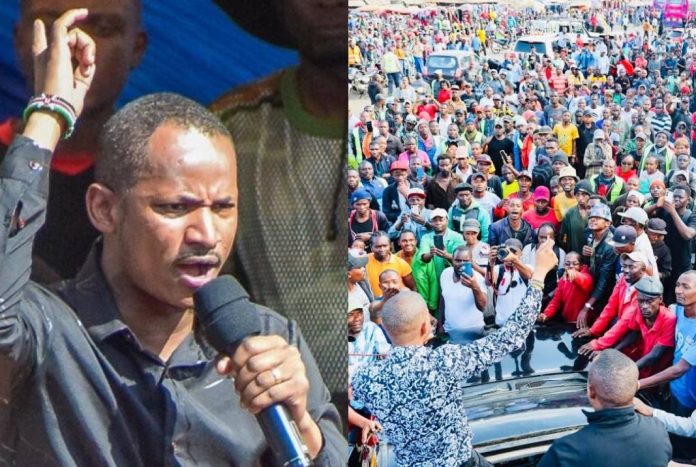
Back at home, last Sunday at Ligisa Secondary School in Homa Bay County, the political stronghold of the Orange Democratic Movement (ODM), the crowd temporarily disrupted the function, demanding that Babu be allowed to speak.

The event was graced by former ODM party leader Raila Odinga, interim Party Leader Prof Anyang’ Nyong’o, National Chairperson Gladys Wanga, Cabinet Secretaries John Mbadi and Hassan Joho, as well as various senators, governors, and members of parliament, all of whom witnessed Babu’s “bloodless coup.”

Rarieda MP Otiende Amollo’s efforts to pacify the crowd were drowned out by chants of “Babu, Babu” before Suba North MP Millie Odhiambo interjected, saying, “Let Babu speak to the people.” The crowd went wild and then fell silent.

In his speech, Babu showed his support for Raila’s bid for the chairperson of the African Union, saying he was the best candidate. He stated that Wanga was suited to lead the party forward and was a game-changer in party politics.

Babu, in a closing remark on the next political agenda, said, “Na Baba aki saa enda, na Baba aki saa enda” (loosely translated, “When Baba is…, when Baba is gone”) but did not complete the sentence as the jubilant crowd cheered.

Raila recently announced he would be stepping away from local politics for an international role, sparking succession politics in the party and Nyanza, his stronghold.

President William Ruto is already eyeing the Nyanza vote bloc for the 2027 elections, having rolled out multimillion-shilling development projects in the region and appointed several members from the community to his cabinet and other government positions.

Other leaders, including Wanga, Siaya Governor James Orengo, Otiende, Migori Governor Ochillo Ayacko, and others, have been positioning themselves for community leadership after Raila.

The impassioned Suna East MP Junet Mohammed, speaking at the function, condemned those eyeing Raila’s position, calling it treason.

“Those people bringing irrelevant and useless discussions on Raila’s succession and inheriting his seat—I want to deliver a warning here in Homa Bay. That is an act of treason. If you talk of inheriting Raila’s seat, you will be beaten like nobody’s business,” he said.

Junet maintained that Raila would remain their leader, whether in Addis Ababa as AU Chair or in Kenya.

“Our father is one. If you want small positions like that of Gladys Wanga’s or mine, which is the Director of Elections, you can go for that. But if you want to take Raila’s seat, we will pound you like a potato,” Junet said.

Babu has been traversing several parts of Nyanza to connect with grassroots supporters, causing disquiet among some in the political class.

Nairobi-based medic Dr Gedion Majiwa said the stars seem to be shining brighter for Babu, and the positive mentions he is receiving locally and internationally are beneficial for his political future.

“Babu is on the right political trajectory. Time and age are on his side. He is a go-getter and a shrewd politician. He is a man to watch in the emerging new political arrangements,” he said.

Recently, Babu faced criticism from Ugandan President Yoweri Museveni for allegedly supporting the opposition leader in his country, who warned him to stay out of Uganda’s affairs.
Shock as Kisumu County Government suspends recruitment of staff

0
Anyang-nyongo-KCPSB

By Anderson Ojwang

The county government of Kisumu has suspended recruitment, contract extensions, and contract conversion to permanent and pensionable terms for its employees.

Prospective new employees of the county government who have been interviewed and were successful will have to wait a little longer, while employees whose contracts are expiring will be rendered jobless by the action. Employees who had hoped their contracts would be converted into permanent and pensionable ones will have to wait until the government lifts the suspension.

A memo dated 11th November 2024, addressed to the County Secretary from the Kisumu County Public Service Board and signed by the Vice Chairperson, Dr Mary Jacinta A. Kapiyo, was in response to a letter from the County Secretary dated 7th November 2024 on the above matter.

“The Board, on receipt of the above-mentioned letter, held a meeting on Monday, 11th November 2024 to discuss its contents. As at the time of suspending recruitment, contract extension, and contract conversion to permanent and pensionable terms, the Board had the following ongoing activities,” read the memo in part.

The Board had conducted interviews after receiving requisitions from different departments to recruit staff in various positions.

In the Department of the County Attorney, there were nine vacancies; after the availability of funds was confirmed, the selection was done but appointment letters were yet to be issued.

In the Department of Trade, Tourism, Cooperatives, Industry, and Marketing, there were eight positions; selection had been done, and the Board was awaiting confirmation of fund availability from the department.

In the Department of Kisumu County Revenue Board, there was one vacant position; selection had been done, and the Board was awaiting confirmation of fund availability from the department.

In the Department of Energy, Transport, Roads, and Public Works, there were 109 vacant positions; selection was done, and fund availability was confirmed, but the appointment letters were not yet issued.

In the Department of Lands, Housing, Physical Planning, and Urban Development, there were 32 vacancies; fund availability was confirmed, and selection undertaken, but the appointment letters were not yet issued.

In the Department of Education, Technical Training, Innovation, and Social Services, there were vacancies for Assistant Vocational Trainers (10 positions), and 100 vacancies for Early Childhood Development Education (ECDE) teachers. Interview dates were scheduled from 18th November 2024 to 2nd December 2024.

The Board observed that the recruitment process was initiated by the relevant departments and approved by the cabinet after budget confirmation and consideration of several factors to justify the need. Subsequently, a formal request was made to the Board.

“The Board received a reminder letter from the Department of Lands, Housing, Physical Planning, and Urban Development, requesting the Board to release names of successful candidates to enable the department to operationalise the municipalities. This will ensure that the county government does not miss out on the conditional grant from the Kenya Urban Support Program (KUSP),” read the memo in part.

The Board noted that it had conducted interviews for ECDE teachers in 2020 and selected suitable candidates, but the appointment letters were never issued due to a lack of funds.

“Consequently, a repeat of the same will negatively impact the Board and the county government’s image to the public. Similarly, it will discourage applicants in the future,” read the memo.

The Board stated that service delivery in the education sector will be affected, as exemplified by the number of schools without ECDE teachers in the county, among other departments.

Homa Bay Speaker Julius Gaya resigns ahead of an impeachment motion

0
Homa Bay Speaker Julius Gaya
Former Homa Bay Speaker Julius Gaya

By Habil Onyango

Homa Bay Speaker Julius Gaya resigned on Tuesday as the Speaker of the Homa Bay County Assembly ahead of a planned impeachment motion against him.

Gaya, who served as the Assembly’s third speaker, tendered his resignation to the Acting Clerk of the Assembly, Hannington Abeka.

Presiding over Tuesday’s sitting, Deputy Speaker Samuel Okings Okomo confirmed that he had received Gaya’s resignation through the County Clerk and therefore declared the seat vacant.

“I am in receipt of the resignation letter from Hon. Julius Odhiambo Gaya, addressed to the Clerk, pursuant to the provisions of Standing Order No. 14a (1),” the Deputy Speaker notified the members.

“Gaya appreciates the opportunity given to him to serve this house as the third speaker, having been elected on 21 September 2022,” reads the letter.

“I hereby notify this house of the resignation pursuant to the provisions of Standing Order No. 14a (3) and declare the office of the Speaker vacant,” said Okings.

Gaya served as the Central Karachuonyo MCA for two terms under the former County Governor, Cyprian Awiti, before being elected as Speaker.

Gaya dropped his third quest for the Central Karachuonyo MCA after supporting the election of the current Governor, Gladys Wanga, and was rewarded with the Speaker’s seat.

According to Majority Leader Richard Ogindo, out of the 54 County Assembly members, 53 had already signed the petition in support of Gaya’s impeachment motion.

He thanked the former Speaker for taking the bold and brave step before the impeachment motion could be tabled.

“On behalf of all members, I appreciate our former Speaker, Hon. Julius Gaya, for the brave move he undertook by handing in his resignation letter,” said Ogindo.

“Out of 54 members, only one member opposed the petition to remove him from office. By deciding to resign, he made the best decision before this house could proceed with the impeachment motion,” said the Majority Leader.

Gaya succeeded former Speaker Elizabeth See, who was elected after defeating his arch-rival, former Gwasi North MCA Evance Marieba, by garnering 40 out of the possible 54 votes.

In 2018, while serving as the Central Karachuonyo MCA, Gaya was barred from accessing the house by security guards over allegations of exposing corruption and misconduct at the County Assembly.

He stated that the action was intended to intimidate him due to his efforts to fight corruption and uphold human rights within the County Assembly.

Gaya was recently summoned by the Ethics and Anti-Corruption Commission, which is investigating his academic credentials. He has appeared before the commission on two occasions.

Mbadi wants LBDA to make the Oluch-Kimira irrigation project economically viable 

0
Mbadi oluch-kimira irrigation Ochiaga

By Habil Onyango

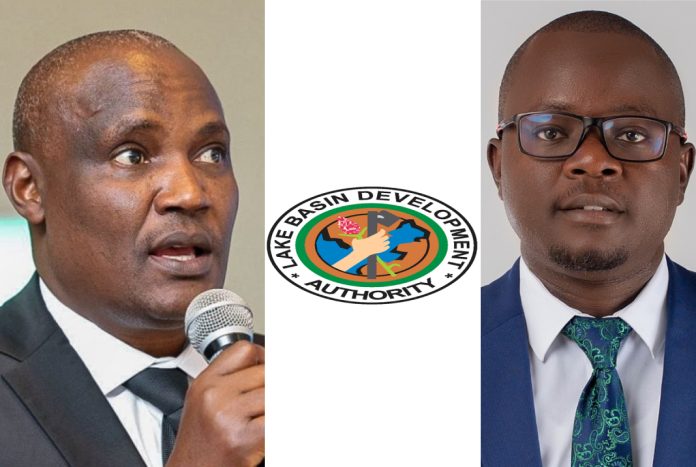
The Lake Basin Development Authority (LBDA) has been tasked with transforming the Sh 7.2 billion Oluch-Kimira irrigation project into a viable economic catalyst not only for Homa Bay County but for national growth.

With an expected allocation of Sh 700 million from the National Treasury, LBDA must make the scheme economically beneficial for residents of Rachuonyo North, Rachuonyo West, and Rangwe sub-counties.

The project, which is primarily funded by the African Development Bank (ADB) and the Government of Kenya, covers 3,685 acres (1,474 hectares) and is divided into 97 irrigation blocs. Currently, however, it has not yet yielded the intended economic benefits, as most residents rely on the water for domestic purposes rather than for commercial agriculture.

During a function in Homa Bay, Cabinet Secretary for Treasury and Economic Planning Mr. John Mbadi announced that the government would allocate Sh 700 million for the completion of the Kimira Oluch Smallholder Farm Improvement Project.

The irrigation scheme was originally intended to address food insecurity in the region and to generate additional revenue from agriculture once fully implemented. Mbadi explained that he had engaged in a consultative meeting with the LBDA CEO Mr. Philip Ochiaga to resolve obstacles to the project’s effective use.

“I have engaged the LBDA CEO and shared some of the issues which have prevented the full utilization of the project by farmers, and I have assured him that I am allocating an additional Sh 700 million to the project,” said Mbadi.

“This will ensure that the multi-billion irrigation project serves its purpose and benefits our farmers, while also improving food security in our country,” he added.

Mbadi spoke at Ligisa Secondary School in Rangwe Constituency on Sunday during a thanksgiving ceremony for new ODM Chairperson Governor Gladys Wanga.

The Oluch-Kimira project is structured into two irrigation schemes aimed at enhancing land productivity and substantially increasing smallholder farmers’ average income. The initiative also aligns with Kenya’s current development strategy, which emphasizes growth and poverty reduction.

The project focuses primarily on agricultural intensification, developing irrigation infrastructure, empowering farmers to manage their schemes, and boosting productivity. Implemented in Rangwe and Rachuonyo Constituencies, which have about 400,000 households, the scheme is set to benefit 3,000 households directly through improved marketing and extension activities.

“We want to help our farmers increase their yields of traditional crops and introduce new varieties throughout the year, especially during the dry season when prices are high and the region faces food insecurity,” Mbadi stated.

Recently, a Parliamentary Committee on Regional Development visited the project and challenged the residents to maximize its economic potential. The committee noted the underutilization of the facility, urging for an attitudinal change to encourage broader use of the water resources.

Committee Vice Chairperson Mary Wamaua expressed concerns, saying, “We expected to see more people using the water for irrigation. Few are doing so, but the majority have not fully tapped into its potential.”

Since its initiation in 2006, Sh 7.3 billion has been invested in the project, but an outstanding Sh 1.3 billion is still needed to complete it. The remaining works include the extension of dykes to maximize water utilization.

Raila declares readiness to face off his challengers for the AU seat

0
Former Prime minister Raila Odinga

By Habil Onyango

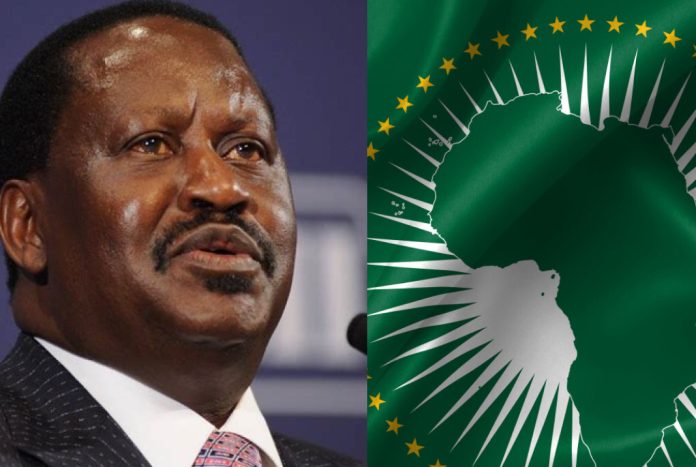
The former Prime Minister has declared that he is ready and prepared to face off with his worthy opponents for the seat of African Union (AU) Chairperson.

Raila said he was ready to battle it out, using the symbol of a lion to convey his readiness to engage with his challengers.

The immediate former Orange Democratic Movement party leader acknowledged facing strong opposition from other countries but expressed optimism about winning the seat.

“I have developed a winning strategy for the seat. My team is committed and is working to ensure we are victorious,” he stated.

Raila said his main agenda was to ensure that Africans receive respect and are exempted from discrimination, including gender and racial abuse.

He emphasized that his leadership would ensure Africans are free from the exploitation of their minerals and wealth by other countries. “I want to assure our people that I am ready to serve Africa and explore available opportunities to enrich our continent,” he affirmed.

Raila highlighted the issue of youth unemployment, explaining that many talented and educated young Africans are unable to secure job opportunities. Under his leadership, he vowed to seek ways to create employment opportunities.

Three days ago, Raila unveiled his candidature for the AUC Chairperson in Addis Ababa, Ethiopia.

President William Ruto, Deputy President Kithure Kindiki, and Prime Cabinet Secretary are spearheading Raila’s campaign.

“As a continent, we must be able to face those who have been taking advantage of us without fear, shyness, or sympathy, and this is why I am going for the seat as a strong African lion,” said Raila.

The AUC Chairperson’s position has attracted four candidates, including Raila (Kenya), Mohamoud Ali Youssouf of Djibouti, Richard Randrianmandrato (Madagascar), and Anil Gyan (Mauritius), all vying to replace the current chairperson, Moussa Faki.

Odinga spoke at Ligisa Secondary School in Rangwe Constituency, Homa Bay County, where he presided over the thanksgiving ceremony for the new ODM National Chairperson Gladys Wanga.

Raila was accompanied by Cabinet Secretaries for Mining, Ali Hassan Joho, Finance John Mbadi, Special Economic Advisor to the President Moses Kuria, and former CS for Gender Aisha Jumwa.

Among the Governors in attendance were Kisumu Governor Anyang’ Nyong’o (also acting ODM Chairman), Ochillo Ayacko (Migori), James Orengo (Siaya), Simba Arati (Kisii), Abdulswamad Nassir (Mombasa), Nathif Jama Adam (Garissa), Johnson Sakaja (Nairobi), Ole Lenku (Kajiado), and Paul Otuoma (Busia).

Senators Oburu Odinga (Siaya), Chief Whip in the Senate Ledama Olekina, Eddy Oketch (Migori), Geoffrey Osotsi (Vihiga), Julius Mwaruma (Taita Taveta), and Beatrice Ogolla (ODM Nominated) were also present.

The leaders wished Raila well in his quest for the AU seat, with elections scheduled for February next year.

Sakaja expressed support, stating, “On behalf of UDA, we are grateful to Raila and pray for him in his quest for the AUC top seat. He has shown unity, patience, and selflessness for the sake of the country, and he is well-placed to lead Africa.”

Moses Kuria added, “Africa will be one of the luckiest continents to be served by Raila, and I pray that he gets elected.”He further remarked, “Raila is a dedicated Pan-Africanist. Despite not always being treated fairly in Kenya, he has put the country first, and we are indebted to him.”

Raila: ODM in safe hands with Wanga as the national chairperson

0
Homabay governer Gladys wanga and Mbadi Cabinet Secretary (CS) for The National Treasury and Economic Planning.
Homa Bay governer Gladys wanga and Mbadi Cabinet Secretary (CS) for The National Treasury and Economic Planning.

By Habil Onyango

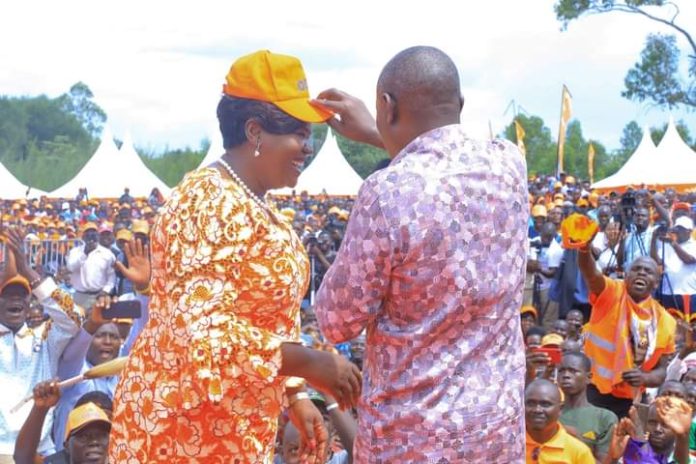
There was glitz and glamour in Homa Bay during the National ODM Chairperson Gladys Wanga’s thanksgiving ceremony as hundreds of party supporters turned up to witness history being made.

Wanga became the first Governor from the Western region and the first female leader to serve as chairperson of Raila Odinga’s party.

The Former Prime Minister led a number of leaders, including National Government Cabinet Secretaries, Governors, Senators, MPs, MCAs, and other leaders from various political parties.

The ceremony, held at Ligisa Secondary School in Rangwe Constituency, Homa Bay County, drew party supporters from all over the country.

Party enthusiasts began arriving at the venue as early as 6 in the morning, braving the scorching sun and drizzling rain.

Raila praised Governor Wanga, stating she has all the qualities needed to ensure ODM remains strong and capable of forming the next government.

He instructed Wanga to ensure that ODM remains resilient and extends its roots across the country, emphasizing his shift in focus to his AU responsibilities.

“Wanga has shown strong signs of leadership in the past and must ensure that democracy prevails under her watch,” Raila affirmed.

He dismissed critics opposed to Wanga’s elevation due to gender, saying, “Even in every successful family, there must be a strong woman to care for the children when the father is away.”

“There are some people who are saying, ‘Oh, women cannot hold major leadership positions.’ I want to ask them, who gave birth to them?” he posed.

“Women carry the heaviest burden in each and every family, from giving birth to raising children,” he remarked.

The ceremony marked the first major meeting for ODM since its leadership changes and the secondment of members to government roles.

Raila tasked the new team with registering new members, stating, “Without a strong party, there will be no development or hope for forming the next government.”

The leaders expressed gratitude to Raila for appointing Wanga to the party’s leadership position.

Cabinet Secretary for Treasury, John Mbadi, voiced confidence in Wanga’s capability, saying, “I have faith in the Homa Bay Governor to lead the party to the next level. I am happy the party leadership remains in Homa Bay.”

Mombasa Woman Representative Mishi Mboko praised the advancement of the women’s agenda in capturing top party leadership through Wanga.

Former Gender CS Aisha Jumwa expressed appreciation to President William Ruto and Raila for believing in women and awarding them key roles in their parties.

“I want to thank my party leader, President William Ruto, and Raila for believing in us and entrusting us with leadership,” she said.

“In UDA, we have Cecile Mbarire as our Chairperson, while in ODM we now have Wanga. From this, we will achieve the two-thirds gender principle in the country, increasing the number of women in leadership,” she added. Rangwe MP Lilian Gogo described Wanga as a go-getter, crediting her ascent to high office to her determined attitude.

Raila to preside over Wanga’s Thanks Giving service following her elevation

0
Governor of Homabay County Wanga and Former Prime Minister of Kenya Raila

By Habil Onyango.

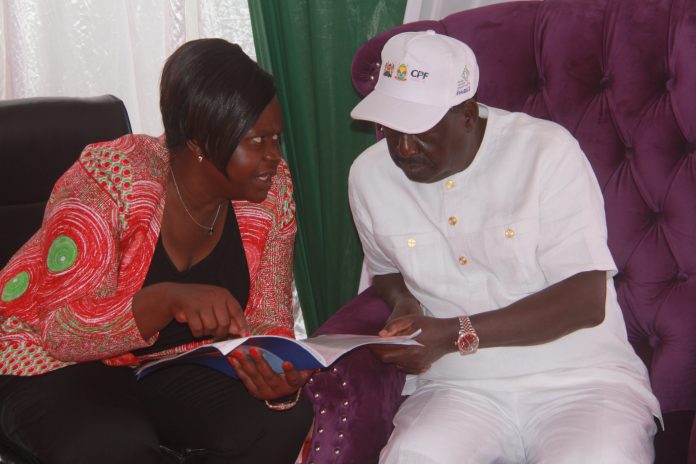
Former Prime Minister Raila Odinga will tomorrow (Sunday) preside as chief guest during a special thanksgiving ceremony and interdenominational prayers for Homa Bay Governor Gladys Wanga on her new appointment as the ODM National Chairperson.

Raila is expected to be accompanied by luminaries, including Governors, top party organs, Senators, and Members of Parliament from across the political divide.

The ceremony will be held at Ligisa Secondary School in Olare, Rangwe Constituency and is set to begin at exactly 8 in the morning.

According to Wanga, this will be a momentous occasion for support and unity within the beloved ODM party.

Wanga was elevated to the position after former National Chairman John Mbadi was appointed by President William Ruto to head the treasury docket.

The County Public Communication Officer, Chief Officer Atieno Otieno, noted that preparations for the event are in top gear.

Atieno said they are expecting hundreds of party supporters from across the country as well as other distinguished guests from various political divides, including National Government Officials.

“Former Prime Minister Raila Odinga will be our chief guest during this celebration of our Governor’s new role as the ODM National Chairperson,” said Atieno.

“We are expecting dignitaries from all over the country and even some from outside to grace the event,” added the Officer.

During the occasion, politics surrounding the planned ODM grassroots elections is expected to feature prominently, as several elected leaders have expressed interest in the Homa Bay branch party Chairperson position, previously held by the Governor.

Former Deputy Governor Hamilton Orata has been appointed as interim Chair for the branch.

Wanga was elected as Homa Bay’s second Governor alongside her deputy, Oyugi Magwanga, succeeding former County Chief Executive Officer Cyprian Awiti and his deputy, Hamilton Orata.

Wanga is not only the first woman to hold the Governor’s seat in the region, but she is also making waves nationally with her impactful leadership and visionary initiatives.

Breaking Barriers and Shattering Glass Ceilings in Kenyan Politics

In a political landscape dominated by male leaders, Governor Wanga stands as a shining example of a woman breaking barriers and shattering glass ceilings in top political leadership.

With a strong educational background in Health Management from Kenyatta University, Wanga has dedicated her career to public service, starting as a legislator and rising to become a key player in national politics.

Her extensive parliamentary experience, including service as a commissioner and chair of the Finance Committee, has equipped her with the expertise to tackle complex fiscal issues and drive economic recovery, especially in the wake of the COVID-19 pandemic.

Under her leadership, Homa Bay County has rapidly transformed, emerging as a frontrunner in development and progress.

Governor Gladys Wanga’s journey is a testament to resilience, determination, and breaking barriers in the face of adversity.

As a pioneering figure, she continues to inspire women and girls across Kenya to strive for greatness and challenge the status quo.

Wanga’s unwavering commitment to service and progressive leadership is a force to be reckoned with in Kenyan politics, proving that women possess the strength, skills, and determination to lead and excel in any arena.

From a warzone to a 24-hour economy: The changing fortunes of famous Kondele

0
kondele-transformed

 By Anderson Ojwang 

Kondele

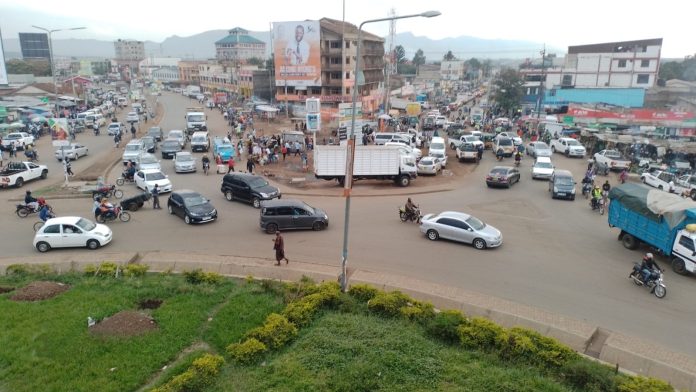
From a war zone, Kondele is shedding off the negative image that was previously associated with it, transforming into a 24-hour economy in the Lake City of Kisumu.

Feared and avoided by local and visiting politicians, Kondele has been the heart of violent political protests and crime for the last four decades.

Kondele is mainly a slum, with a majority of its population living below the UN’s definition of poverty of less than $2 per day. Recently, there has been an upsurge in economic activity, with the government aiming to lift Kondele out of poverty as part of Kenya’s Millennium Development Goals and Vision 2030.

But Kondele has a rich cultural and religious background that has endured alongside its persistent negative image.

The history of violent Kondele dates back to October 24th, 1969, during the opening of New Nyanza General Hospital by founding President the late Jomo Kenyatta. Kenyatta and his former deputy, the late Jaramogi Oginga Odinga, differed during the ceremony of this facility, which was built with Russian support, an ally of the latter.

Kondele became a gathering point for protests stemming from political discontent at both the local and national levels. The most notable protest can be traced back to 1969.

In February 1990, following the murder of former Foreign Affairs Minister Dr Robert Ouko, protestors gathered first at Kondele before proceeding to the CBD.

In 1992, during Kenya’s struggle for multiparty democracy, demonstrations began in Kondele before people marched towards the CBD.

Kondele saw post-election violence in 2007 that initiated a nationwide protest in which over 1,000 people died.

In 2017, a repeat of the 2007 violence erupted, with protesters killed by live police bullets in Kondele. The 2013 and 2017 general elections also witnessed protests centred in Kondele, marking it as a protest base.

Subsequent presidents, including the late Daniel Moi, Mwai Kibaki, Uhuru Kenyatta, and William Ruto, have all encountered unrest from Kondele. Even former Prime Minister Raila Odinga and nearly all local politicians have experienced the impact of Kondele’s protests.

Commonly referred to as Darfur due to its war zone nature, Kondele has a reputation for violence and crime. However, Kondele is currently transforming into a business hub in Kisumu, attracting a variety of investors.

Kondele’s growth began with locals starting businesses after being excluded from the CBD by well-established enterprises. The area turned into a business hub for residents along the Kisumu-Kakamega Highway, Town-Kibos route, and adjacent estates.

Main businesses in Kondele now include supermarkets, hotels, restaurants, and apparel retail, drawing banks like Co-operative Bank, Equity Bank, and KCB Bank.

The return of peace and the superhighway’s development have fueled economic activity and raised land value—by 2016, land averaged KES 10 million per acre, up from KES 6 million in 2014.

Housing prices also rose, with two-bedroom rentals priced at KES 15,000–KES 20,000 (around US$150 to US$200) monthly by 2016.

Today, supermarkets, wholesales, and a growing entertainment industry flourish in Kondele. High-end hotels and restaurants and improved social amenities have placed Kondele in the spotlight for positive change.

The area also hosts top primary schools, the regional blood bank, Kenya Medical Training College, Jaramogi Oginga Odinga Teaching and Referral Hospital, and Knightdale Hospital.

Private healthcare is provided by notable facilities like Nightingale Hospital, Migosi Health Center, and Rapha Medical Clinic. There’s also an NGO-sponsored hospital called KMET.

Kondele’s 33 schools—28 primary and five secondary—highlight the region’s education infrastructure.

Kisumu’s Deputy Governor, Dr. Mathews Owili, notes that Kondele is rebranding from negative publicity to an economic front for the county. “Our first strategy is to rebrand Kondele and promote it as a potential investment hub. We aim to engage residents in economic opportunities. This is working, which is why we no longer see a restive Kondele,” he says.

Strategically positioned to connect Kisumu to Kakamega, Busia, and into Uganda and East Africa, Kondele’s stability is essential for regional economic health.

Kondele MCA Mr Joachim Oketch Swagga notes improved infrastructure and a better business environment following the county government’s upgrades.

Dr. Otieno Obondi, a Kisumu medic, sees economic revival in Kondele but remains concerned over insecurity and drug hubs. He stresses the need to combat insecurity and crack down on drug peddling to protect the new economy.

Capacity building for residents is crucial to maintaining calm and preventing political exploitation, he adds.

Foundation out to revive 4K club in schools in Homa Bay to boost Agriculture

0
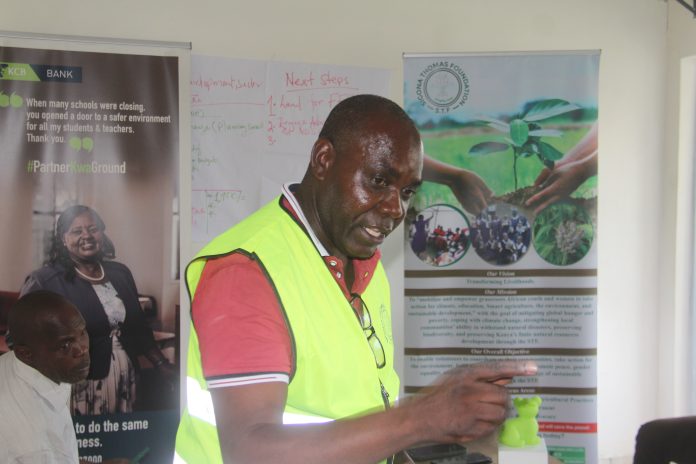
STF Programs Manger Steve Amolo

By Habil Onyango.

For a long time, young Kenyans have held a negative view of agriculture, favouring white-collar jobs instead.

In the early 1990s, the Kenyan education system promoted agriculture’s value through the 4K Club. The four Ks represent “Kuungana, Kufanya, Kusaidia Kenya” in Kiswahili, meaning “coming together, to act, to help Kenya.” However, changes in the curriculum led to the 4K Clubs’ decline, contributing to food insecurity and prompting the government to consider relaunching the club to inspire youth to lead agribusiness.

Responding to this need, the Sigona Thomas Foundation (STF), a non-governmental organization, is taking the lead in reintroducing 4K Clubs and establishing Farmer Field Schools to encourage a positive view of agriculture among primary school students across Homa Bay County. According to STF’s Chief Executive Officer, Mr Kefa Onyango, the program will manage and implement 4K Clubs as a climate action initiative with funding at the village and household levels in Homa Bay and beyond.

STF’s approach involves reinstating 4K Clubs in all schools within Homa Bay County’s 40 wards. “When we identify a school, we provide tree seedlings to 4K Club members to sell and save earnings,” explained Onyango. Pupils are also encouraged to plant fruit trees and vegetables at home, which supplements family income and improves nutrition. “When a student waters a tree, they also tend the vegetables around it, which helps reduce household expenses and supports environmental preservation,” he added.

Each school with a 4K Club is expected to establish a Farmer Field School, including tree nurseries. Partnering with Kenya Commercial Bank (KCB), 4K Club members open ‘Cub Accounts,’ introducing young students to financial literacy early. These accounts enable pupils to save for school fees, easing future financial pressures on families.

“Young people from low-income households often miss school because of financial constraints,” Onyango said. “Teaching financial literacy to both children and parents helps reduce school dropout rates and addresses poverty.”

STF also aims to foster climate action through green investments in climate resilience and low-carbon initiatives, promoting sustainable development by supporting community-led efforts at the village level. Two primary schools in Homa Bay have been designated as model centres for the 4K Club program. “Our objective is to shift the perception of agribusiness as a career, showing young Kenyans that they can contribute to food security and earn income for their education,” said Onyango.

STF’s programme manager, Steve Amolo, highlighted that this program is part of a broader mission to engage youth in agriculture and related fields such as livestock, fisheries, and cooperatives. Through Farmer Field Schools, the program promotes youth development with a focus on competency, confidence, connection, contribution, and character building. It integrates smart agriculture practices in a community-centred model.

“Our rebranded 4K Clubs emphasize themes like agricultural projects, agri-nutrition, environmental conservation, STEM, civic engagement, and the Presidential Award Scheme,” Amolo explained. Partnering with KCB, the program offers an 8.5% annual return on Cub Account savings, fostering a savings culture that helps prevent dropout rates due to financial difficulties.

With activated accounts, students can save earnings from their agricultural work to support their education later. “We’ve opened and activated accounts for 150 4K Club members at Ngere Primary School so far,” Amolo noted. The program also began at Janeiro Junior Academy, where a two-acre plot has been donated for use as a Farmer Field School.

“Once the vegetables and seedlings mature, students will sell them and deposit the earnings into their Cub Accounts,” Amolo said. “We provide farming inputs and an agronomist to guide students in profitable agriculture practices.” Youth nationwide are encouraged to join 4K Clubs to gain knowledge on agriculture, nutrition, environmental science, and STEM skills essential for personal and community development.

STF is actively identifying, training, and supporting green champions and revitalizing 4K Clubs across public and private primary schools in all 40 wards of Homa Bay. Additionally, the organization promotes climate action, focusing on a tree-planting campaign in eight Kenyan counties to combat deforestation and land degradation.

Philip Aduda, Head Teacher at Janeiro Junior Academy, noted that as a boarding school reliant on vegetables, they will buy produce directly from 4K Club members, allowing them to deposit their earnings. “This initiative shows students that agriculture, alongside education, can be a path to financial security,” said Aduda.

Gorrety Ouko, a 4K Club member, mentioned that the land donated at Janeiro Junior Academy allows students to learn modern farming techniques, supporting their education and their community. She emphasized the benefit for students from less fortunate backgrounds in saving for future school fees.

Dave Rabuor from STF’s Monitoring and Evaluation team explained that STF’s activities include forming steering committees, mapping primary schools, and organizing orientation sessions to support village development and Ward Climate Change Committees.

STF’s campaign targets planting 140 million trees, restoring landscapes, and reducing carbon emissions, enhancing crop productivity. STF has planted over 50,000 seedlings across schools in Homa Bay and Migori Counties so far. Additionally, STF promotes financial literacy for parents and students, establishes ‘Orundu’ smart gardens, and supports ward-level climate planning, along with a green bio-carbon zone. Currently, Kenya has approximately 1,250 registered 4K Clubs in primary schools, with over 70,000 members across the country. Any child aged 8-15 in primary school is eligible to join the 4K Club.

US Elections Puts Africa at the Crossroads: Trump vs. Harris and What It Means for Kenya and the Continent

0
trump kamala

By Billy Mijungu

As the 2024 U.S. presidential election draws to a close, Africa finds itself at a political crossroads. The outcome of the race between former President Donald Trump and Vice President Kamala Harris is poised to have significant ripple effects—not only for Kenya but for the entire African continent. Both candidates have policies that appeal to different segments of African society, but the question remains: which direction will Africa lean towards?

One of the most prominent divides in Africa is around social values, particularly LGBTQ+ rights and abortion. Vice President Kamala Harris, a strong advocate for human rights, has been a vocal supporter of LGBTQ+ rights and the expansion of abortion access. While these views are progressive in the West, they remain deeply controversial in many African countries, where traditional values often prevail. Homosexuality is criminalised in several African nations, and abortion is illegal or strictly regulated in many others.

For large segments of the African population, especially among conservative religious communities, Harris’ support for these issues may appear misaligned with their cultural and moral norms. In countries like Kenya, evangelical Christians hold significant influence and may find Trump’s policies more in line with their values, particularly his opposition to the expansion of LGBTQ+ rights. Trump, long supported by conservative Christian groups in the U.S., would likely find similar backing among Africa’s evangelical circles. The role of the church in African politics is considerable, and on issues of morality, Trump’s policies may resonate more than Harris’ progressive stance.

Another crucial area is immigration. For many Africans, the United States symbolises opportunity and prosperity, and the “American Dream” holds great allure, particularly for younger generations. In this respect, Kamala Harris, as part of the Democratic Party, appears the more favourable option. The Democratic Party generally promotes a more inclusive immigration stance, with policies that protect immigrants and create pathways to citizenship—benefiting Africans seeking a better life in the U.S.

By contrast, under the Trump administration, restrictive immigration policies were emphasised, including efforts to reduce legal immigration and the controversial push for a border wall. Trump’s “America First” policy was often perceived as hostile to immigrants, and African nations were impacted by these stances. For many Africans, the Democratic Party’s more welcoming approach provides not only a policy benefit but also a symbol of hope. They see Harris—a woman of African and Indian descent—as someone who represents them, embodying possibility and upward mobility in a world that can feel exclusionary.

Kamala Harris’ African heritage also significantly shapes her perception across Africa. For many, her rise to the second-highest office in the U.S. is a profound source of pride. Her success is celebrated as a vindication for Black people globally—a reminder that anyone, regardless of background, can rise to power. This sentiment is especially strong in Kenya, where Harris has notable support as a figure of pride alongside President Obama, often affectionately referred to as “Kenya’s son.”

This deep-rooted pride could very well sway support towards Harris among Africans, despite reservations about her party’s social policies. The symbolism of a Black woman in the White House resonates deeply, leading some Africans to overlook her more liberal positions simply because she represents hope and the potential for change.

On the other hand, Trump commands a following among certain African leaders and populations who appreciate his more authoritarian and populist style. For these groups, Trump’s unapologetic embrace of traditional values and firm stance on immigration aligns with their own political ideologies. Many of these leaders prioritise strong national sovereignty and are sceptical of liberal internationalism, often viewing it as the imposition of foreign values. To them, Trump represents a familiar, less intrusive option.

Trump’s “America First” policy also aligns with a pragmatic economic view that appeals to Africa’s emerging middle class. His promises to prioritise U.S. interests and reduce foreign aid resonate with African leaders tired of dependency on international aid, preferring direct trade agreements that support economic growth rather than aid dependency.

Africa’s support, however, is not monolithic. The continent’s diversity means that opinions on Trump and Harris vary widely, influenced by religion, political affiliations, and socioeconomic status. While Harris has strong backing from those who view her as a beacon of opportunity and pride, Trump appeals to conservative and religious communities who hold traditional values and see his policies as a defence against the erosion of those values.

Ultimately, though, Africa’s support might tip in favour of Harris. The Democratic Party’s inclusive stance on immigration and its promise of a more welcoming U.S. offer tangible hope for Africans aspiring to a better future. Harris herself, as a figure of African descent, is a powerful symbol of success for a continent still grappling with the legacies of colonialism and systemic inequality.

As Africa watches this election reach its conclusion, one thing is certain: the stakes are high, and the outcome will have far-reaching implications for Africa’s relationship with the U.S. Whether they lean towards Harris or Trump, Africans are searching for a leader who can provide a chance for a brighter future—whether through immigration opportunities, equitable trade, or the promise of a world beyond poverty and despair. This election places Africa at the intersection of two visions—one grounded in the past and another looking forward to a more inclusive future.

The author is a 2022 Senate Candidate, Migori County
Social Media: Facebook | X | Instagram | TikTok | LinkedIn
@BillyMijungu
#Forward #TusongeMbele