
Home Blog Page 22

WHY ORENGO WILL BE AT THE PRESIDENTIAL NEGOTIATION TABLE

0

By Billy Mijungu
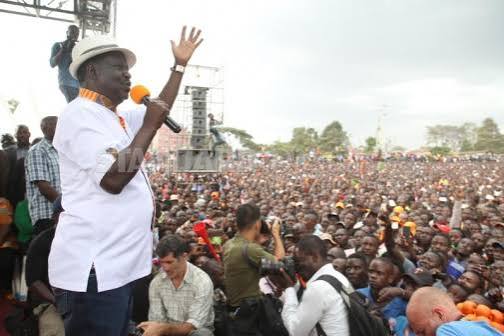
There is a political calculation taking shape in Kenya, and those dismissing James Orengo’s movements as routine political courtesy may wake up too late. Bob is not touring Kenya for photographs. He is building a political proposition.

To understand what is happening, you have to understand Orengo. This is a man who entered Parliament in 1980 at the age of 29 as Kenya’s youngest Member of Parliament. He was not simply an MP. He became one of the unmistakable faces of Kenya’s struggle for multiparty democracy and constitutional reform. He endured the politics of confrontation, stood with the forces that challenged the KANU establishment and became part of the generation that fundamentally changed Kenya’s political architecture. He has been a presidential candidate, Cabinet Minister, Senator, Senate Minority Leader and is now Governor of Siaya.

He has also built a formidable reputation as a lawyer and human rights advocate. You cannot erase four decades of political memory from a man and expect him to behave like a newcomer.
That history explains the current movement.
Look at where Orengo is going and, more importantly, look at who is receiving him. Kwale, Mombasa, Kilifi, Nyeri, Homa Bay repeatedly, Kisumu, Siaya and a Maa delegation at his home.

His political engagements now stretch into Kirinyaga, Mandera, Migori, Nyeri, Kiambu and Taita Taveta.Some will call it courtesy. Others will call it coincidence.I call it preparation.

Orengo understands something that many politicians discover only when it is too late. Presidential negotiations are not won on the day people sit around the table. They are won months and years before that table is set. They are built through relationships, numbers, trust, networks and the ability to speak to people who do not necessarily vote the same way you do.
That is precisely what Orengo appears to be constructing.

His interactions with people such as Hon. Aisha Jumwa and Hon. Chirau Ali Mkwakwere are politically significant because they demonstrate a willingness to cross traditional political boundaries. This is the politics of accommodation. This is the politics of creating options before the negotiations begin.
And then comes the question nobody wants to ask loudly.

Who exactly is negotiating for the Luo community?
ODM once occupied that position almost by default. But politics has changed. The old arrangements have been exhausted, and yesterday’s political receipts cannot automatically purchase tomorrow’s political bargain.

The Luo community cannot afford to arrive at the next national negotiation table as spectators waiting to be allocated a position. Someone must build the numbers before the negotiations. Someone must create relationships beyond Nyanza. Someone must make it impossible for the national political establishment to ignore the community.

Orengo is positioning himself to do exactly that.
He is not merely protecting an old political generation. He is cultivating the next one. He is creating a space where young leaders, sitting leaders, aspirants and political actors from different communities can interact with Nyanza without the old suspicion and rigid political boundaries.

When the national political table is eventually assembled and figures such as Sifuna, Rigathi, Kalonzo and Matiang’i are fighting for strategic space, Orengo will not be standing outside the room waiting for an invitation.
He will walk in with a constituency.

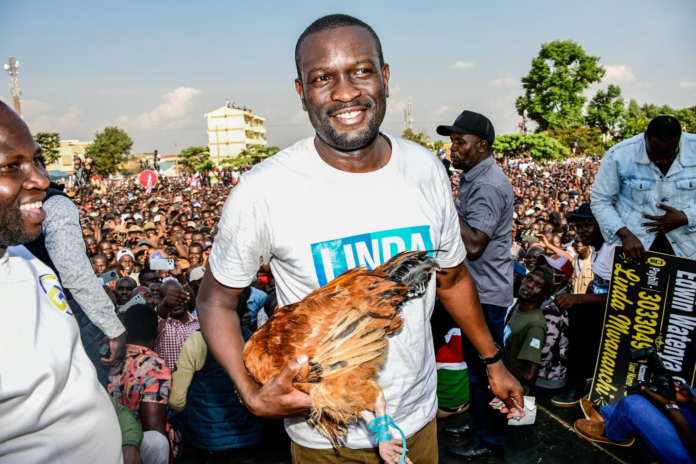
Kisumu is already critical. Siaya is moving. Homa Bay and Migori remain the great test. If Linda Mwananchi manages to consolidate those two counties, the political arithmetic changes completely.
And once the numbers change, the conversation changes.

Suddenly the question will not be whether Orengo deserves to negotiate. The question will be how anyone can negotiate without him.
This is why those writing Orengo off as an ageing political figure are making a dangerous analytical mistake. Political relevance is not measured by noise. It is measured by networks, organisation, history and the ability to convert relationships into political leverage.
Orengo has all four.

And then there is Babu Owino.
Whatever one thinks of Babu, his political energy and influence among younger voters cannot simply be dismissed. Put that energy alongside Orengo’s experience, networks and institutional memory, and you begin to see a potentially formidable political combination emerging in Nyanza.

The political establishment should therefore pay attention.
This is not about whether Orengo wants the presidency. It may not even be about whether he wants the premiership.
It is about whether he wants to make himself indispensable to whoever eventually occupies State House.

That is a different game.
And Bob knows how to play it.
So when the presidential negotiation table is finally set, do not ask why James Orengo is there.

Ask a more uncomfortable question.
Who can afford to negotiate without him?
Because Orengo is not coming to the table to ask for political charity.
He is coming with numbers, history, relationships and a bill to settle.
Beyond the Slogans: Why Nyanza Must Urgently Audit Its Post-Raila Leadership

0

By Odiwuor Alala

History rarely grants political communities the luxury of an easy transition. For nearly four decades, the political destiny, identity, and strategic direction of the Luo nation have been tightly intertwined with the colossal figure of Raila Amolo Odinga. His towering presence on Kenya’s national stage provided not only a formidable rallying point for Nyanza, but also a defining voice in the nation’s democratic struggles. Yet, as the tectonic plates of Kenyan politics shift toward a new era, a sobering question confronts the region: What comes next?

If Nyanza is to secure its seat at the national decision-making table in the post-Raila horizon, the community must immediately pause, pull back from the political noise, and conduct an uncompromising audit of the leadership it nurtures, promotes, and tolerates. Continuing down the familiar road of empty rhetoric, reflexive sloganeering, and emotional loyalty tests is no longer just a failure of strategy—it is political suicide.

The Cost of Internal Attrition

While other regions prepare for national alignment, local political discourse in Nyanza remains trapped in a destructive cycle of internal rivalry. Promising leaders, technocrats, and policy-driven minds are routinely vilified or pushed to the periphery in zero-sum battles for local supremacy. Instead of building a cohesive ideological ecosystem, political capital is expended on enforcing conformity and penalising independent thought.

This intra-regional warfare carries a heavy opportunity cost. Power on the national stage is neither gifted out of sympathy nor sustained by nostalgia; it is negotiated through strategic leverage, economic clout, and disciplined organisation. When a political house spends its energy fighting itself tooth and nail over regional fiefdoms, it systematically disarms itself before reaching the national negotiating table.

The Regional Calculus: Facing the “A-Teams”

A candid survey of the national landscape reveals a stark contrast in preparation:

  • Mount Kenya: Leaders from the region consistently rally around tangible economic agendas—protecting enterprise, agricultural value chains, and equity in resource distribution—ensuring their seat at the centre of national wealth allocation regardless of political shifts.
  • The Rift Valley: The region has mastered political and institutional consolidation, aligning state-building priorities, infrastructure investments, and voting power to maintain long-term leverage.
  • Western Kenya: Regional actors are actively building multi-party blocks, putting forward experienced negotiators, and positioning themselves as indispensable partners in successive government coalitions.

These regions understand a fundamental law of modern governance: national politics is a game of strategic pragmatism. They are fielding their “A-teams”—seasoned negotiators, economic strategists, and policy architects capable of driving hard bargains.

If Nyanza continues to bring emotional slogans to a table where others bring detailed blueprints, the region will inevitably find itself relegated to spectator status.

What Type of Leadership Does the Land Deserve?

Stocktaking requires defining the specific qualities necessary for Nyanza’s next generation of political stewardship. The post-Raila landscape demands a fundamental pivot from agitation to institutional and economic transformation:

  1. Economic Architecture over Political Theatre: Nyanza requires leaders whose primary metric of success is economic transformation—harnessing the Lake Victoria blue economy, revitalising sugar and cotton belts, driving local manufacturing, and creating sustainable industry for an educated, underemployed youth population.
  2. Strategic Alliance-Building: Future leadership must possess the diplomatic maturity to build durable coalitions across regional, ethnic, and ideological lines without suspicion or hesitation.
  3. Intellectual and Policy Rigor: The complex challenges of devolution, public debt, and national governance demand representatives who can debate policy at the highest levels, draft transformative legislation, and hold the executive accountable through substance rather than noise.
  4. Mentorship and Succession Planning: The culture of suffocating emerging talent to protect individual political turf must end. A resilient political ecosystem actively mentors, elevates, and integrates young leaders, women, professionals, and the diaspora.

The Imperative of Choice

The end of an era is not an invitation to panic; it is an invitation to mature. Raila Odinga’s historic legacy is secure in the annals of African democratic movements, but a legacy was never meant to be a substitute for regional planning and self-determination.

The window to shape the post-Raila political landscape is open right now. If Nyanza chooses to indulge in continuous infighting and shallow slogans, the community will have no one to blame when national power dynamics shift permanently without them. The moment demands sober reflection, strategic foresight, and a collective resolve to demand—and build—the high-calibre leadership the region truly deserves.

“Sikiza ground”: Is Sifuna climbing the Mountain?

0

By Anderson Ojwang’

The immediate former ODM Secretary Edwin Sifuna’s wave could also be sweeping into Mt Kenya, where he is gaining traction.

Sifuna, the Linda Mwananchi co-principal who is currently enjoying national traction and has declared his presidential intent, is seeing his wave sweep right into Mt Kenya and could be the trigger to a possible change of heart by the leaders from the region.

Wiper leader Kalonzo Musyoka was the preferred presidential candidate, but his laid-back characteristic could be dimming his stars in the mountain.

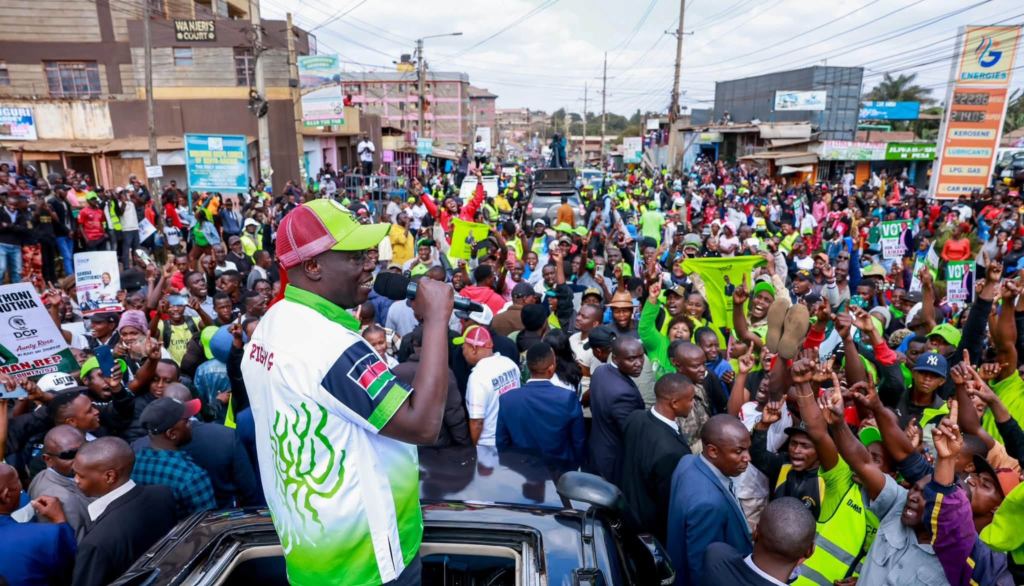
The recent Thika rally by Linda Mwananchi was a pointer to Mt Kenya opening up to Sifuna.

The “Sikiza Ground”

The slogan by Citizens for Democracy (DCP) – “sikiza ground” (listen to the ground) – has been the fulcrum in the politics of former Deputy President Rigathi Gachagua.

For Gachagua, ahead of his impeachment and after the axe, he took to “sikiza ground” and found the people of Mt Kenya had moved from President William Ruto and the UDA party which they voted for in the 2022 presidential election.

Gachagua jumped to the opportunity while other leaders from Mt Kenya slept in office, realigned with the masses, and ultimately became their leader.

And now again, Gachagua is listening to the ground in Mt Kenya, and that is why his deputy Cleophas Malala made a bold statement at the Linda Mwananchi rally in Busia.

Is Sifuna climbing the Mountain?

On Saturday in Busia, DCP Deputy Party Leader Cleophas Malala upped the stakes even higher after he declared that his party leader Rigathi Gachagua was ready to support Sifuna’s presidential bid.

“I want to say here that my party leader Rigathi Gachagua told me to tell Sifuna that he was ready to support his presidential bid,” he said.

This was a pregnant statement from Malala and could imply that Sifuna could be gaining sizeable support from the region.

On Friday, August 7, Malala had also spoken of bringing Gachagua and Sifuna together, arguing that an alliance between the two could produce a formidable opposition ticket.

“On behalf of the people of the Western Region, I will sit down with my brother Edwin Sifuna so that he can forge ties with Gachagua so that we can remove Ruto from office. When the two unite, we shall have victory,” he said.

This could be supported by Murang’a Governor Irungu Kangata openly endorsing Sifuna’s presidency and former President Uhuru Kenyatta’s confidant Pauline Njoroge resigning from Jubilee Party to join Linda Mwananchi.

Moribund Azimio La Umoja

The move by former President Uhuru Kenyatta to reactivate the moribund Azimio La Umoja has not gone down well with Mt Kenya.

The recent admission of parties from Mt Kenya into the coalition did not augur well with Gachagua and his allies.

For Gachagua and his allies, former President Uhuru Kenyatta was trying to call the shots in the opposition and positioning his allies and buddies into leadership positions while they have no following.

Wiper Leader Kalonzo Musyoka wrote after the meeting: “We resolved to reorganise and rebrand Azimio, welcomed Dr Fred Matiang’i, Peter Munya and Lenny Kivuti into the Azimio Council, and extended invitations to the Democratic Action Party Kenya (DAP-K) led by Hon. Eugene Wamalwa, Umoja na Maendeleo Party (UMP) led by Governor Kawira Mwangaza, the People’s Democratic Party (PDP) led by Omingo Magara, and the Democratic Party (DP) led by Speaker JB Muturi to join our growing coalition.”

He said the Council also mandated him to continue engaging like-minded political formations, including the Democracy for Citizens Party (DCP), the People’s Liberation Party (PLP), the United Green Movement (UGM), and Linda Mwananchi upon its registration, as they continue building a broad national movement.

But MP James Gakuya dismissed the overture, saying DCP had no space for the coalition.

“Personally, and the whole fraternity of DCP, we have no space in Azimio. Even going forward, we cannot recognise it at all,” he said.

He said the opposition should work on a new coalition outfit and not Azimio La Umoja.

“If we are going to make any formation going forward, it should not be Azimio at all. That one we are going to reject in totality. We cannot allow ourselves to be fixed to that particular cocoon. As DCP, we cannot even dare to be part of Azimio on a single day,” he said.

Unifying factor

Gachagua said he was the uniting factor in the united opposition and was ready to sacrifice his presidential ambition.

This pregnant statement gives credence to Malala’s weekend pronouncement that Gachagua was ready to support Sifuna.

“I will make whatever necessary sacrifice to make Ruto a one-term president. Even if it means I forgo my own bid, I will do so. We must go to the people. We cannot remove him from hotels, workshops, and seminars. Our difference is when to name the candidate – JB Muturi says now, while Kalonzo says December, and Riggy says next year,” he said.

The melodrama which Mt Kenya politics is becoming, with Kindiki offering peace and unity overtures to Rigathi but the latter declining

0

By Anderson Ojwang

The politics of Mt Kenya is turning melodramatic, with Deputy President Kithure Kindiki offering peace and unity overtures to former Deputy President Rigathi Gachagua over Mt Kenya. But the latter is hearing none of that at all.

Kindiki told Gachagua that the unity of the region was paramount and they needed to treat one another with respect, devoid of abuses.

“My dear brother Rigathi Gachagua, I am not asking you to join the government because you left. I pray for you in the role you are currently playing. But do it with respect. Let us not cause division in Mt Kenya. I will not abuse you because you are my brother, and you too don’t abuse me,” he said.

But Gachagua dismissed the overture, saying it was culturally wrong to “kill your brother and take his wife.”

“Do not call me your brother because even if you are someone’s brother, can you kill him and take his wife? You say one is your brother but you killed him and took his wife,” he said.

Kindiki called for respect and peaceful co-existence in Mt Kenya to avoid division in the region.

“For two years Gachagua was in office as Deputy President, I was Cabinet Secretary for Internal Security, and not any single day in those two years did I undermine him,” he said.

But Gachagua dismissed Kindiki, saying he sabotaged his fight against alcoholism in Mt Kenya.

“I have seen Kindiki saying he has no problem with me and that when I was in office, he respected me. That we only differed after he left. How did you respect me? The day I finished alcoholism in the region, you acted on the contrary,” he said.

Kindiki said he supported Gachagua while he was Deputy President and he was never engaged in politics.

“I supported him 100 percent. I was very busy with my ministry and never engaged in politics. The Cabinet Secretary for Internal Security is a focused docket. For the two years, I was living in the forest. For two years, I was your junior while you were in government. Not a single day did I abuse you,” he said.

Kindiki said his appointment to the post of Deputy President was by the grace of God and that Gachagua should remain respectful.

“I didn’t know after your removal, I would be made Deputy President. I didn’t know where he would take it. President William Ruto had the option of taking the seat to Nyanza or Western, and even Coast, but he decided that the seat belonged to Mt Kenya. I want to request peace. Ask for your Kalonzo Musyoka or any other opposition candidate for the presidency while we will meet at the ballot,” he said.

But Gachagua told Kindiki to sort out his own problems with President Ruto and the Kenya Kwanza government without involving him.

“How did you respect me while you undermined my duty? Even if you have a problem with Ruto, stay there,” he said.

Welcome home

Earlier, Gachagua had claimed that Kindiki was being subjected to the same mistreatment he went through before he was impeached.

He told Kindiki that he was welcome back home in the political formation that Mt Kenya has shifted to.

But Kindiki declined the overtures, saying he had built the party and cannot walk away and will be President Ruto’s running mate.

Who is the king of the Mountain?

After the Ol Kalou parliamentary by-election loss by UDA, Kindiki told Gachagua that the battle for the region was still a tie and that none had the bragging right.

Kindiki took the battle a notch higher when he posted on his social media platforms: “Mbeere North: 1, Ol Kalou: 1. Final Match: 10 Aug’ 2027” in reference to the battle of Mt Kenya.

He went on to say: “A good time to re-engineer the game altogether.”

Kindiki and Gachagua are sworn political rivals, with each claiming seniority and the leadership of Mt Kenya.

Genesis of rivalry

Kindiki’s tiff with Gachagua burst open during the 2022 choice of President William Ruto’s running mate.

Ruto, then Deputy President and UDA presidential candidate for the 2022 presidential election, had invited Gachagua and Kindiki to a duel for his deputy.

In this contest, a stalemate that lasted over 17 hours was characterised by failed consensus building, with opinion polls favouring Kindiki.

Ruto and his team resorted to opinion polls conducted internally to unlock the stalemate. The first poll, conducted internally by a strategy and research team headed by Cabinet Secretary Davis Chirchir, involved 10,000 respondents drawn from 10 Mt. Kenya counties. In that poll, Kindiki trounced Gachagua, with Governor Anne Waiguru coming in third.

In the second survey, conducted nationwide in the 47 counties involving 25,000 respondents, Kindiki yet again emerged top, with Waiguru and Gachagua second and third respectively.

The final vote involved the Central Kenya UDA MPs, who were called in for a vote. Senator Kindiki once again trounced Gachagua.

Out of the 31 Mt. Kenya UDA MPs present, 22 voted in favour of Kindiki, 5 voted for Gachagua, two backed Waiguru, while Muturi obtained one vote, with one rejected vote.

The referee was left with no alternative but to annul the results and instead awarded the mantle to Gachagua, who was later impeached by Parliament and the Senate.

Not my peer

Kindiki said Gachagua was not his peer in leadership and the academic world, as he has held various senior positions while the former Deputy President was a junior officer in the government.

“If you continue like that, I will embarrass you, Rigathi Gachagua. Leave me alone. Seek votes for Newton Kariuki and leave me alone,” he said.

Protect the DP

Cabinet Secretary Geoffrey Ruku has ungloved and is ready to protect Kindiki from the current onslaught from ODM and other Cabinet Secretaries over the running mate slot.

“The office of the Deputy President is occupied. It is wrong for leaders to continue discussing it as though it were vacant. Such conversations amount to disrespect to the Deputy President and the institution he serves,” Ruku said.

Already ODM has maintained that in the pre-election coalition negotiations with UDA, they will demand the post of Deputy President.

Recently, National Assembly Minority Leader Junet Mohammed declared Cabinet Secretary Wycliff Oparanya as the preferred Deputy President and running mate to Ruto.

“We are forming an alliance between ODM and UDA with a view to forming the 2027 government with President William Ruto. If UDA takes the President’s slot, ODM will go for the Deputy slot, and that is what we will negotiate for. The person who qualifies and has experience, a Cabinet Secretary, former Deputy Party Leader, is Wycliff Oparanya,” he said.

Kindiki has also maintained that he will not leave the government and will fight from within.

Kindiki said the number of people eyeing his seat has doubled and welcomed Oparanya to the ring.

“The number has increased with Oparanya and others joining the fray. They are welcome. We will fight from within, and we are not moving an inch,” he said.

Split the mountain

Ruku has called for the split of Mt Kenya East and West, saying it was time Central Kenya respected their counterparts.

Slipping Luhya looks to Sifuna for presidency as pressure mounts on Oparanya

0

By Valentine Omondi

Cabinet Secretary Wycliff Oparanya finds himself in a slippery and tricky situation over his quest to become President William Ruto’s running mate.

ODM Director of Elections Junet Mohammed could have declared Oparanya as the party’s preferred candidate for the Deputy President in the ODM and UDA pre-election coalition alliance, but the community is not budging or buying the idea.

The Luhya community is first rallying behind the immediate former ODM Secretary General Edwin Sifuna, who has declared presidential intent.

On Saturday in Busia, DCP Deputy Party Leader Cleophas Malala upped the stakes even higher after he declared that his party leader Rigathi Gachagua was ready to support Sifuna’s presidential bid.

“I want to say here that my party leader Rigathi Gachagua told me to tell Sifuna that he was ready to support his presidential bid.”

And Sifuna, speaking in Busia, asked Oparanya to support his presidential bid and not to become a hindrance to the community’s journey to the presidency.

“Oparanya, you have been my political mentor in ODM. I do not know if currently we agree on the political path, but I want to request you bless me as I seek the presidency. I know you, and if I have your support, there is no way President William Ruto can defeat us. Oparanya, I am ready for the presidency, and do not dim my dream and aspiration,” he said.

Trans Nzoia Governor George Natembeya rejected Oparanya’s pursuit of the Deputy President, saying it has failed to serve the interests of the community.

“We had Musalia Mudavadi, Moody Awori, and the late Wamalwa Kijana as Vice President. We want the presidency and not the Deputy President. It is time for the Luhya community to produce the president,” he said.

Six Members of Parliament from Western Kenya have officially endorsed Co-operatives and MSMEs Cabinet Secretary Wycliffe Oparanya for the Deputy President position in the 2027 General Election, vowing to rally the region behind his candidacy.

Speaking in Khwisero Sub-County during the disbursement of Uwezo Funds, the lawmakers termed Oparanya a proven leader, citing his strong development record as former Kakamega Governor and his current role in government.

The leaders made the “Khwisero Declaration”, a symbolic endorsement of Oparanya’s bid, stating that the region must be strategically positioned in the next government through his leadership.

Khwisero MP Christopher Aseka called on Oparanya to officially declare his candidacy, assuring him of unwavering support.

“You have the experience, the vision, and the people’s trust. We are ready to support you on the ballot,” said Aseka.

But Vihiga Senator Godfrey Osotsi, while participating in the Linda Mwananchi tour in Busia County, warned former Kakamega Governor Wycliffe Oparanya against being misled by Suna East MP Junet Mohamed, another indication of the competing interests and disagreements playing out within opposition circles.

Malala’s game plan

Malala endorsed Sifuna for president, despite being a close ally of former Deputy President Rigathi Gachagua, who is also seeking to lead the opposition into the election.

Malala’s endorsement, made on Saturday, August 8, 2026, during political engagements linked to the Linda Mwananchi movement, places him in an increasingly complicated position within the opposition coalition-building efforts.

The former Kakamega Senator has previously backed Sifuna, but his latest position goes further by supporting the Nairobi Senator for the presidency rather than simply advocating for him as a running mate.

The development is significant because Malala is a senior figure in Gachagua’s DCP, while Gachagua has openly positioned himself as the politician best placed to lead a united opposition against President William Ruto in 2027. Gachagua said recently that he was best suited to be the opposition’s presidential flag bearer.

Malala, however, has now thrown his weight behind Sifuna.

“I will be supporting Edwin Sifuna,” Malala said, according to reports on his latest position.

On Friday, August 7, Malala had also spoken of bringing Gachagua and Sifuna together, arguing that an alliance between the two could produce a formidable opposition ticket.

“On behalf of the people of the Western Region, I will sit down with my brother Edwin Sifuna so that he can forge ties with Gachagua so that we can remove Ruto from office. When these two unite, we will surely win the election,” Malala said.

The rapid movement in positions highlights one of the central challenges facing Kenya’s opposition: how to build a single presidential ticket when several leaders and their allies are already positioning themselves for influential positions.

Gachagua’s camp has continued to insist that the former Deputy President is the strongest candidate to face Ruto, with allies warning other opposition leaders against undermining his presidential ambitions.

The Orange Democratic Movement has also been forced to address questions over disagreements surrounding the Deputy Presidency, with Acting Secretary General Catherine Omanyo saying the party would rely on its democratic structures to settle on a preferred candidate.

These developments suggest that while opposition leaders continue to publicly speak about the need for unity, the question of who gets what position and who ultimately leads the ticket remains unsettled.

Malala’s endorsement therefore raises a broader question: Can the opposition translate its growing number of alliances and political movements into one coherent electoral team before 2027?

For now, the competing endorsements and ambitions point to a political camp still negotiating its final shape.

The opposition may agree on one objective—defeating Ruto—but the path to deciding who will lead that effort remains far from settled.

Breached: Baba’s Homa Bay political bedroom

0
Enigma

By Anderson Ojwang

Homa Bay County was established as the political bedroom of the immediate former Orange Democratic Movement (ODM) party leader, the late Raila Odinga.

Homa Bay became the fulcrum of Raila’s politics, and the former Prime Minister would hold his second-last rallies to Presidential elections and other important national events in Homa Bay town.

After the 2022 presidential election, Homa Bay became the first destination for President William Ruto after his victory on October 22nd, 2022.

President William Ruto has made at least 8 to 12 trips to Homa Bay County since taking office in September 2022. His visits include major development tours, church services, the opening of the Devolution Conference, and launching projects like affordable housing and road infrastructure in partnership with local leadership.

Ruto’s move was to inherit the bedroom, and in his strategy, he has a team of confidants: Dr Raymond Omollo, Permanent Secretary for Internal Security; Treasury Cabinet Secretary John Mbadi; Homa Bay Governor and ODM National Chairperson Gladys Wanga; and Homa Bay MP Opondo Kaluma.

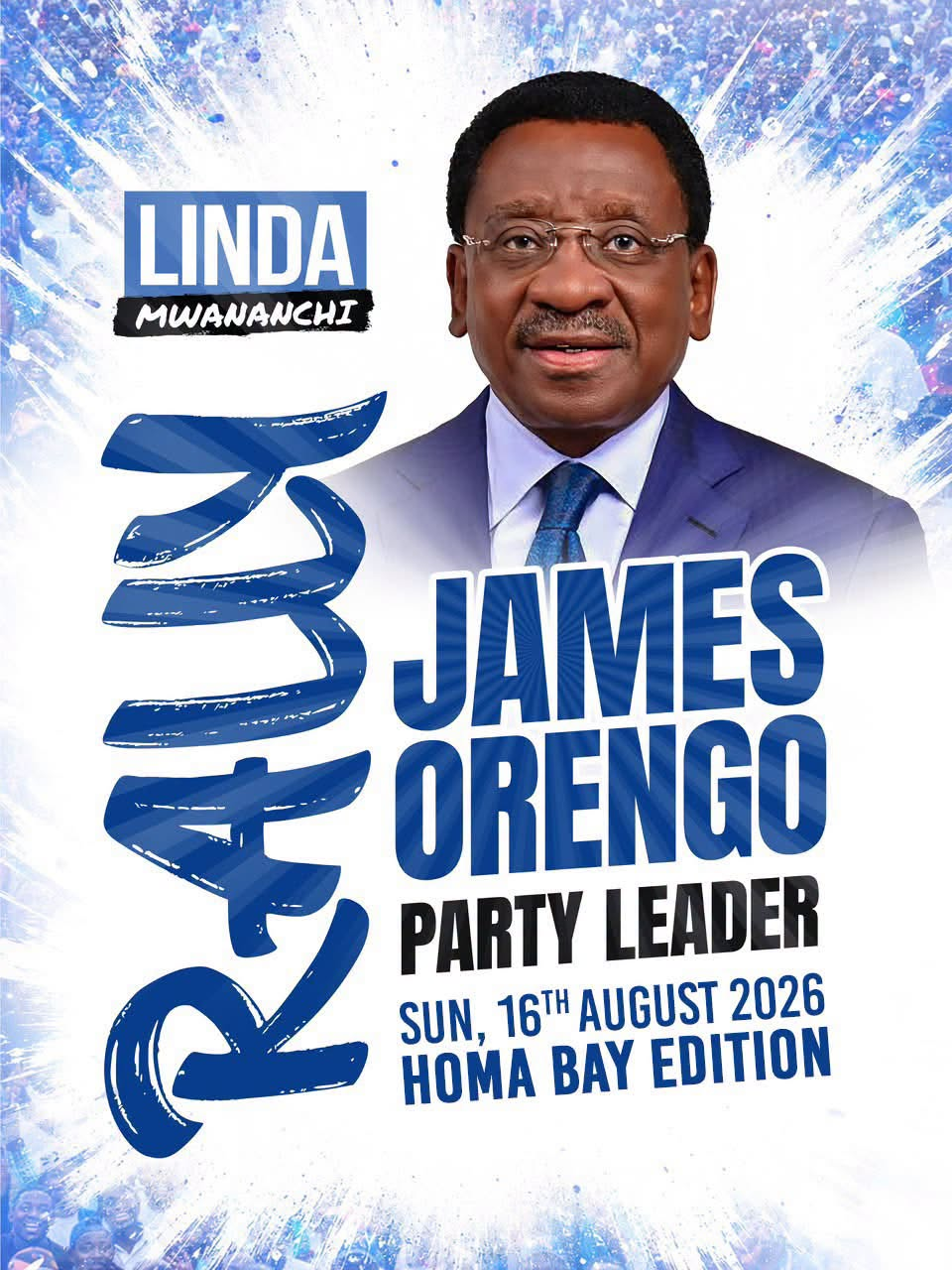
Babu said next weekend Linda Mwananchi will colonise Homa Bay and make it a Linda Mwananchi stronghold.

“Embakasi East MP Babu Owino, on 16th we are going to Homa Bay. We are coming in peace. Those mobilising goons, we know your plot. We are coming to Homa Bay to colonise it. We are not cowards,” he said.

Now the bedroom is breached, and the battle for the soul of Raila’s political turf is in the offing.

Rattled

The bedroom has been rattled by next weekend’s Linda Mwananchi rally in Homa Bay town. The rally is a test pad for Wanga, who had been instrumental in the sacking of the immediate former ODM Secretary Edwin Sifuna.

Wanga and her ODM colleagues presided over the split in the party with the formation of two factions: Linda Ground versus Linda Mwananchi.

Linda Mwananchi brigades recently applied for registration from the Registrar of Political Parties.

Last Tuesday, six youths were arrested over an alleged attack on the Linda Mwananchi team that had gone to notify the police of the August 16th rally.

Later in the evening, demonstrations rocked the town after a section of youth lit bonfires to protest over the arrests.

Homa Bay Police Commander Lawrence Koilem confirmed the arrests and said security had been deployed to restore order and peace.

The incident came amid growing tension over the planned Linda Mwananchi public rally in Homa Bay, with the organising team accusing security agencies of failing to protect opposition supporters from repeated attacks.

“This is not an isolated case. There are several other cases, but for us we are saying we really want peace to prevail during our political journey, and the government is propagating that we are doing things that we have not done,” said Linda Mwananchi Coordinator Samuel Nyauke.

The visits and rumbles

Siaya Governor James Orengo has in the last two months visited Homa Bay County more than six times. Orengo and Wanga have been engaged in bitter exchanges, and now Orengo is taking the battle to Wanga’s home turf.

Kaluma wondered why Orengo was frequently visiting Homa Bay to undermine the elected leaders.

“Orengo keeps on visiting Homa Bay while he has failed to perform in Siaya. Our Homa Bay County is the heartbeat of ODM. Let nobody say there is Linda Mwananchi. As a region, we are firmly behind Ruto. If you come to Homa Bay, do not come to abuse President William Ruto. The word ‘one term’ is provocation to violence for people in Homa Bay. Don’t provoke our people. If you want to give Homa Bay joy, say ‘two term.’ That is where Baba left us,” he said.

Homa Bay County Assembly Speaker Richard Ogindo declared that they must protect their territories and party from invasion.

“Some are coming to Homa Bay. We are Sifuna. Try wearing those useless T-shirts in Homa Bay. We want those youths who were arrested released,” Ogindo said.

But Wanga played down the emerging tension and has welcomed the planned Linda Mwananchi rally to the county, maintaining that ODM remains firmly committed to supporting the broad-based government.

Speaking during a public gathering in Kabondo Kasipul, Wanga said all political leaders and movements have the constitutional right to tour any part of the country and engage with citizens.

“Anybody is free to tour any part of this country. Anybody is free to seek whatever they want in any part of the country,” Wanga said.

But PS Omollo said Linda Mwananchi should be allowed into the area and that the residents should avoid any form of confrontation.

“Allow them to come and hold their rally, because they have no agenda. They want to provoke to get relevance from their sponsors,” he said.

Linda Mwananchi spokesperson Mr Caroli Omondi was over the weekend in the county mobilising residents to attend the rally.

“This evening, we had a successful and productive meeting with representatives of Linda Mwananchi leaders from Homa Bay County ahead of our Mega Rally scheduled for 16th August 2026. The momentum is building, the message is resonating, and the people are ready. Homa Bay is going to explode,” he wrote.

For the Broad-Based brigade, next weekend’s Linda Mwananchi rally is the biggest political test and could usher in a new political dispensation in the region.

For Wanga, Mbadi, and Omollo, it is a test of whether they can deliver for President Ruto in the absence of Raila.

The dice is cast. It is just a matter of which faction will carry the day.

The Comfort of Compliance: “Yes Men,” Adolf Eichmann, and the Banality of Evil

0

By Odiwuor Alala

History is rarely broken by solitary monsters; more often, it is dismantled by committees of the compliant. When bad leaders rise to power—whether in a corporate boardroom or a totalitarian regime—one of their very first acts is to systematically replace critical thinkers with “yes men.” These are advisors whose primary function is not to offer wisdom, but to mirror the leader’s ego and validate their worst impulses.

This preference for blind compliance creates a dangerous political and moral vacuum. When a leader’s worldview goes entirely unchallenged, policy detaches from reality, and atrocities become normalised. To understand how ordinary human compliance scales into historic catastrophe, we must look to political theorist Hannah Arendt and her profound analysis of Adolf Eichmann—the historical archetype of the bureaucratic “yes man.”

Bad leaders, particularly those with authoritarian or highly narcissistic tendencies, operate under an intense undercurrent of fragility. For them, advice is not a tool for optimisation; it is a metric of loyalty. They view genuine counsel—which inherently requires pointing out risks, flaws, and ethical boundaries—as a form of soft mutiny.

By surrounding themselves with “yes men,” bad leaders accomplish three distinct objectives:

  1. Ego Preservation: Maintaining an artificial reality where they are perpetually correct, infallible, and beloved.
  2. Consolidation of Power: Weeding out independent thinkers to ensure that the mechanisms of execution face zero friction.
  3. The Elimination of Conscience: A leader looking to enact harmful policies needs an advisory body that will translate cruel directives into sterile, administrative goals without pausing to ask, “Is this right?”

When a leadership circle becomes an echo chamber, a psychological shift occurs. Morality ceases to be evaluated by the outcome of an action; instead, it is judged by how efficiently one executes the command.

The danger of the “yes man” extends far beyond historical regimes; it is a structural vulnerability present in any human organisation, from corporate boards to modern governments. When leaders demand absolute compliance and dismiss critics as enemies, they set the stage for systemic moral failure.

“Yes men” provide bad leaders with the leverage they need to tip a system over the edge. By automating obedience and muting the voice of conscience, they prove that the most destructive forces in history are not always those who plot evil actively, but the countless ordinary people who simply refuse to say “no.”

Only three counties earn good fiscal grade as majority remain average

0

By Valentine Omondi

Only three of Kenya’s 47 county governments attained a “Good” fiscal performance grade in the 2024/25 financial year, with the vast majority remaining in the average category despite a marginal improvement in overall fiscal performance.

A new County Fiscal Performance Measurement Index (CFPMI) report by the Parliamentary Budget Office shows that Embu, Narok and Wajir were the only counties to secure a Grade B, while 35 counties, representing 74.5 per cent, were rated Grade C.

No county attained the highest Grade A, which is classified as excellent fiscal performance, highlighting the limited number of counties that have moved beyond average financial management.

Embu emerged as the country’s best-performing county with a CFPMI score of 0.689, moving from Grade C in the previous financial year to Grade B. Narok retained its position among the top performers with a score of 0.608, while Wajir entered the Grade B category with a score of 0.605.

The three Grade B counties increased the proportion of counties in the “Good” category from 4.3 per cent in 2023/24 to 6.4 per cent in 2024/25. At the same time, the share of counties in Grade C fell from 76.6 per cent to 74.5 per cent, indicating a modest shift towards better fiscal performance.

The overall average CFPMI score also edged upwards from 0.469 to 0.471, suggesting that county fiscal management improved, although only marginally.

The grading pattern, however, shows that the improvement was not broad-based. While two counties moved into the Good category, the overwhelming majority remained in Grade C, suggesting that average fiscal performance continues to be the dominant position among county governments.

The CFPMI assesses all 47 counties using seven indicators: budget implementation, development expenditure, own-source revenue, wages and benefits, pending obligations, county assembly expenditure ceilings, and audit outcomes. The index combines these indicators to produce an overall fiscal performance score for each county.

The 2024/25 results therefore present a mixed picture of county financial management: there is evidence of gradual improvement, but the movement into the higher performance category remains limited.

For counties such as Embu and Wajir, the shift into Grade B demonstrates that movement beyond average performance is possible. However, with no county reaching Grade A and nearly three-quarters remaining in Grade C, the data suggests that excellence in county fiscal management remains uncommon.

The findings point to a county system making incremental rather than dramatic progress, with a small group beginning to pull ahead while most governments continue to operate within the average performance band.

When truth finally spoke: Governor Wanga placed in position 28 in Senate Fiscal Performance as Governor Orengo leads in Nyanza

0

By Anderson Ojwang

The Senate’s latest Fiscal Performance by Counties has finally laid the truth bare for the public to consume, with only 12 months to the General Election.

Homa Bay County and Governor Gladys Wanga, who after assumption of office has been ranked as a top performer by various pollsters, finally found herself in unfamiliar territory – position 28, down from the top ten.

Wanga has been oscillating between positions, but the Senate Report finally placed Wanga in position 28 nationally.

While Siaya Governor James Orengo, who had been getting negative ranking, was placed in position 17 and led in the region.

Kisumu Governor Prof Anyang’ Nyong’o was last both nationally and regionally.

Migori County Governor Ochilo Ayacko was ranked 21, ahead of Wanga. Kisii County Governor and ODM Deputy Party Leader Simba Arati was ranked 37, while Nyamira County was ranked in position 36.

Wanga’s ranking by pollsters

Since taking office in August 2022, Homa Bay Governor Gladys Wanga has consistently climbed the rankings in major national performance and approval polls.

Her performance tracking across the prominent Infotrak CountyTrak Index and major independent pollsters highlights her trajectory:

YearPollsterNational RankingScore / Approval RatingNotes / Regional Ranking
2026Infotrak4th nationally66%1st in Nyanza region
2025Timely Kenya3rd nationally54%Based on 3-year scorecard
2024Infotrak3rd nationally61%1st in Nyanza region
2024Politrack Africa7th nationally68.9%Tied with Nandi Governor
2023Infotrak29th nationally54%Baseline year of evaluation
2022Politrack AfricaTop 1053.7%Initial 8-month baseline poll

Wanga’s most notable shift occurred between 2023 and 2024, when she jumped from 29th to 3rd place nationally in the Infotrak Performance Index.

Homa Bay Governor Gladys Wanga ranked fourth nationally and first in the Nyanza region in the August 2026 CountyTrak Performance Survey by Infotrak. She scored a 66% approval rating, tying with Makueni Governor Mutula Kilonzo.

Siaya Governor James Orengo has faced mixed performance rankings in recent public opinion surveys. While some localized or alternative metrics indicate moderate-to-high approval ratings, major pollsters like Infotrak have placed him lower down among county performance indices, sparking active local political debates ahead of the 2027 elections.

Former Deputy Governor Oyugi Magwanga said the report by the Senate was factual, as various sectors in Homa Bay had collapsed.

He said the ranking of Homa Bay and Wanga by various pollsters was not factual to the reality on the ground.

“We are happy that finally the truth has spoken. The Senate poll is the true position on the ground,” he said.

The County scorecard

Counties scored relatively higher, with a mean score of 0.557 and a maximum of 0.823, indicating that none of the counties were able to fully implement their budgets as approved. The minimum score of 0.156 and a standard deviation of 0.138 show inconsistencies in execution, with many counties still struggling to implement their budgets effectively and on time.

“C” Performing Counties

Thirty-five counties scored a “C” with indices ranging from 0.404 for Kakamega to 0.567 for Kitui.

For counties with at least 50% – such as Mandera (0.531), Nakuru (0.522), Samburu (0.509), West Pokot (0.547), Kilifi (0.541), Wajir (0.559), Siaya (0.502), Tana River (0.526), Trans Nzoia (0.523), Kericho (0.512), Bungoma (0.516), and Kwale (0.555) – budget absorption was generally strong among this group, particularly Kitui and Trans Nzoia, which had a score exceeding 86%, suggesting competent budget execution.

Most counties also maintained moderate compliance in development expenditure, with Marsabit and Mandera recording relatively higher scores, pointing to reasonable focus on capital investments.

However, own-source revenue performance and audit outcomes tended to be weaker across the group, with the majority of counties recording audit CFPMI scores of 0.375 except Kwale, Trans Nzoia, West Pokot, Kericho, and Bungoma, indicating room for improvement in financial accountability.

Additionally, county assembly expenditure scores varied, with Nakuru performing better (0.965) while Marsabit (0.302) lagged, which signals potential inefficiencies in legislative spending.

Overall, these counties exhibited stable but unexceptional performance, highlighting the need to enhance audit practices, strengthen local revenue mobilisation, and maintain discipline in county assembly expenditure to transition into higher-performing tiers.

Court approves DPP’s application to extradite three Kenyans to the USA

0

By Reporter

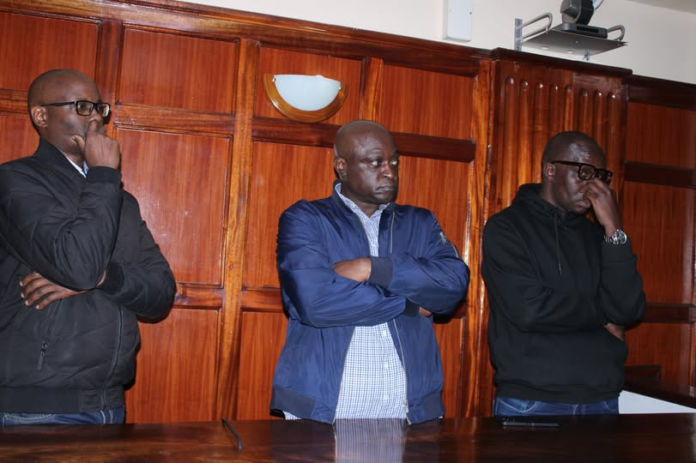
A Nairobi court on Thursday approved an application by the Director of Public Prosecutions (DPP) to extradite three Kenyans to the United States of America to face criminal charges.

Principal Magistrate Hon. P.K. Mutai endorsed warrants of arrest against Francis Asanyo, Peter Omari and Elvis Obaigwa. The warrants were issued by the U.S. District Court for the Eastern District of Virginia, Richmond Division, on 15th November 2023.

The three are wanted to face charges related to conspiracy to commit computer intrusions, conspiracy to commit wire fraud, aggravated identity theft, and aiding and abetting under U.S. law.

The extradition proceedings followed a formal request made by the United States on 26th February 2026 through Kenya’s Central Authority, the Office of the Attorney General and Department of Justice. The request was submitted by Jeffrey M. Olson, Associate Director, Office of International Affairs, Criminal Division, U.S. Department of Justice.

After reviewing the request and supporting evidence, the DPP confirmed that the legal requirements for extradition had been met and applied to the court for the necessary orders.

The court directed that the three respondents be held at Industrial Area Prison pending their extradition to the United States.

Prosecution was led by Senior Deputy Director of Public Prosecutions Vincent Monda, assisted by Principal Prosecution Counsel Victor Owiti and Prosecution Counsel Fatma Shaban.