
Home Blog Page 24

Kalonzo in the yoke

0

By Anderson Ojwang

Wiper Leader Kalonzo Musyoka finally finds himself in the yoke to guide and unite the opposition ahead of the 2027 general elections.

After a cocktail of events that had surrounded his next political journey and move, Kalonzo on Monday chaired the Azimio La Umoja council meeting.

Former President Uhuru Kenyatta, the council chair, usually chairs the meeting, but yesterday’s meeting indicated a silent power shift, with Kalonzo probably moving to take over the mandate and activities of the council.

After attacks and overtures from President William Ruto and his allies for Kalonzo to join the Broad-Based Government fold, Monday’s Azimio La Umoja meeting signalled that the move had come a cropper.

Chaired

Kalonzo chaired the council and the executive, putting him in the lead position role and curtailing any further dalliance with President Ruto.

“Today, I chaired the Joint Council and National Executive Committee meeting of the Azimio La Umoja One Kenya Coalition Party at the SKM Command Centre in Nairobi, where we made far-reaching resolutions that will strengthen our coalition as Kenya enters the election year,” he wrote.

Mandate

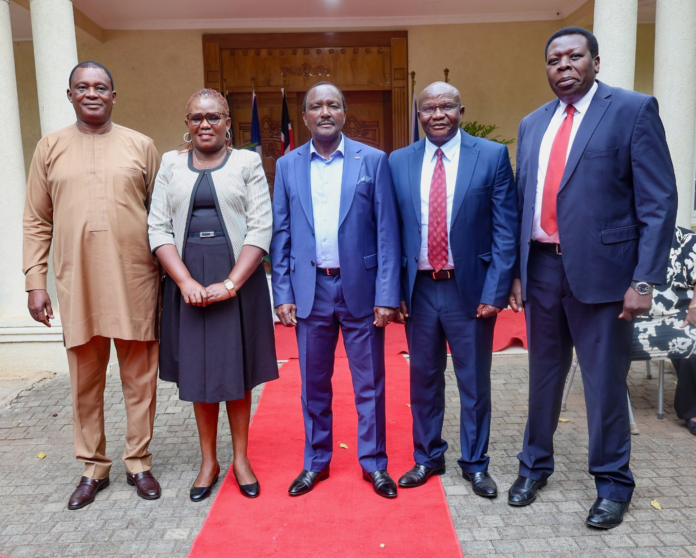
Kalonzo was mandated to engage the DCP leader Rigathi Gachagua, Linda Mwananchi of Edwin Sifuna and James Orengo, and other opposition outfits to join the Azimio La Umoja Coalition.
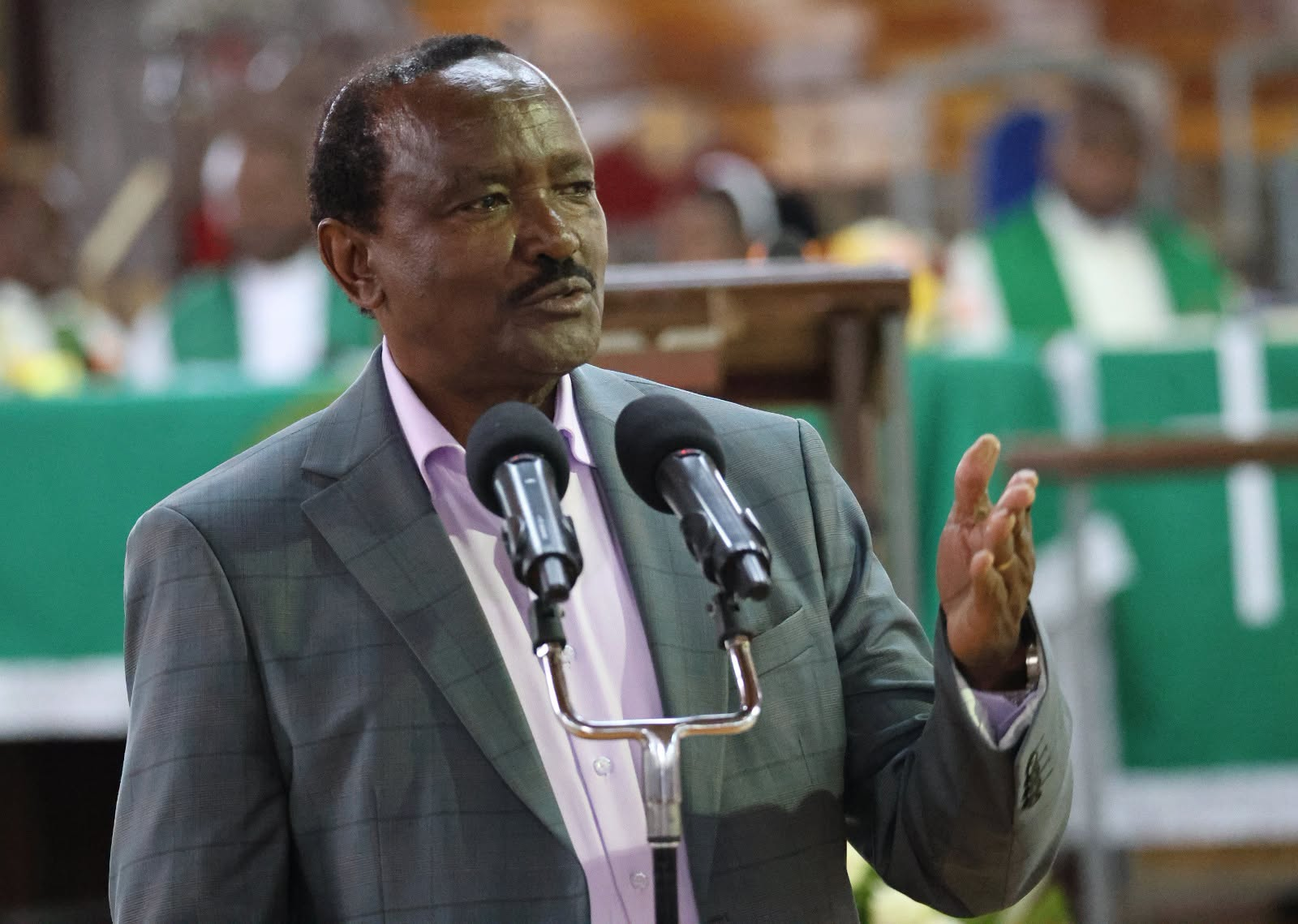
“The Council also mandated me to continue engaging like-minded political formations, including the Democracy for Citizens Party (DCP), the People’s Liberation Party (PLP), the United Green Movement (UGM), and Linda Mwananchi upon its registration, as we continue building a broad national movement,” he wrote.

Former Kitui Governor Charity Ngilu wrote: “The Joint Council and National Executive Committee of the Azimio La Umoja One Kenya Coalition Party held its meeting today chaired by Kalonzo.”

The admission of Dr Fred Matiang’i

Dr Fred Matiang’i is the Jubilee Party Deputy Party Leader and the presidential candidate. Matiang’i is the heir apparent to former President Uhuru.

In the admission of Matiang’i to the council, Uhuru was easing himself out and allowing Matiang’i to take over from him in the Azimio council members.

“We resolved to reorganise and rebrand Azimio, welcomed Dr Fred Matiang’i, Peter Munya and Lenny Kivuti into the Azimio Council, and extended invitations to the Democratic Action Party Kenya (DAP-K) led by Hon. Eugene Wamalwa, Umoja na Maendeleo Party (UMP) led by Governor Kawira Mwangaza, the People’s Democratic Party (PDP) led by Omingo Magara, and the Democratic Party (DP) led by Speaker JB Muturi to join our growing coalition,” he wrote.

Kalonzo said the unity of the opposition was an important ingredient to their victory.

“I was pleased to be joined by leaders from WPF, Jubilee Party, ODM, NARC, KANU, PNU, UMP, PDP, DP, and DAP-K, all united by our shared commitment to deliver a better future for all Kenyans. Our unity is growing stronger, our resolve is unwavering, and together we will build the Kenya our people deserve,” he wrote.

Coalition

Azimio La Umoja is building a bigger and stronger coalition to face off with President Ruto in next year’s election.

The Party of National Unity aptly captured it and wrote: “AZIMIO GROWS STRONGER. We extend our heartfelt congratulations to our Party Leader, Peter Munya, on his appointment as a Member of the Azimio Coalition Council. Congratulations, Waziri, on this well-deserved recognition and appointment.”

Wamalwa welcomed the invitation and a possible return to the outfit.

“On behalf of my Party, DAP-K Party, I received an invitation from the Azimio One Kenya Coalition Council through the Party Leader Kalonzo Musyoka to rejoin the Coalition. I welcomed the invitation and, subject to approval by the relevant organs of my Party, I assured my Colleagues in the Coalition that DAP-K Party will continue championing the unity of the Opposition as a founder of Azimio,” he wrote.

Kawira also welcomed the invitation and expressed readiness to join the outfit.
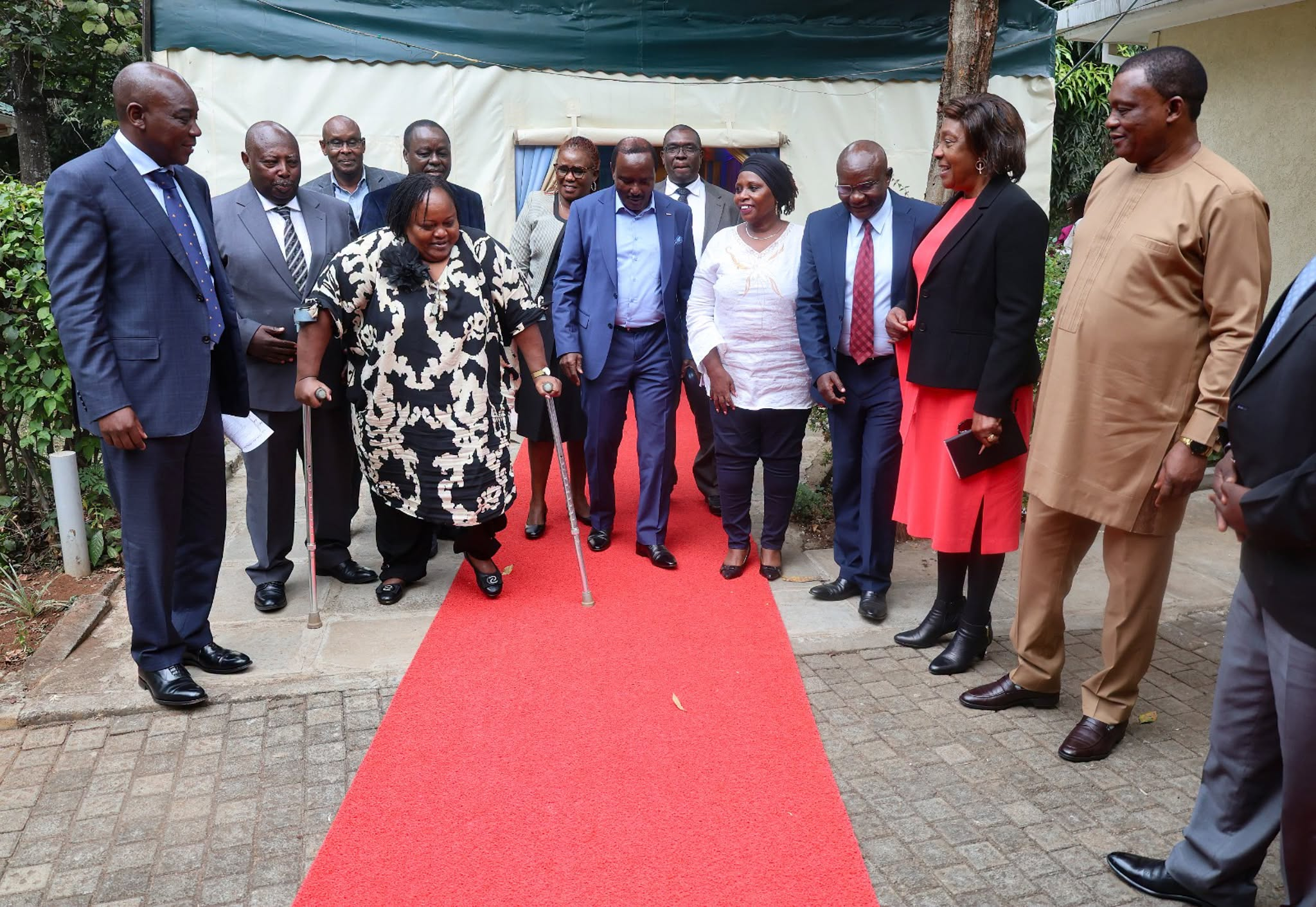
“The Azimio La Umoja–One Kenya Coalition Party Council has formally resolved to invite the Umoja na Maendeleo Party (UMP) to join the coalition. As Party Leader of UMP, I attended today’s Coalition Council meeting and confirmed that, subject to the required UMP internal consultations and party processes, the party will proceed towards joining the coalition. UMP welcomes this invitation as an important step towards building a broader, stronger and people-centred political movement founded on democracy, constitutionalism, accountable leadership and inclusive development. The party will now undertake the necessary consultations through its authorised organs before communicating its final decision and completing the formal process. The journey towards a united, progressive and prosperous Kenya continues,” she wrote.

Kindiki fights on

Over the weekend, Deputy President Prof Abraham Kithure Kindiki caused more storm after he declared that he will not leave his post for Kalonzo.

He said Kalonzo had held senior government positions in the government for over 40 years but failed to even tarmac a road to his own home.

“You have for over 40 years held senior positions like this one of fireman. You have not even tarmacked a road to your home. They want to cheat and lie to us that that is the person who will help Kenya,” he said.

Kindiki said he will not budge and give up his position as Deputy President for Kalonzo.

“After 40 years you have not solved the problem, and we are being told fireman should leave so that you help the people. No way. Is there tarmac in Seikuru? No way, my friend,” he said.

Attack

Last week, Kalonzo revealed that he had been under attack from President Ruto and his allies to lure him to their fold, claiming that he was about to cross over.

Kalonzo admitted at the press conference that he was under a terrible attack by President Ruto and his teams, claiming that he was joining the government.

“I am thrilled because you have also come to Linda Kalonzo. Because I am under attack, a terrible attack that I met William Ruto,” he said.

Kalonzo said there were claims that last Thursday evening he was supposed to join President Ruto at the 7.00 pm presser on the conversation on the future of Kenya.

“There were claims that yesterday and that this morning I should be joining him for the 7.00 pm presser. You have come to Linda my name, and through God I have Linda my name, constitution and our pride. I cannot make that terrible mistake,” he said.

Emissaries

Kalonzo admitted and said President Ruto has been sending emissaries to various opposition leaders to join him.

“They are sending all kinds of emissaries. We cannot fall into the trap. We must take Ruto home and liberate the country,” he said.

No to Ruto

Kalonzo has waved a red card to President Ruto, saying he cannot join the President.

“Ruto and his bloggers, stop dreaming. I want to assure our supporters that if I am the last man to drive Ruto out of State House, I will. I want to tell Mr William Ruto, please stop imagining that one Stephen Kalonzo Musyoka can ever join you. We will meet at the ballot. We will have that conversation at the ballot next year,” he said.
Why Ambani brothers will deliver the Premier League, with Ingwe ready to rival Gor Mahia

0

By Anderson Ojwang

Twenty-eight years after they led AFC Leopards to the last Premier League title, the Ambani brothers – Fred and Boniface – are back with a mission.

A mission not only to win the Premier League but to checkmate reigning champions Gor Mahia’s dominance of the league and return the bragging rights to Ingwe.

For the Ambanis, the noisy Gor Mahia now have a date with Ingwe, who for seasons one after another had become points donors but are now rewriting the story.

The tip of the iceberg of the Ambanis’ master plan was witnessed during the last season, when AFC Leopards for the first time beat Gor Mahia.

The Ambanis won the first leg of the league against Gor Mahia, who had for over a decade tasted defeat at the hands of Ingwe, and that was a wake-up call.

K’Ogalo did not disappoint and in the return match revenged the earlier victory. But the rivalry was back.

Ambani has declared it was time to reclaim the lost glory and restore AFC Leopards to league winners.

“In conjunction with the entire NEC (SG, Tresh, CEO), Technical Bench, Players and Support staff, 12th Man (Our able fans), we are on course to restoring our lost glory and pride. We have taken the baby steps. We need all the support systems to work. Join the bandwagon. In God we Trust. The 2025/26 season was a litmus paper. 2026/27 will be better. Mungu mbele,” he wrote.

He said the AFC Leopards badge was the best honoured and must be hoisted higher.

“When I said respect the badge, this is what I meant. We do things with precision. Guard the badge. Legit… Respect. The CREST must be respected. I take things one at a time and to perfection,” said the chairman.

Movement

In the first year in office, the Ambanis revived the ailing Leopards from mid-table to finishing as runners-up.

Leopards scared Gor Mahia and gave them a run for their money, causing panic in the K’Ogalo den, with the fans demanding more from the players and coaching staff to produce results to secure the league.

At one point, Ingwe sat at the top of the log – no mean achievement – and Gor Mahia and other teams panicked.

“First 360 days in office, with a milestone. Setting the pace. The most attended AFC LEOPARDS AGM. The atmosphere was on another level. Ingwe fraternity, I salute you all wherever you are. Making the strides in the right direction. I loved the engagements. Once again my fellow members, asaaaanteni,” the chairman said.

1998

In 1998, when AFC Leopards last won the league, the two brothers were instrumental. Their partnership won the league for Ingwe.

The Ambani brothers – Fred and Boniface – won the 1998 Kenyan Premier League title as star strikers. Fred finished as the league joint top scorer with 14 goals, while Boniface finished close behind as runner-up in the Golden Boot race with 13 goals.

The powerful partnership on the pitch drove AFC Leopards to the domestic title.

The leadership and the bench

In 2025, Boniface was elected chairman and joined forces with his elder brother Fred as the head coach. The partnership is once again working and pushing Ingwe to glory.

Infrastructure and sponsorship

Boniface has not only been engaged with securing the Premier League but is building infrastructure that will ensure stability in the team.

He is also reaching out to the Luhya community leaders to be fully engaged in the development and growth of the club.

Recently, the team was in State House to meet with President William Ruto, where they walked home with a tray full of goodies.

Cabinet Secretary Wycliff Oparanya recently wrote: “Hosted AFC Leopards Chairman Boniface Ambani, who paid me a courtesy call at my office. As the new season approaches, we will continue going above and beyond to ensure Ingwe succeeds, competes at the highest level, and reclaims its lost glory.”

Ambani responded: “It was time to set records straight. CS Oparanya, shukraaaaani sana for your time. The club is always bigger than an individual… Thanks for your wiseness. My urge to Western leadership: it’s time to rally behind the club. AFC LEOPARDS SC.”

Goodies

President Ruto recently pledged a Sh35 million financial package and a state-backed training ground construction plan.

To kickstart this transformation, the President announced an immediate Sh10 million cash injection to bolster the club ahead of the 2026/27 season.

“You are entering into a new season. Therefore, you need to sign maybe more players from different places. I will give you Sh10 million. Out of that, Sh5 million will be used to sign new players while the other Sh5 million will go to the players so that they have something to take home,” Ruto explained.

Apart from the immediate cash injection, the President committed to a long-term Sh25 million annual sponsorship top-up.

This sustainable funding pledge will elevate the club’s current Sh75 million sponsorship portfolio to a huge boost of Sh100 million yearly kitty, giving ‘Ingwe’ the financial muscle to compete at the highest levels.

Training ground

After club officials revealed that AFC Leopards had secured a 15-year lease on land for a training facility, the Head of State immediately directed the Ministry of Sports to step in and fund the entire development.

“I am told you have secured a lease for your training ground. The Cabinet Secretary for Sports will provide the necessary resources, prepare a suitable design, and we will develop a proper training pitch for you,” he promised.

The bench

The team has embarked on strengthening the squad and the bench. The recent addition to the bench was Ben Mwalala Sichangi, aka Maasai.

“Welcome to the den. Your experience in the KPL as a player, and now as an established coach, adds a lot of value to the club. Let’s do this the way we used to do on the pitch. Karibu kijana as you join the technical bench. All I wanna wish you guys is the best of luck. Once more, karibu. Next season,” the chairman wrote.

Ambani said the team was looking forward to the new season and was happy with the developments.

“It’s boiling. The season is on… Boys, let’s go. Off to preseason camp. Wishing you all the best, young men,” he said.

No Katikati: Kalonzo in a tight spot. Which way?

0

By Anderson Ojwang

Wiper Leader Kalonzo Musyoka finds himself in a tight spot. Unlike the 2007 general elections where he “pitia katikati” (passed through the middle), currently all eyes are on him.

The opposition torch is on Kalonzo, while President William Ruto of the broad-based government continues to dangle the carrot. Which way, Kalonzo Musyoka?

Kindiki fights on

Over the weekend, Deputy President Prof Abraham Kithure Kindiki caused more storm after he declared that he will not leave his post for Kalonzo.

He said Kalonzo had held senior government positions in the government for over 40 years but failed to even tarmac a road to his own home.

“You have for over 40 years held senior positions like this one of fireman. You have not even tarmacked a road to your home. They want to cheat and lie to us that that is the person who will help Kenya,” he said.

Kindiki said he will not budge and give up his position as Deputy President for Kalonzo.

“After 40 years you have not solved the problem, and we are being told fireman should leave so that you help the people. No way. Is there tarmac in Seikuru? No way, my friend,” he said.

Last year, Kindiki revealed that he was wooing Kalonzo to join President Ruto’s administration and that he had not given up on the matter.

On June 13, 2025, Kindiki called on Kalonzo to reconsider his position in the opposition and join the government, suggesting that he would be a more supportive ally than former Deputy President Rigathi Gachagua.

Kindiki said Kalonzo has the potential to be a “good friend” to the government, unlike Gachagua, whom he described as “hostile and selfish.”

“If you people allow me, I will go and look for my big brother Kalonzo,” he said then.

Ruto on Kalonzo’s presidency

President Ruto, in an engagement with Kalonzo’s support base, told them that they do not have to force Kalonzo to run for the presidency.

“I hear that you have told Stephen that whatever it takes, he must run for the presidency. That is not bad, but remember, I too was told so by those who supported me. At the end, I measured. Those who run for the sake of it are many, but winning is a different ball game. So don’t give conditions to Kalonzo that he must contest for the presidency. Tell Kalonzo to go and plan with others so that we see a way out,” he said.

Gachagua

Former Deputy President Rigathi Gachagua recently warned President Ruto to keep off Kalonzo and stop sending emissaries to the Wiper leader.

On October 6, 2025, Gachagua dismissed Kenya Kwanza’s continued effort to convince Kalonzo to join them.

“Ruto ridiculed Kalonzo, saying he is a mere dengu farmer. I want to tell him to leave Kalonzo alone. He is not available for you,” he stated.

Attack

Last week, Kalonzo revealed that he had been under attack from President Ruto and his allies to lure him to their fold, claiming that he was about to cross over.

Kalonzo admitted at the press conference that he was under a terrible attack by President Ruto and his teams, claiming that he was joining the government.

“I am thrilled because you have also come to Linda Kalonzo. Because I am under attack, a terrible attack that I met William Ruto,” he said.

Kalonzo said there were claims that last Thursday evening he was supposed to join President Ruto at the 7.00 pm presser on the conversation on the future of Kenya.

“There were claims that yesterday and that this morning I should be joining him for the 7.00 pm presser. You have come to Linda my name, and through God I have Linda my name, constitution and our pride. I cannot make that terrible mistake,” he said.

Meeting Ruto

Kalonzo explained that last Tuesday, after a breakfast meeting with the Editors, he travelled to Zanzibar and was nowhere near meeting President Ruto.

He dismissed claims that he had met with President Ruto in State House and that the president’s bloggers were churning out fake news.

“The social media platforms were awash with me joining Ruto. I was in Zanzibar after having a meeting with editors. Yesterday I took a boat from Zanzibar to Dar es Salaam and back to Nairobi,” he said.

The social media has been awash with video clips of Kalonzo in State House meeting President Ruto and that he was about to join the government.

Emissaries

Kalonzo admitted and said President Ruto has been sending emissaries to various opposition leaders to join him.

“They are sending all kinds of emissaries. We cannot fall into the trap. We must take Ruto home and liberate the country,” he said.

No to Ruto

Kalonzo has waved a red card to President Ruto, saying he cannot join the President.

“Ruto and his bloggers, stop dreaming. I want to assure our supporters that if I am the last man to drive Ruto out of State House, I will. I want to tell Mr William Ruto, please stop imagining that one Stephen Kalonzo Musyoka can ever join you. We will meet at the ballot. We will have that conversation at the ballot next year,” he said.
2002 moment

Kalonzo said the country was witnessing the 2002 moment rehappening and warned that any opposition leader who goes against the grain will be washed away.

In the 2002 moment, former Kanu Secretary General, the late Raila Odinga, led top Kanu officials – Kalonzo, the late George Saitoti, Musalia Mudavadi – to the opposition after then President Daniel Moi picked Uhuru Kenyatta as the presidential candidate.

In 2002, Mudavadi moved back to Kanu and was appointed Vice President but lost the Sabatia parliamentary seat to little-known clergy Moses Akaranga.

Infuriated and disappointed, Mudavadi declined Kanu nomination to Parliament and instead was left in the sun and was only rehabilitated by Raila during the 2005 constitutional referendum.

“We have a 2002 moment. At that time, anyone of us who tried to look backwards was rejected by the public. Whoever wants to betray the public will find himself or herself in a political pit,” he said.

Kalonzo, referencing the biblical Lot, warned Sifuna and his opposition colleagues of the dangers of joining President Ruto.

“I want to make it clear before the public that if I hear Edwin you have met Ruto, if my brother Rigathi… Will you become like Bible Lot’s wife? Anybody looking back will be a betrayer of national consciousness,” he said.

Spotlight

For Kalonzo, the spotlight is on him. The public, the opposition, and President Ruto and his allies will be watching keenly his next move. He is a marked man.

Bloom Hospital achieves Kisumu’s first high-precision cornea transplant, raising the bar for specialised healthcare in Western Kenya

0

By James Okoth

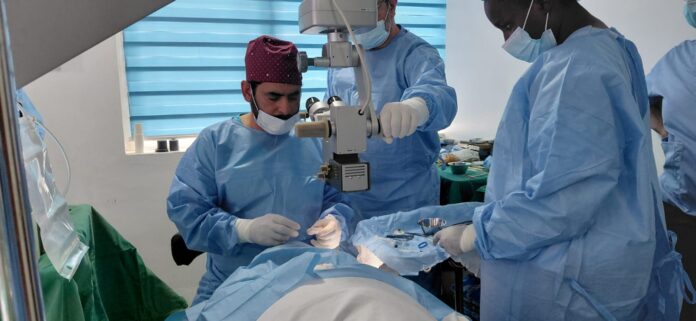
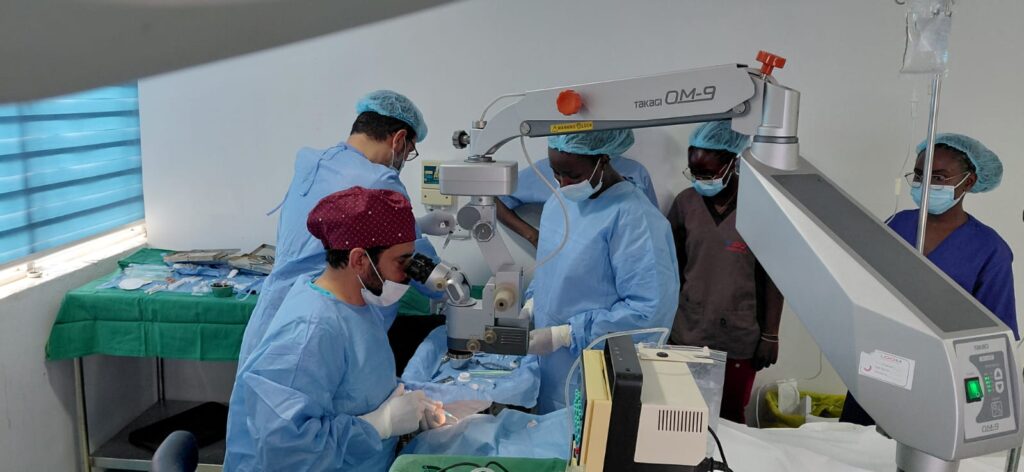
A groundbreaking high-precision cornea transplant performed at Bloom Hospital has marked a major milestone in specialised healthcare in Kisumu County, positioning the Level 4 private facility among the region’s emerging centres for advanced surgical care.

The delicate operation – the first of its kind at the hospital and among the few undertaken in the region – was successfully conducted by consultant ophthalmologist Dr Mansur Yildirim, offering fresh hope to patients suffering from corneal blindness who previously had to seek treatment in Nairobi or outside the country.

Dr Yildirim said the highly specialised procedure takes about 30 minutes, after which patients undergo close follow-up until complete healing.

“This is a high-precision operation. Our responsibility does not end in theatre. We continuously monitor every patient until complete healing. At our centre, we do not look at our patients as business but as people seeking medical care,” he said.

The achievement underscores Bloom Hospital’s growing reputation as a centre for advanced surgeries since opening its doors in 2019 as a surgical centre before expanding into comprehensive medical services.

Today, the hospital operates a 30-bed, 24-hour facility equipped with two operating theatres, two intensive care units (ICUs), a High Dependency Unit (HDU), a neonatal unit, and a specialised Eye Centre, offering both general and highly specialised surgical services.

Its services now include general surgery, laparoscopic surgery, orthopaedic surgery, paediatric surgery, obstetrics and gynaecological surgery, cataract surgery, and other complex eye procedures.

The hospital also runs specialist outpatient clinics in internal medicine, paediatrics, ophthalmology, ENT, orthopaedics, dermatology, nephrology, oncology, and urology.

Chief Executive Officer Aiman Mohamed said the institution has deliberately built its services around quality care and dignity for patients.

“We are dealing with human beings. That is my belief. We handle each case uniquely. This means that we do not hold any patient for not being able to pay our hospital bill, which is quite affordable despite being a private facility,” Mohamed said.

The hospital has embraced the Social Health Authority (SHA) as a key pillar of healthcare financing, enabling more patients to access treatment without being asked to make cash top-ups.

Mohamed said Bloom’s long-term vision is to become a regional Centre of Excellence for specialised surgeries, including cardiology, oncology, ophthalmology, ENT, and other advanced medical disciplines.

“Our goal is to become the centre for excellence for surgeries including cardiology, oncology, ophthalmology and ENT, while continuously increasing the number of specialised services we offer to the public,” he said.

Bloom Hospital also works closely with leading medical specialists, among them Dr Gregory Ganda, a renowned cancer specialist.

Mohamed attributed part of the hospital’s growth to its collaboration with the Kisumu County Government.

“We have a very good relationship with the county government. Through that partnership, we hosted a medical delegation from Dubai. More than 500 patients were attended to, with hundreds successfully undergoing cataract surgeries during the outreach,” he said.

The hospital’s Eye Centre has rapidly grown into one of the busiest specialist units in the region, recently restoring sight to hundreds of patients during the eye medical camp.

Despite the rapid growth, Mohamed acknowledged that increasing patient numbers have stretched the available space.

“Our main challenge is space. We are trying to manage the growing numbers while expanding our facilities. Even as we add more floors, we are encouraging an appointment booking system to improve efficiency. We also provide home-care arrangements through private doctor-patient consultations where necessary,” he said.

With the successful cornea transplant now added to its list of advanced procedures, Bloom Hospital is strengthening Kisumu’s position as an emerging regional hub for specialised healthcare, reducing the need for patients to travel long distances in search of life-changing surgical treatment.

Mama Yao and the forgotten children: Hope amid the brutality of street life

0

By James Okoth

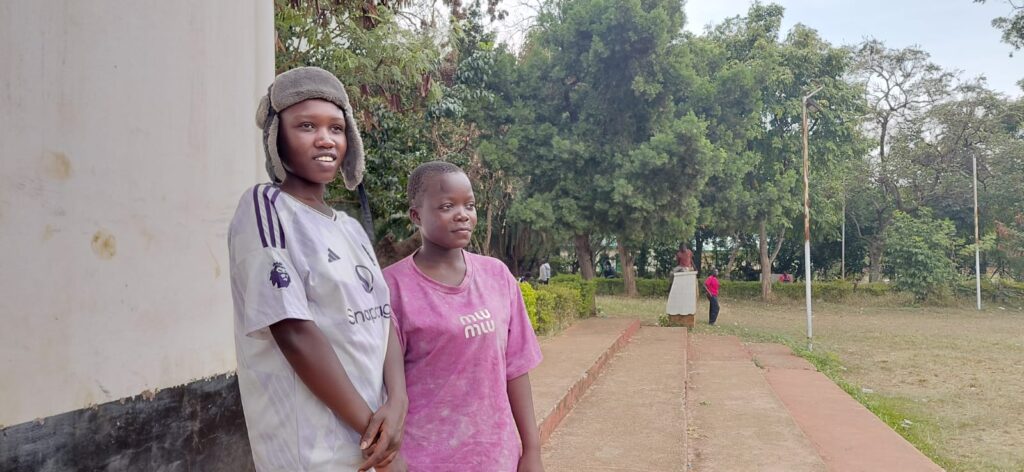
When 17-year-old Mitchelle Joy begins to speak, words fail her. Instead, tears flow.

The teenager from Sidho in Kisumu East sobs uncontrollably as she recounts four painful years of life on the streets of Kisumu, a place she never imagined would become home.

“I have tried going back home, but they rejected me,” she says between sobs.

Mitchelle fled home after irreconcilable family differences. Since then, every day has been a battle for survival – searching for food, clothes, shoes, and somewhere safe to sleep.

For girls like her, darkness brings even greater fear.

She says street girls are frequently attacked by older boys and forced into sexual acts in exchange for protection or survival. One such ordeal left her pregnant.

She later gave birth to a baby girl, Talia, now four months old, whom she entrusted to her mother in Manyatta in the hope of giving the child a better future than the streets could ever offer.

Despite everything she has endured, Mitchelle has refused to surrender her dreams.

“I still want to become an accountant,” she says quietly.

Her story mirrors that of thousands of street-connected people across Kenya.

According to the 2025 National Census of Street Families, the country has 18,049 street-connected persons, down from more than 46,000 recorded in 2018 following intensified rehabilitation efforts. The report attributes street migration largely to poverty, family instability, drug abuse, and economic hardship.

Nineteen-year-old Flora Brenda Juma has known no other life since joining the streets in 2019 after leaving her home in Ramba, Siaya County.

Her greatest fear is not hunger.

It is rape.

“When night comes, you don’t know whether you’ll wake up safely,” she says.

The constant anxiety has driven her into drug and substance abuse. She chews miraa to keep herself awake throughout the night, fearing that sleeping could expose her to sexual violence.

Yet, amid the hardship, Brenda clings to hope.

She eagerly waits for days when well-wishers visit with food, clothing, and words of encouragement.

“Those visits teach us about the dangers of drugs and remind us that someone still cares,” she says.

Before life took an unexpected turn, Brenda dreamed of becoming a journalist.

Twenty-three-year-old Brighton Onyango has survived on the streets since 2015.

Born in Gem Dudi, his journey began after poverty tore his family apart. His parents separated, and his mother’s new husband refused to accept him into the family.

With nowhere to go, Brighton found himself on the streets.

“There is no certainty of food. You sleep without knowing whether someone will attack you. There is no safe place,” he says.

Brighton says he has managed to overcome his addiction to cannabis and is now fighting to quit alcohol, admitting that rejection and loneliness continue to push many young people deeper into substance abuse.

His childhood dream was to become a professional plumber.

For more than a decade, however, one woman has become a constant source of hope for many of these forgotten young people.

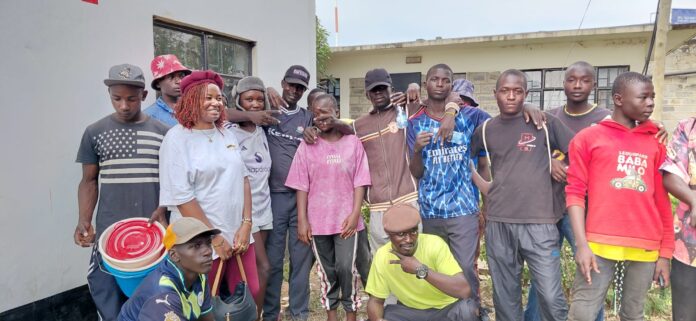
Every month since 2013, Phenny Achieng’ Magann has gathered street families, not just to share meals, but to listen, counsel, and remind them that their lives still matter.

“They come from different backgrounds, and each one has unique needs. They are my children,” she says with a smile.

The affection is mutual.

They simply call her “Mama Yao.”

On this particular day, Phenny led a delegation of nine visitors from the United States who spent time with the street families through games, meals, and interactive activities that temporarily replaced despair with laughter.

She says her inspiration came through working with the Office of the Kisumu Deputy Governor, where she has partnered closely with Deputy Governor Dr Mathew Owili to extend relief and restore dignity to street-connected families.

Dr Owili says his commitment to supporting street families stems from one simple conviction: that every human being deserves dignity and respect regardless of their circumstances.

“They are human beings first. They deserve love, care, and an opportunity to rebuild their lives,” he says.

The Deputy Governor revealed that he and his team are in the final stages of identifying land for the establishment of a resource centre that will include a rehabilitation facility and a safe space where street families can access counselling, skills development, and support as they begin rebuilding their lives.

For Mitchelle, Brenda, and Brighton, such a place would mean far more than shelter.

It would be a chance to dream again.

THE SHADOW OF OCEANIA: GROUPTHINK, DISSENT, AND THE THE ORWELLIAN PARALLEL POST-RAILA

0

By odiwuor Alala

For decades, the political identity of the Luo community in Kenya has been deeply intertwined with the towering figure of Raila Odinga. His leadership provided a singular focal point for political mobilisation, ideological direction, and collective resilience. However, when examining a landscape post-Raila Odinga, a troubling narrative parallel emerges—one that mirrors the chilling socio-political dynamics of George Orwell’s 1984. The core of this concern lies in a visible shift toward regional groupthink: an environment where individual thinking is increasingly discouraged, and independent thinkers are systematically balkanised as outliers and cast as political boogeymen.

In Orwell’s Oceania, the Party maintains absolute control not by convincing the population of its brilliance, but by eliminating the intellectual vocabulary required to dissent. In the hypothetical or emerging power vacuum left by a historic leader, a similar mechanism often takes root. Without a singular, universally accepted authority to unite the collective, secondary political actors and gatekeepers frequently resort to enforcing a rigid orthodoxy to maintain their own relevance and leverage on the national stage.

In this environment, solidarity is no longer built on shared aspiration, but on enforced conformity. To question the strategy of the regional elite is no longer treated as a healthy democratic critique; instead, it is framed as an existential threat to the community’s survival. The collective mindset is pushed to mimic the citizens of Oceania, who accept contradictions and suppress their own analytical faculties to preserve the illusion of absolute unity.

One of the most potent tools of control in 1984 is the creation of Emmanuel Goldstein—the ultimate scapegoat and boogeyman onto whom the populace can project their anxieties and anger. A similar phenomenon occurs when independent thinkers within the community attempt to chart a different intellectual or political course.

When a community’s political elite fears the loss of control, the intellectual contrarian is rarely answered with logic; they are answered with isolation.

Instead of engaging with the substance of alternative ideas, the machinery of groupthink relies on balkanisation. Independent thinkers—be they intellectuals, younger politicians, or civil society leaders—are insulated from the mainstream. They are labelled as “outliers,” political mercenaries, or traitors to the cause. By transforming these free-thinkers into ideological boogeymen, the enforcers of conformity achieve two goals:

  1. They successfully deflect attention away from their own lack of strategic vision.
  2. They create a cautionary tale that deters anyone else from speaking out.

The tragedy of this Orwellian shift is the profound paradox it introduces into a community historically celebrated for its rich intellectual tradition. The Luo community has long been regarded as a powerhouse of academic rigour, legal philosophy, and fierce defence of national democratic spaces in Kenya. To reduce this vibrant ecosystem of thought into a monolith where variation is penalised is a disservice to that very heritage.

When individual thought is discouraged, the collective capacity to innovate, adapt, and negotiate within a pluralistic nation-state is paralysed. Groupthink creates a fragile political ecosystem that cannot withstand the fluid alliances of modern politics because it treats internal critique as a fatal flaw rather than an essential tool for growth.

The parallel to 1984 serves as a stark warning of what happens when fear replaces vision. True resilience in a post-Raila era cannot be achieved by inheriting the psychological tools of Oceania. Forcing individuals into a strict ideological mould and treating dissenters as balkanised outcasts only weakens the collective fabric.

Moving forward, the challenge for the community lies in dismantling the fear of the “outlier.” Recognising that independent thought is not an act of betrayal, but the very foundation of sustainable progress, is the only way to ensure that the vibrant democratic spirit of the region outlives any single political era.

Two Games in the Mountain

0

By Billy Mijungu

Politics in Kenya is often shaped by both visible events and the strategic calculations taking place behind the scenes. Recent developments have generated debate about whether the country is witnessing two parallel political games that could significantly influence the road to the next General Election.

The first revolves around Deputy President Kithure Kindiki. There has been political speculation and commentary suggesting that efforts may be underway to weaken his influence within government by reducing or reassigning some of the coordination responsibilities traditionally associated with the Deputy President’s office. Some commentators have gone further, alleging that such moves could ultimately pressure him to resign and pave the way for another political figure, including names such as Wycliffe Oparanya, before the elections. At present, these remain matters of political speculation rather than established fact, and any such changes would depend on constitutional and political processes.

The second game concerns recent public remarks by National Assembly Minority Leader Junet Mohamed. His assertions regarding the impeachment of former Deputy President Rigathi Gachagua have sparked fresh political debate and attracted public attention. If interpreted as some commentators have suggested, such claims could become relevant in ongoing or future legal and political discussions involving Mr. Gachagua. Others argue that these statements merely reflect political rhetoric and should not be taken as evidence of wrongdoing without supporting proof.

Taken together, these developments have fuelled competing narratives about the broader political strategy ahead of the next presidential election. Supporters of one view argue that political realignments are designed to create favourable conditions for President William Ruto’s re-election campaign by reshaping alliances, neutralising potential rivals, and consolidating support across different regions. Critics, however, maintain that Kenya’s electoral outcomes will ultimately be determined by voters rather than political manoeuvres alone.

As always, citizens should approach political claims critically, distinguishing between verified facts, personal opinions, and political messaging. Democratic accountability requires that serious allegations be supported by credible evidence, while political transitions should occur within the framework of the Constitution and the rule of law.

Whether these developments amount to carefully coordinated strategy or simply the normal evolution of Kenya’s competitive politics remains to be seen. What is certain is that the political landscape continues to shift rapidly, and every statement, alliance, and institutional decision will be scrutinised as the country moves closer to the next General Election.

Follow on Facebook, X, Instagram, TikTok and LinkedIn: @BillyMijungu

Forward #TusongeMbele #Change

Ruto inherits Raila’s coat hangers, may be a Waterloo in Nyanza politics

0

By Anderson Ojwang

President William Ruto may have pulled a political masterstroke by luring the former Prime Minister, the late Raila Odinga, into the broad-based alliance, but the move was a double-edged sword.

For President Ruto, it thawed the political climate and gave him the needed impetus to run the country, but it also opened wounds.

For President Ruto, with Raila as his anchor, he was assured of a second term with ease, but the demise complicated the matter.

But now Ruto is hard-pressed with the unfolding political climate in ODM and the country.

With Raila out of the equation, Ruto has inherited the ODM party with all Raila’s coat hangers.

Raila’s coat hangers

Raila for decades carried his political coat hangers who relied on him to win elections and appointments. Without Raila, they suffocate and perish.

The political coat hangers have been the main contributing factor in Raila’s failed presidential bid.

With a year to the August 10th 2027 general elections, Ruto could be walking to a reality check of having inherited Raila’s coat hangers and not actual movers in the party.

Gladys Wanga

Wanga rose to Parliament through a combined effort of the late Homa Bay Senator Otieno Kajwang’, former Homa Bay Governor Cyprian Awiti, and former Deputy Governor Oyugi Magwanga, who blocked respected educationist Roseline Onyuka for Wanga in a delicate power arrangement against former Rangwe MP Philip Okundi’s lineup.

Magwanga again pushed Wanga for the Homa Bay County Chairperson position against a strong wave from Homa Bay MP Opondo Kaluma, who was supported by Governor Awiti.

In the 2022 General Elections, Raila had to prevail on Magwanga and other gubernatorial aspirants Isaiah Ogwe, Nicholas Koriko, John Mbadi, and Akelo Misori to award the ticket to Wanga.

Raila forced a Wanga-Magwanga ticket, and the duo finally ended the marriage early this year and will face one another at the ballot.

Former Nairobi Governor Dr Evans Kidero declined to bow to Raila and ran against Wanga in the election. Wanga won and became the first woman Governor from Western Kenya.

With the appointment of Mbadi as the Cabinet Secretary for Treasury, the lucky one also found herself becoming the party chairperson.

Currently, Wanga is facing a serious onslaught from Magwanga and Homa Bay residents over non-delivery. Similarly, she is being accused of sponsoring candidates in the region in order to become the kingpin.

In Wanga, President Ruto will find himself in a tight corner and may just lose the grassroots support.

Oburu Oginga

Oburu successfully won the by-election after the death of his father Jaramogi Oginga Odinga in 1992.

In 2013, Oburu lost the gubernatorial bid after the ODM party opted to give a direct ticket to Amoth Rasanga after Dr Oduol Denge was poised to win.

Oburu’s attempts to win the Siaya governorship came a cropper, and he had to be appointed to EALA.

In the 2017 general election, Oburu made a detour to contest for the Bondo Parliamentary seat, but he was humbled and vanquished at the party primaries.

Oburu lost the Bondo parliamentary nomination to Gideon Ochanda during the April 2017 ODM party primaries. Ochanda secured 28,446 votes while Oburu received 4,000 votes.

In 2022, he was a beneficiary of the power matrix that gave Orengo the governor seat, and he easily won the Siaya senatorial seat.

After Raila’s demise, Oburu assumed the party leader slot and has presided over the party’s downhill fall and the split.

Already Orengo and former Secretary Edwin Sifuna-led Linda Mwananchi are soaring high while the Oburu-led Linda Ground is disappearing into thin air.

Dr Oburu and Wanga are the representation of Raila’s coat hangers that Ruto inherited, stifling the wheelbarrow journey in the ODM strongholds.

The Ruto’s cabinet secretaries

The experts ODM seconded to President Ruto’s cabinet – namely John Mbadi and Opiyo Wandayi – have failed to initiate any meaningful development and empowerment of the people.

This explains why President Ruto told Mbadi and Wandayi to use their brains to develop the region.

Ruto made history in his cabinet appointment during the formation of the broad-based government by making Mbadi the first Treasury Cabinet Secretary from the community, 60 years after independence.

Wandayi became the Energy Minister, second after Migori Governor Ochilo Ayacko, who was appointed during the NDP-Kanu cooperation.

But during the tour, President Ruto came face to face with harsh reality during his engagement with the residents who requested projects which could have been effectively handled by Mbadi and Wandayi.

“We previously had marginalisation. You remember some areas were marginalised and forgotten. I have told Opiyo Wandayi ‘tigi wiyi.’ I have told him ‘tigi wiyi.’ I told him to use his brain. The people of Migori, do you agree with that? There is no other administration which put Sh28 billion in one year for development in Migori. It is only the broad-based government,” he said.

In Kasipul, Ruto also told Mbadi to use his head after area MP Boyd Were had made requests for tarmacking of a 16km Sikri road.

Currently, Mbadi and Wandayi have been spearheading flopped women empowerment programmes in Nyanza which have received more backlash than appreciation.

Mbadi is already campaigning for his 2032 presidential bid but is losing grassroots support.

Orengo and Embakasi East MP Babu Owino are being viewed as the possible community leaders.

Game plan

For President Ruto, reliance on Raila’s coat hangers will be his Waterloo. For Ruto to secure the majority of Nyanza votes, he must reinvent himself and go directly to the electorate.

Interestingly, most of Raila’s coat hangers may be counting their days ahead of the August 10th 2027 elections.

With the emerging political wave in the country, Ruto must double his political strategy for Nyanza.

Kisumu public service board warns the public to be wary of fraudstars soliciting bribes for employment

0

By Hope Barbra

Kisumu County Public Service Board has warned the public over fraudsters soliciting money from innocent job seekers.

Board Chairman Prof James Otieno Obondi warned the public and job seekers not to fall prey to fraudsters.

Otieno said the board has official telephone lines for communication with job seekers.

“We do not solicit for bribes for employment. We operate above board and follow the law of the country,” Prof Otieno said.

Prof Otieno said they have reported to the police a telephone number used by the fraudsters to solicit money from job seekers.

He said in every advert by the board, they have indicated official telephone numbers and wondered why the public still falls prey to the fraudsters.

“We have launched investigations, and we will crack the whip on those involved in the fraud. We do not employ through bribery. We have a reputation and name and legacy to protect,” he said.

Prof Otieno said it came to his attention that a number which was not the board’s official number and a person identified as one Wycliff was soliciting for bribes from the public.

He urged those who have been conned to report the matter to the police to help with investigations.

PS Omollo rallies Kenyans to shape President Ruto’s vision for a prosperous Kenya beyond 2030

0

By Habil Onyango

Principal Secretary for Internal Security and National Administration Dr Raymond Omollo has urged Kenyans to embrace President William Ruto’s call to shape a new long-term national development vision that will guide the country beyond Vision 2030 and secure prosperity for present and future generations.

Speaking at Ambassador Pamela Mboya Girls High School in Suba, Homa Bay County, Dr Omollo said the National Conversation on Kenya’s Future Beyond Vision 2030, which will be formally launched on August 12, 2026, will give every Kenyan an opportunity to participate in defining the country’s next chapter.

He said the conversation would bring together young people, students, the elderly, professionals, political leaders, faith communities, the private sector and civil society to develop a people-driven national vision that transcends political and electoral cycles.

“We owe it to the current and future generations to have an honest conversation, safeguard the gains we have made, and address the longstanding challenges that have held our country back since independence,” Dr Omollo said.

The PS said President Ruto’s vision is to transform Kenya into a prosperous, high-income, industrialised and globally competitive nation while ensuring that no community, county or generation is left behind.

He noted that this commitment to inclusive development was already evident in reforms expanding access to National Identity Cards, healthcare and education, alongside investments in roads, modern markets and other essential infrastructure across the country.

“Development must never depend on how a community voted or where a citizen comes from. Every Kenyan must be treated equally, and every region must receive a fair share of national progress,” he said.

Dr Omollo commended Homa Bay Governor Gladys Wanga and the county’s MPs, Senator, Woman Representative and MCAs for agreeing to work together to advance development and ensure the people of Homa Bay benefit fully from the Government’s transformation agenda.

He said political differences should not be allowed to undermine development gains, calling upon leaders to place the interests of citizens and the country above partisan considerations.

He challenged students to reciprocate the investment made by the Government, parents and communities by remaining disciplined, respecting their teachers and fellow learners, and working hard in their academic and extracurricular activities.

Dr Omollo also commended the approximately 130 eligible students who recently registered for National Identity Cards through the Government’s school-based registration programme. He said the initiative would ensure learners leave school with the identification documents required to pursue further education, access opportunities and participate fully in national development.

The PS reaffirmed the Government’s commitment to taking registration services closer to citizens, operationalising new administrative units and deploying chiefs and assistant chiefs to strengthen grassroots service delivery, security coordination and access to Government programmes.

Present were Homa Bay Governor Gladys Wanga, Homa Bay Senator Moses Kajwang’, Members of the County Assembly and other national and county leaders.