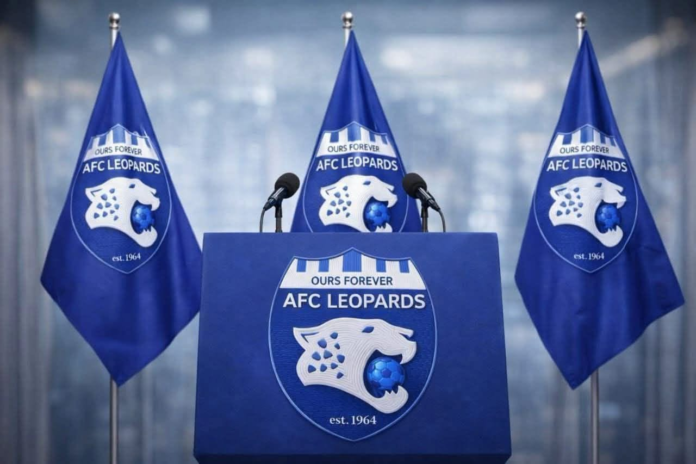
AFC Leopards continue to get it right with right decision-making while the bitter rivals Gor struggle with the reality of making the right decision.
At Ingwe Den, after the indefinite postponement of the league opening match, the management announced they would make a refund.
“In case you missed it, our FKF Premier League opening fixture against Bandari FC, scheduled for Sunday, 20th September 2026 (today) at Nyayo National Stadium, was cancelled by the Football Kenya Federation (FKF).
𝐓𝐈𝐂𝐊𝐄𝐓 𝐑𝐄𝐅𝐔𝐍𝐃𝐒
All supporters who purchased tickets for the fixture will receive direct communication on the refund arrangements by close of business on Tuesday, 22nd September 2026,” read the statement.
And on Monday, they said they had processed all the refunds and were asking those who had not received their monies to let them know.
“We wish to confirm to all our fans and stakeholders that refunds for the postponed Bandari match have been processed.
Let us know if anyone has not received their cash.
We sincerely thank you for your support and look forward to welcoming you to our upcoming games,” read the new statement.
At Gor Mahia, the management announced they have retained the money and that the ticket remains valid.
The question is: who is enjoying the interest on the money, and why is Gor Mahia not following the trend of other clubs?
“Gor Mahia wrote: ‘We regret to inform all fans that our season opener match against Murang’a Seal that was set for today at Nyayo Stadium has been postponed until further notice; Federation has postponed all league matches.
We sincerely apologise to all our fans for the inconvenience and disappointment this may cause.
For fans who had already purchased tickets, please do not worry. Your tickets remain valid and will be honoured when the season officially gets underway.
We will keep you updated on the new kick-off date,’” read the statement.
With the emerging turmoil in Gor Mahia Den, with the suspension of two players and the allegations of players protesting over the action, the unity and cohesion in Ingwe Den provide it with the opportunity and possibility to win the league after 28 years of unsuccessful searching.
The events seem to be conspiring in favour of AFC Leopards, and it will not come as a surprise if they win the league while Gor Mahia may struggle this season.
Kilifi County Government has been declared technically insolvent over pending bills.
The full extent of the pending bills in the Kilifi County Executive has been laid bare before the County Public Accounts Committee, prompting Senator Moses Kajwang to declare the county technically insolvent.
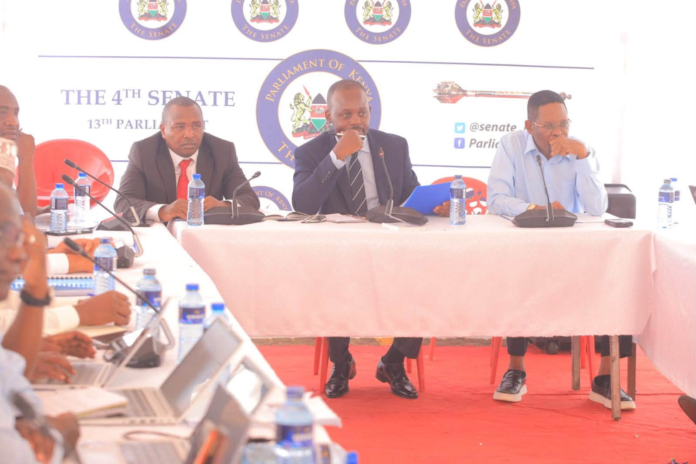
A section of suppliers, under the aegis of their association, appeared before the Committee on Monday, September 21, 2026, during a public engagement at the Kilifi County Assembly in Malindi, where they painted a sorry picture of the situation.
They complained of poor record-keeping of procurement documents, unremitted statutory deductions and a lack of professionalism in the financial management of county affairs.
The suppliers also questioned why the county administration was prioritising payment of new debts at the expense of older ones, some dating back 10 years.
“We are suffering and if you don’t step in and help us, no one will,” said Mr Joshua Chai, the chair of the association.
One of the suppliers who appeared before the Committee is owed Sh17 million, while another is owed Sh16 million. They want the Senate to help audit the total stock of debt and determine the necessary intervention.
Chae said at least two task forces had been formed to verify and validate the debt, but nothing came out of the process as the findings were never published.
The pending bills in the county have hit a staggering Sh10.7 billion, the second highest nationally after Nairobi County.
According to the data presented to the Committee, the revenue-to-debt ratio stands at a worrying 70 per cent, higher than the national ratio. The county’s total revenue for the 2024/25 financial year was Sh14.3 billion, comprising Sh12.8 billion from the equitable share and Sh1.5 billion in own-source revenue.
Details of the county’s worsening debt situation emerged during a meeting between the Committee and suppliers and contractors of the County Executive at the Kilifi Assembly.
The suppliers used the meeting to vent their frustrations over the challenges they face before receiving payment, with some saying they had been pushed to the brink of bankruptcy and faced the auctioneer’s hammer.
Some claimed they are usually paid just part of what they are owed and wait for as long as a year for the balance.
It also emerged that while the county has used suppliers’ vouchers to make requisitions for withdrawals, the ultimate payments are often made to other suppliers, allegedly those willing to offer bribes or those who are politically connected.
For example, the Office of the Controller of Budget states that 612 transactions, with a total value of Sh3.2 billion, were voided in the Integrated Financial Management Information System (IFMIS). The Committee believes such practices have contributed to the huge pending bills in the county.
The Controller of Budget has said there is a need for the National Treasury to address systemic and legislative gaps identified in the management of IFMIS.
Senator Kajwang said it was time for the Senate to explore ways of developing a framework through which some of the bills could be paid at source where sufficient proof exists following verification.
He proposed that National Treasury CS John Mbadi must be involved as the worrying situation is forcing some of the suppliers out of business.
“You are removing these suppliers from business and with that you are killing the economy,” he said, as he challenged the County Assembly to exploit its immense powers to address the situation.
“Do a detailed inquiry and demand for answers and bring this cycle of poverty to an end,” he said.
Governor Gideon Mung’aro had been scheduled to appear before the Committee but was indisposed. The Committee directed the Deputy Governor to appear on Tuesday, September 22, 2026, where the matter will be discussed. The County Executive is expected to provide its side of the story on the state of pending bills and how the debt keeps mounting despite the clear provisions of the law.
Kajwang declares Kilifi County technically insolvent
By Reporter
Kilifi County Government has been declared technically insolvent over pending bills.
The full extent of the pending bills in the Kilifi County Executive has been laid bare before the County Public Accounts Committee, prompting Senator Moses Kajwang to declare the county technically insolvent.
A section of suppliers, under the aegis of their association, appeared before the Committee on Monday, September 21, 2026, during a public engagement at the Kilifi County Assembly in Malindi, where they painted a sorry picture of the situation.
They complained of poor record-keeping of procurement documents, unremitted statutory deductions and a lack of professionalism in the financial management of county affairs.
The suppliers also questioned why the county administration was prioritising payment of new debts at the expense of older ones, some dating back 10 years.
“We are suffering and if you don’t step in and help us, no one will,” said Mr Joshua Chai, the chair of the association.
One of the suppliers who appeared before the Committee is owed Sh17 million, while another is owed Sh16 million. They want the Senate to help audit the total stock of debt and determine the necessary intervention.
Chae said at least two task forces had been formed to verify and validate the debt, but nothing came out of the process as the findings were never published.
The pending bills in the county have hit a staggering Sh10.7 billion, the second highest nationally after Nairobi County.
According to the data presented to the Committee, the revenue-to-debt ratio stands at a worrying 70 per cent, higher than the national ratio. The county’s total revenue for the 2024/25 financial year was Sh14.3 billion, comprising Sh12.8 billion from the equitable share and Sh1.5 billion in own-source revenue.
Details of the county’s worsening debt situation emerged during a meeting between the Committee and suppliers and contractors of the County Executive at the Kilifi Assembly.
The suppliers used the meeting to vent their frustrations over the challenges they face before receiving payment, with some saying they had been pushed to the brink of bankruptcy and faced the auctioneer’s hammer.
Some claimed they are usually paid just part of what they are owed and wait for as long as a year for the balance.
It also emerged that while the county has used suppliers’ vouchers to make requisitions for withdrawals, the ultimate payments are often made to other suppliers, allegedly those willing to offer bribes or those who are politically connected.
For example, the Office of the Controller of Budget states that 612 transactions, with a total value of Sh3.2 billion, were voided in the Integrated Financial Management Information System (IFMIS). The Committee believes such practices have contributed to the huge pending bills in the county.
The Controller of Budget has said there is a need for the National Treasury to address systemic and legislative gaps identified in the management of IFMIS.
Senator Kajwang said it was time for the Senate to explore ways of developing a framework through which some of the bills could be paid at source where sufficient proof exists following verification.
He proposed that National Treasury CS John Mbadi must be involved as the worrying situation is forcing some of the suppliers out of business.
“You are removing these suppliers from business and with that you are killing the economy,” he said, as he challenged the County Assembly to exploit its immense powers to address the situation.
“Do a detailed inquiry and demand for answers and bring this cycle of poverty to an end,” he said.
Governor Gideon Mung’aro had been scheduled to appear before the Committee but was indisposed. The Committee directed the Deputy Governor to appear on Tuesday, September 22, 2026, where the matter will be discussed. The County Executive is expected to provide its side of the story on the state of pending bills and how the debt keeps mounting despite the clear provisions of the law.
The opposition is facing a herculean challenge: a challenge to survive and weather the storm to face President William Ruto in the August 10, 2027, Presidential Election.
The opposition finds itself fixed and boxed into a corner, with emerging internal cannibalism, strife and a fallout.
Not a single opposition party or formation is currently free from struggles over leadership, constant court cases, infiltration and unsuccessful back-and-forth attempts to register new political parties and formations.
Ruto’s prediction
President Ruto, in his recent tour of Nyanza and the Rift Valley, alluded to a possible fallout in the opposition outfit ahead of next year’s General Election.
Ruto said the United Opposition coalition would collapse because its founders lacked unity and a common purpose, before attempting to create another political outfit dubbed the alternative government.
“Walianzisha United Opposition hiyo ikazambaratika because there was no unity, and there was no convergence of anything,” Ruto said.
Ruto exuded confidence over the broad-based agreement, terming it as the only outfit that has a plan and development agenda for the country.
“I am a very proud person because it is very rare to be a leader of a big committed outfit as the one we have in this room today. Listen, guys, the other side is in chaos and I don’t have to say that. I don’t have to explain,” he said on August 11, 2026.
Ruto said the opposition was in chaos and had been disorganised, left to speaking in tongues.
“The opposition have no unity, they are now speaking in tongues. They are stuck in one-term and must-go slogans. We have opposition, which is clueless, brainless; they expect that there will be competition. Will there be any form of competition?” he said.
Ruto said while in Nyanza, “I want to say this when I am in Nyanza, our government cannot be left to formations that have no agenda and clueless.”
Ruto’s infiltration of opposition
But Democracy for Citizens Party (DCP) leader Rigathi Gachagua claimed Ruto had been infiltrating opposition outfits, with the latest being Linda Mwananchi.
“In DCP there is a lot of infiltration, and we have put mechanisms to vet aspirants so that he doesn’t plant more to come in the party pretending they belong to DCP. But the truth is they work for William Ruto, with a mission to come and wreck our party from within. Let other opposition parties do the same,” he said.
Gachagua said Ruto’s first target was the Jubilee Party of former President Uhuru Kenyatta and that he had been wrecking the outfit.
“Jubilee has had a big challenge and they have really worked on Jubilee. They have so many people there who are trying to wreck the party from within, undermining Fred Matiang’i and making sure he doesn’t go anywhere,” he said.
Gachagua said he had warned Matiang’i and that he now understood how hard Ruto was working to infiltrate and divide the opposition.
“These are people who work for Ruto and they are in Jubilee. I had warned Matiang’i about it and he took it lightly, but now he knows. Because they are the same people who have gone to court and nullified the appointment of Secretary-General Ole Kenta.”
Gachagua predicted a possible power wrangle when Uhuru finally hands over Jubilee leadership to Matiang’i.
“I am sure when President Uhuru Kenyatta decides that the party should have Matiang’i as the party leader, when he retires, I know they will make it very difficult because they work for Ruto. It is upon these parties to continue being very careful,” he said.
Linda Mwananchi co-principal Godfrey Osotsi said the troubles in the outfit and unsuccessful registration were the work of Ruto.
“We as Linda Mwananchi, we are united and focused. If you hear some differing opinion, what is there is Kasongo trying to bring war in Linda Mwananchi using the government bloggers. Let the government bloggers leave us. In Linda Mwananchi, we are one and our presidential candidate is Nairobi Senator Edwin Sifuna.
It is Kasongo who is trying to portray division through government bloggers,”he said.
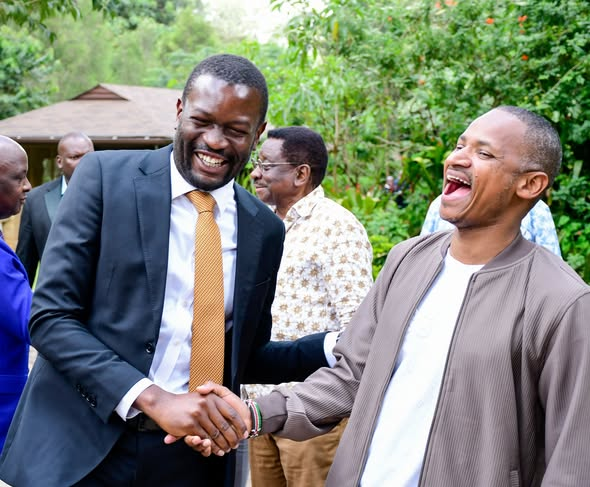
Gachagua said there was trouble in Linda Mwananchi between the two leaders, Sifuna and Embakasi East MP Babu Owino, and put the blame on Ruto.
“I know there is a small challenge with Linda Mwananchi of Sifuna and Babu Owino supporters trading barbs and insulting each other,” he said.
Gachagua said he was building a truce between Sifuna and Babu to avoid a blown-out fallout.
“I placed a call to Edwin Sifuna and had a long chat with him and the same with Babu Owino. I told them, young guys, your movement is being infiltrated by William Ruto and the National Intelligence Service and your supporters are falling for it. You must very quickly meet, the two of you, and tell your supporters not to fall into the trap of infiltration.
The state has invested heavily in dividing Linda Mwananchi. The President is so scared of the young leaders after the Jacaranda meeting.
I have briefed Sifuna and Babu. They have agreed that they have to do whatever it takes to jointly call the supporters to order and inform them that the state is trying to divide Linda Mwananchi,” he said.
Wiper leader Kalonzo Musyoka appealed to Babu and Sifuna to resolve any issues and avoid dividing the outfit.
“We don’t want that movement divided. Kijana Sifuna, Kijana Babu, my call on them is not to allow any division in their ranks so that this issue,” he said.
first target was the Jubilee Party of former President Uhuru Kenyatta and that he had been wrecking the outfit.
“Jubilee has had a big challenge and they have really worked on Jubilee. They have so many people there who are trying to wreck the party from within, undermining Fred Matiang’i and making sure he doesn’t go anywhere,” he said.
Gachagua said he had warned Matiang’i and that he now understood how hard Ruto was working to infiltrate and divide the opposition.
“These are people who work for Ruto and they are in Jubilee. I had warned Matiang’i about it and he took it lightly, but now he knows. Because they are the same people who have gone to court and nullified the appointment of Secretary-General Ole Kenta.”
Gachagua predicted a possible power wrangle when Uhuru finally hands over Jubilee leadership to Matiang’i.
“I am sure when President Uhuru Kenyatta decides that the party should have Matiang’i as the party leader, when he retires, I know they will make it very difficult because they work for Ruto. It is upon these parties to continue being very careful,” he said.
Linda Mwananchi co-principal Godfrey Osotsi said the troubles in the outfit and unsuccessful registration were the work of Ruto.
“We as Linda Mwananchi, we are united and focused. If you hear some differing opinion, what is there is Kasongo trying to bring war in Linda Mwananchi using the government bloggers. Let the government bloggers leave us. In Linda Mwananchi, we are one and our presidential candidate is Nairobi Senator Edwin Sifuna.
It is Kasongo who is trying to portray division through government bloggers,”he said.
Gachagua said there was trouble in Linda Mwananchi between the two leaders, Sifuna and Embakasi East MP Babu Owino, and put the blame on Ruto.
“I know there is a small challenge with Linda Mwananchi of Sifuna and Babu Owino supporters trading barbs and insulting each other,” he said.
Gachagua said he was building a truce between Sifuna and Babu to avoid a blown-out fallout.
“I placed a call to Edwin Sifuna and had a long chat with him and the same with Babu Owino. I told them, young guys, your movement is being infiltrated by William Ruto and the National Intelligence Service and your supporters are falling for it. You must very quickly meet, the two of you, and tell your supporters not to fall into the trap of infiltration.
The state has invested heavily in dividing Linda Mwananchi. The President is so scared of the young leaders after the Jacaranda meeting.
I have briefed Sifuna and Babu. They have agreed that they have to do whatever it takes to jointly call the supporters to order and inform them that the state is trying to divide Linda Mwananchi,”he said.
Wiper leader Kalonzo Musyoka appealed to Babu and Sifuna to resolve any issues and avoid dividing the outfit.
“We don’t want that movement divided. Kijana Sifuna, Kijana Babu, my call on them is not to allow any division in their ranks so that this issue,” he said.
Murang’a County is preparing to expand its subsidised school meals programme to more than 200,000 learners, in a plan that will see parents pay less for school meals while the county government takes on a larger share of the cost.
The programme, which is being implemented in partnership with Food4Education, is expected to cover learners in public primary schools, Junior Secondary Schools and Early Childhood Development Education centres when the wider rollout begins in January 2027.
Under the expanded programme, parents are expected to pay Sh15 per child per day, down from the Sh20 contribution that has been tested during the pilot phase, while the county government subsidises the remaining cost.
The programme is expected to benefit about 215,000 learners across hundreds of learning institutions, with the county setting aside Sh200 million to support its implementation. Governor Irungu Kang’ata has said the initiative is intended to ensure learners have access to nutritious meals while also easing the financial burden on families.
How the programme will work
The subsidised meals model was tested for about one-and-a-half years to establish whether parents could afford to contribute towards the cost of feeding their children at school.
During the pilot, parents paid Sh20 per day. Kang’ata said participation levels ranged between 70 and 92 per cent, which the county interpreted as evidence that most parents were able and willing to contribute towards subsidised school meals.
image
“The county now plans to reduce the contribution to Sh15 as it moves to expand the programme, with the government taking on part of the cost,” Kang’ata said.
The county will also fully pay for meals for learners from vulnerable households who may not be able to afford even the subsidised contribution.
The beneficiaries will include orphans, learners with disabilities, children from vulnerable households, children with disabled parents and vulnerable children from single-parent families.
The programme builds on Murang’a’s existing school feeding efforts, particularly the county’s ECDE Uji Programme, which provides free fortified porridge to young learners.
In May 2024, Kang’ata said the subsidised lunch pilot was already running in 55 primary schools, with parents paying Sh20 and Food4Education topping up the cost. He said the pilot would run for two years before possible expansion.
According to the county government, the Uji programme currently serves about 42,000 children in 700 ECDE centres and is implemented in partnership with Food4Education. The county says the initiative has helped improve enrolment by reducing hunger among young learners.
Food4Education partnership
Food4Education is expected to remain central to the expanded meals programme, providing the infrastructure and systems required to prepare and distribute food to participating schools.
The partnership builds on the feeding structures already established through the county’s ECDE programme. Murang’a has also signed an Intergovernmental Partnership Agreement with the national government to provide a framework for extending the programme to primary schools and JSS, which fall under the national government’s education responsibilities.
The county has committed Sh200 million towards the expansion, while 67 kitchens are under construction to support the wider programme.
On August 26, 2026, the county formally announced the planned countywide expansion, targeting more than 215,000 learners, with the parental contribution falling to Sh15. Kang’ata announced the planned expansion after visiting Food4Education’s headquarters in Ruiru and two schools in Kiambu County for benchmarking. The programme is expected to cover about 512 learning institutions, according to reporting on the rollout.
More than meals
Murang’a’s plan is also designed to connect school feeding with the county’s agricultural economy.
The county has said the programme will provide a market for produce from local farmers, including milk and mangoes.
About 200,000 packets of processed milk are expected to be supplied to learners every month through Murang’a County Creameries Union. During the mango season between January and March, the programme is expected to purchase about one million mangoes each month for use in the school meals programme.
The county says the arrangement will give farmers a more reliable market for their produce while keeping part of the money generated by the programme within the local economy.
The programme is also expected to create employment at participating schools, with people involved in preparing and serving meals.
Latest preparations
As Murang’a moves closer to the wider rollout, the county has begun preparations to recruit School Coordinators and Food Champions in participating schools.
image
The recruitment process announced on September 19 is expected to take place in participating schools, with primary schools getting a School Coordinator and a Food Champion. In standalone ECDE centres, one person will serve in the combined role.
The Food Champion will be selected by parents, while the School Coordinator will be recruited through a competitive process. The positions are intended to support the administration and implementation of the meals programme at school level.
The recruitment comes as the county prepares to move beyond the pilot phase and extend the subsidised meals model to more schools.
The broader programme therefore brings together several objectives: providing affordable meals to learners, supporting vulnerable families, improving the learning environment and creating a structured market for agricultural produce from Murang’a.
With the parental contribution expected to fall from Sh20 to Sh15, the county hopes the subsidy will allow more families to participate while the government assumes a greater share of the cost as the programme expands in January 2027.
A rocket is built from many components, but not every component travels all the way to its destination. As it rises, some parts separate and fall away because their purpose has already been fulfilled. What matters is that the rocket keeps gaining altitude, maintains its trajectory and ultimately reaches its destination. The fuel remains critical because without sustained thrust, even the most sophisticated rocket cannot complete its journey.
That is how I see the Sifuna ship.
Sifuna is the rocket. Orengo is the fuel. The various personalities and political formations around the movement are the supporting components. Some may remain attached for a considerable distance, while others may eventually separate as the journey becomes more demanding. But the central question is whether the rocket maintains its thrust and direction.
Sifuna has taken off, and stopping him will not be easy.
For leaders in Western Kenya, the political reality is becoming increasingly important. If you attempt to command Sifuna, control his trajectory or reduce him to a subordinate player, you may end up weakening your own political prospects. Sifuna carries aspirations that go beyond the immediate political arrangements surrounding Linda Mwananchi. His political momentum is increasingly tied to the possibility of building a wider national constituency.
The same applies to those who may imagine that slowing him down is an alternative to working with him. A rocket does not stop because one of its components separates. The journey continues. The component falls, while the rocket keeps moving.
That is why the adherents of Linda Mwananchi must begin to understand that the political table has changed. It cannot continue being treated as a permanent table of equals where every participant expects an identical share of influence. Movements evolve. Leadership emerges. Political gravity shifts.
Sifuna is increasingly occupying the driver’s seat of this political journey.
But every rocket needs fuel.
That fuel, in this political metaphor, is James Orengo. His experience, political networks, institutional understanding and national stature provide an important source of propulsion to the broader project. Sifuna may provide the youthful political energy and organisational thrust, while Orengo provides another layer of political depth and experience.
The destination, however, remains larger than any individual.
The lesson is simple: political movements that have gained momentum cannot be managed indefinitely through internal competition. They require order, discipline, strategic coordination and clarity of leadership.
The Sifuna rocket has launched. Some components may fall away as the altitude increases. But with sufficient political fuel, the trajectory can remain intact.
Sifuna is the Rocket, Orengo is the Fuel
By Billy Mijungu
A rocket is built from many components, but not every component travels all the way to its destination. As it rises, some parts separate and fall away because their purpose has already been fulfilled. What matters is that the rocket keeps gaining altitude, maintains its trajectory and ultimately reaches its destination. The fuel remains critical because without sustained thrust, even the most sophisticated rocket cannot complete its journey.
That is how I see the Sifuna ship.
Sifuna is the rocket. Orengo is the fuel. The various personalities and political formations around the movement are the supporting components. Some may remain attached for a considerable distance, while others may eventually separate as the journey becomes more demanding. But the central question is whether the rocket maintains its thrust and direction.
Sifuna has taken off, and stopping him will not be easy.
For leaders in Western Kenya, the political reality is becoming increasingly important. If you attempt to command Sifuna, control his trajectory or reduce him to a subordinate player, you may end up weakening your own political prospects. Sifuna carries aspirations that go beyond the immediate political arrangements surrounding Linda Mwananchi. His political momentum is increasingly tied to the possibility of building a wider national constituency.
The same applies to those who may imagine that slowing him down is an alternative to working with him. A rocket does not stop because one of its components separates. The journey continues. The component falls, while the rocket keeps moving.
That is why the adherents of Linda Mwananchi must begin to understand that the political table has changed. It cannot continue being treated as a permanent table of equals where every participant expects an identical share of influence. Movements evolve. Leadership emerges. Political gravity shifts.
Sifuna is increasingly occupying the driver’s seat of this political journey.
But every rocket needs fuel.
That fuel, in this political metaphor, is James Orengo. His experience, political networks, institutional understanding and national stature provide an important source of propulsion to the broader project. Sifuna may provide the youthful political energy and organisational thrust, while Orengo provides another layer of political depth and experience.
The destination, however, remains larger than any individual.
The lesson is simple: political movements that have gained momentum cannot be managed indefinitely through internal competition. They require order, discipline, strategic coordination and clarity of leadership.
The Sifuna rocket has launched. Some components may fall away as the altitude increases. But with sufficient political fuel, the trajectory can remain intact.
The September sky offers a timely warning: forecasts do not protect communities unless public budgets and climate finance convert them into early action.
Climate Finance and Project Bankability Specialist
Around 23 September, Kenya experiences the equinox, when the Sun crosses the Equator and day and night are nearly equal in length. For a country named after Mount Kenya and straddling the Equator, the moment carries both scientific and symbolic significance. In 2026, it also arrives as a powerful El Niño strengthens across the tropical Pacific.
The two events should not be confused. The equinox is an astronomical event caused by the Earth’s orbit and tilt. It does not cause El Niño, nor does it guarantee rain. El Niño is a large-scale warming of the central and eastern equatorial Pacific Ocean that changes atmospheric circulation and can alter rainfall and temperature patterns far beyond the Pacific. Their coincidence this September is therefore not a causal relationship. It is a useful public reminder that Kenya is entering a period when climate information must be translated into preparedness.
On 3 September, the World Meteorological Organization reported that El Niño was firmly established and expected to intensify to a very strong event, with an exceptionally high likelihood of persisting through February 2027. WMO warned of increased risks of floods, droughts and extreme heat, while stressing that impacts differ by place and depend on other climate drivers. That qualification matters: El Niño raises probabilities; it does not provide a street-by-street forecast. Kenya must therefore rely on regular updates from the Kenya Meteorological Department and local risk information rather than treating a global outlook as a prediction of identical rainfall everywhere.
For western Kenya, the warning is economic
In western Kenya, climate risk travels quickly through the economy. Intense rain can swell rivers, overwhelm drainage systems, damage roads and bridges, disrupt markets and schools, contaminate water sources and trigger landslides. Around Lake Victoria, changing rainfall, strong winds and lake conditions can threaten fishing livelihoods and lakeshore settlements. Yet poor or uneven rainfall can also damage crops, reduce pasture and deepen household food insecurity.
This is why the central question is not simply whether it will rain more. It is whether counties, utilities, farmers, businesses and communities are financially prepared for a wider range of plausible conditions. Forecast uncertainty is not a reason to delay. It is a reason to finance flexible, no-regret measures that deliver value under several scenarios.
A cleared drainage channel, a protected water source, a functioning early-warning system, pre-positioned emergency supplies, safer school infrastructure and an updated evacuation route are useful even when the worst forecast does not materialise. Climate preparedness should be judged in the same way as insurance: its value is not cancelled because disaster was avoided.
Kenya has a last-mile climate finance problem
Climate finance is often discussed as a contest for billions of shillings from global funds. That matters, but communities usually experience the financing gap at the last mile. A forecast may be available nationally, yet a ward lacks money to repair a culvert. A county may map a flood-prone settlement, yet have no pre-agreed budget trigger for evacuation and temporary shelter. Farmers may receive an alert, yet lack affordable credit, suitable seed, water storage or insurance to act on it.
Information without an action budget transfers responsibility to people who often have the least capacity to absorb loss. An alert that says flooding is possible is not enough if households cannot move, drainage remains blocked and health facilities have no continuity plan.
This is the practical meaning of climate-finance readiness. It is the ability to turn a recognised climate risk into a credible project, with evidence, costed interventions, capable institutions, safeguards, measurable results and a financing plan. Readiness must come before the emergency, not after the damage assessment.
Five investments should begin before the rains
First, county governments should ring-fence contingency funds and link their release to clear, forecast-based triggers. Emergency spending should not depend entirely on slow supplementary budgets after losses have occurred.
Second, counties should prepare investable resilience projects rather than broad wish lists. Flood-control, resilient roads, water storage, catchment restoration and climate-smart agriculture proposals need designs, budgets, climate rationales, safeguards, maintenance plans and indicators. Donors and investors finance credible pipelines, not intentions.
Third, funding should strengthen local early action. Community health volunteers, beach management units, farmer organisations, schools, water-user associations and local media often carry the final warning. They need defined roles, trusted messages, equipment and modest operational budgets.
Fourth, Kenya should expand risk-transfer and liquidity tools. Agricultural and livestock insurance, emergency credit lines, guarantees and contingency finance can help households, enterprises and governments recover faster. But these tools must be transparent and affordable; insurance should complement risk reduction, not become an excuse to leave people exposed.
Fifth, every investment should measure resilience delivered. Counting workshops, beneficiaries or money disbursed is insufficient. The real indicators are whether warning lead time improved, losses fell, water and essential services remained available, vulnerable households recovered faster and protective systems continued functioning after project funding ended.
Preparedness can also unlock investment
The business case for anticipatory action is stronger than it first appears. Flood protection, watershed restoration and climate information may not always generate direct commercial revenue, but they can reduce repair costs, protect agricultural production, preserve market access and lower disruption for firms and public services. These avoided losses are real economic value.
Good financial structuring separates benefits that can support revenue from those that justify public or concessional finance. Commercial capital may fund viable productive assets. Grants can support public goods, community mobilisation and project preparation. Concessional loans and guarantees can reduce financing costs, while insurance and contingency facilities can manage residual risk. Treating every adaptation project as either a pure grant or a conventional commercial investment is too simplistic.
Western Kenya can use this approach to build a pipeline around resilient food systems, urban drainage, water security, wetland and catchment restoration, lake-based livelihoods, resilient schools and health facilities. But each project must answer six questions: What hazard is being addressed? Who or what is exposed? Which vulnerability will be reduced? What intervention will achieve that reduction? How will success be measured? Who will maintain the asset or service after initial funding ends?
September should mark the start of action
The equinox will pass in a day. El Niño and its effects may extend well into 2027. The opportunity is to use this September not for alarm, but for disciplined preparation.
National and county governments should publish understandable local outlooks, test response plans and identify unfunded priorities. Banks and insurers should offer responsible products that help farmers and small businesses act before losses. Development partners should finance preparation and early action, not only post-disaster recovery. Project developers should produce bankable, evidence-led proposals. Communities must be involved in defining risks, workable responses and the indicators by which success will be judged.
Kenya cannot control the equinox or El Niño. It can control whether warnings become budgets, whether budgets become resilient projects and whether those projects protect lives and livelihoods. That is the climate-finance test before us: not how much money is announced after disaster, but how effectively finance reduces loss before the next storm, flood or failed season arrives.
Readers should follow the latest national and county-specific forecasts and advisories issued by the Kenya Meteorological Department.
About the author
Olendo Simon Okola is the Founder and Lead Consultant at Agenda Beyond Borders. He works on climate-finance readiness, project bankability, institutional capacity, and investment-ready climate projects across Africa. Email: simonokola@agendabeyondborders.org | www.agendabeyondborders.org
A day that was expected to mark a significant political statement did not disappoint and, if anything, it was a double-edged sword that sliced each way.
For the Deputy President, it was a solemn occasion that granted him the power to be the Mt Kenya spokesperson and the centre of power.
On the other hand, the fall of the crown has been viewed by his opponents as rejection by the spirits and therefore cannot lead the region.
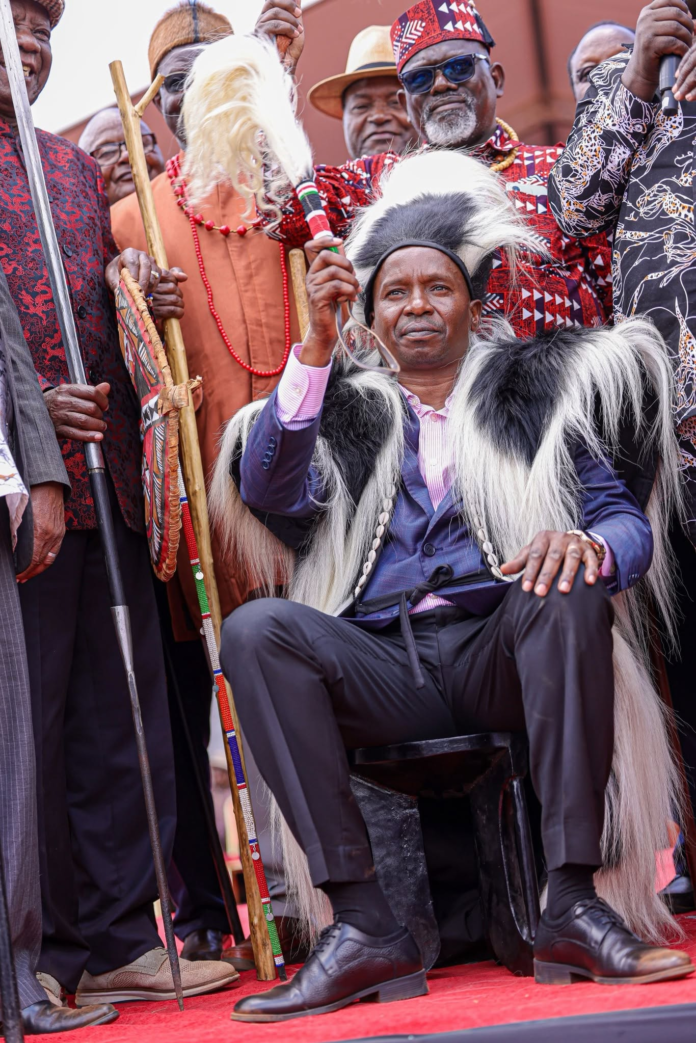
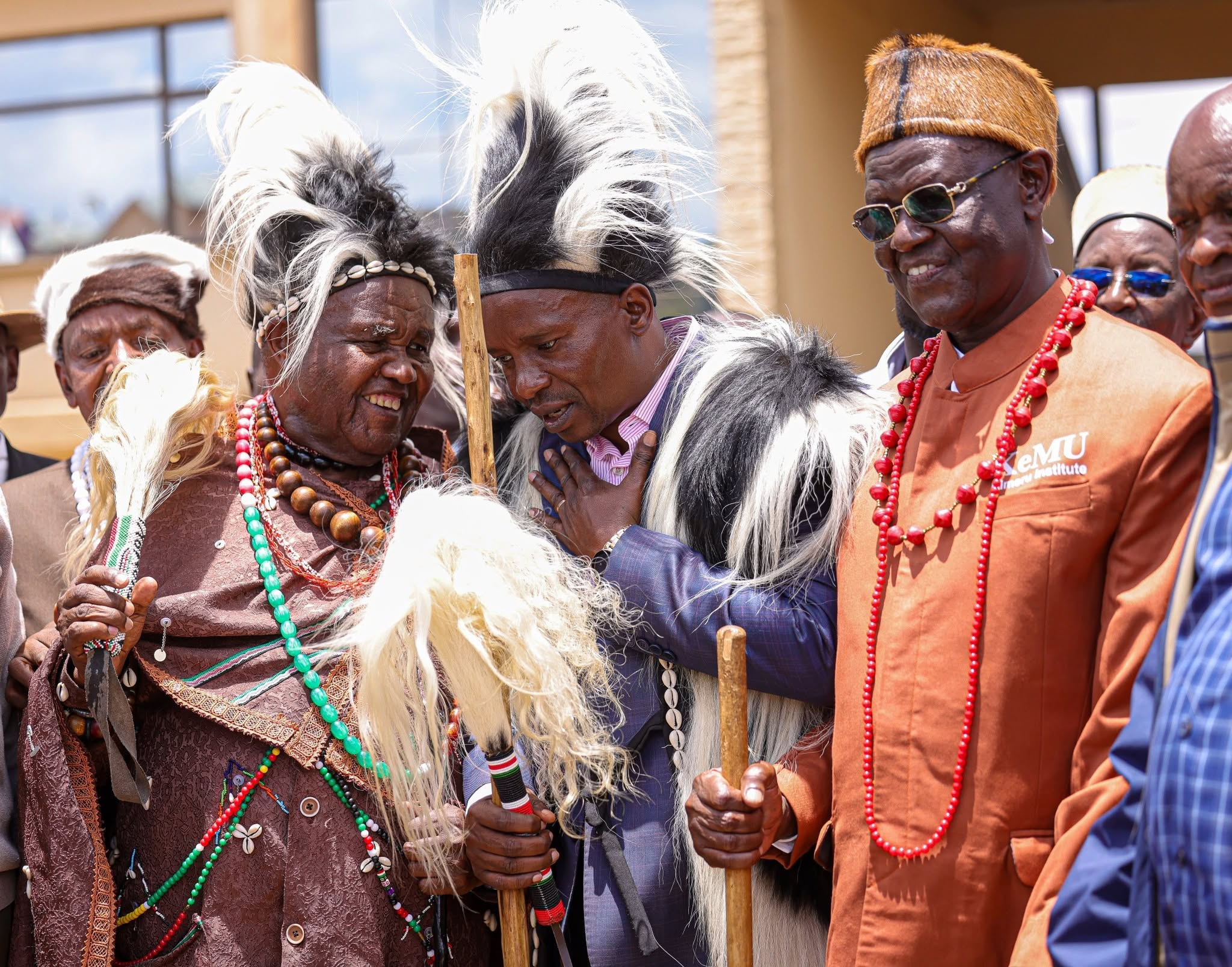
It was a double-edged sword for Deputy President Kithure Kindiki as elders from Mt Kenya converged to crown him as the region’s spokesperson.
But the irony of the event was that while the elders crowned him, the crown fell from his head, which immediately drew widespread interpretation.
Honour in crown
At the historic Kiringiti, Kiambu, on Saturday, before the Council of Elders of the Gikuyu, Aembu, Mbeere and Ameru communities converged for an important mission.
The over 30,000 elders drawn from 11 counties, members of the Kiama Kia Ma, Kikuyu Council of Elders, Kiama Kia Muembu, Nyangi Ndiriri and the Njuri Ncheke Supreme Council of Ameru Elders, resolved to make Kindiki the Mt Kenya spokesperson.
“We hereby endorse and mandate Kithure Kindiki to serve as our spokesperson and representative in advancing the interests and aspirations of the Mount Kenya Region,” they declared.
In a three-page declaration, the elders said they were committed to preserving unity among the Agikuyu, Ameru, Aembu and Ambeere communities.
“We hereby reaffirm our unwavering commitment to preserving, strengthening and advancing this unity for the present generation and for generations to come,” they said.
The declaration was signed by representatives of Kiama Kia Ma, Kikuyu Council of Elders, Njuri Ncheke, Kiama Kia Muembu, Ngome and Ngangi Ndiriri.
Kindiki wrote, “The elders resolve to support the Government and to promote community and national unity.
The elders have further resolved to use their influence in society to preach peace, promote reconciliation, patriotism and all positive cultural values drawn from the GEMA communities and the other communities that constitute the nation of Kenya.”
Rejection
But former Meru Governor Kawira Mwangaza said the fall of the crown was a powerful signal and statement.
“After Kindiki’s fake coronation as Mt Kenya spokesperson in Kiambu, the crown fell down signifying rejection & Kasongo’s government is headed to fall WANTAM… Ancestors seem very angry. Wapi Haki ya Mama?” she wrote.
But Cabinet Secretary Godfrey Ruku said the elders endorsed and mandated H.E. Prof. Kithure Kindiki to serve as the Mt Kenya spokesperson and representative in advancing the interests and aspirations of the Mount Kenya Region.
“Elders reaffirmed their support for H.E. President William Ruto and H.E. Deputy President Prof. Kithure Kindiki, recognising his role as a leader from the Mount Kenya Region serving as Deputy President of the Republic of Kenya and the bearer of our region’s political aspirations,” he wrote.
But DCP leader Rigathi Gachagua dismissed the coronation, saying attempts to divide Mt Kenya will fail miserably.
“The Mountain is one, the party is one, and the leader is one H.E. Rigathi Gachagua, EGH.
I have woken up to the happenings back home that the two mischievous characters assigned by Mr William Ruto to divide the mountain have given up after the residents of the region rejected their attempts in total,” he wrote.
Gachagua said the efforts to divide the mountain by Kindiki and Ruku have miserably failed.
“I have repeatedly warned Mr William Ruto that dividing the mountain using Kithure Kindiki and his agents is like trying to cut a Mugumo tree using a razor blade. It is mission impossible,” he wrote.
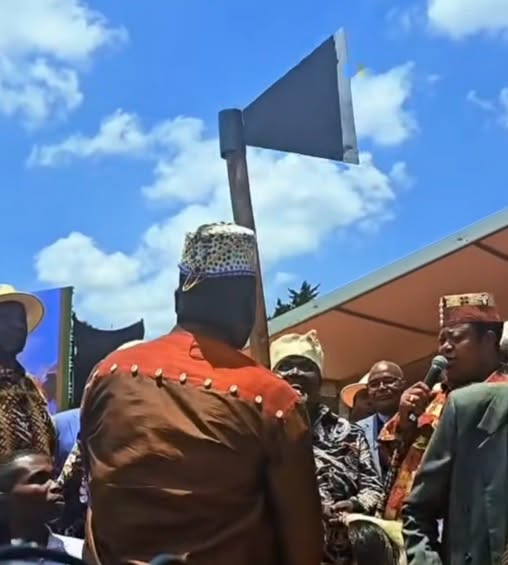
“The ‘elders’ should give back that axe to the two conspirators to take it back to Mr William Ruto, who had sent them on the failed mission. He is the owner of the axe. In fact, it is a bad omen.
Having failed to divide Mt Kenya into the imaginary West and East, the mountaineers are aware of new efforts to divide the former Central Province,” he wrote.
Linturi said coronation is done in special shrines, not in stadiums, and wondered why Kindiki would play politics with an important event.
“When ancestors are against a sham installation exercise, they speak against it on the spot.
Mt Kenya has never been divided and shall never be divided.
The Mountain is one, the party is one, and the leader.
Coronation is done in special shrines, not in stadiums.
When ancestors are against a sham installation exercise, they speak against it on the spot. Mt Kenya has never been divided and shall never be divided,” he wrote.
Kindiki said going forward he will not engage in the political exchange but will engage in their agenda of uniting Mt Kenya and President Ruto’s re-election.
“Will not answer them anymore, will stick to the mission, eyes on ball, hands on deck. One Mountain, One People, One Nation,” he wrote.
The slow progress of Bungoma County Aggregation Industrial Park (CAIP) was among the issues of concern raised by the Members of the Trade, Industry and Cooperatives Committee.
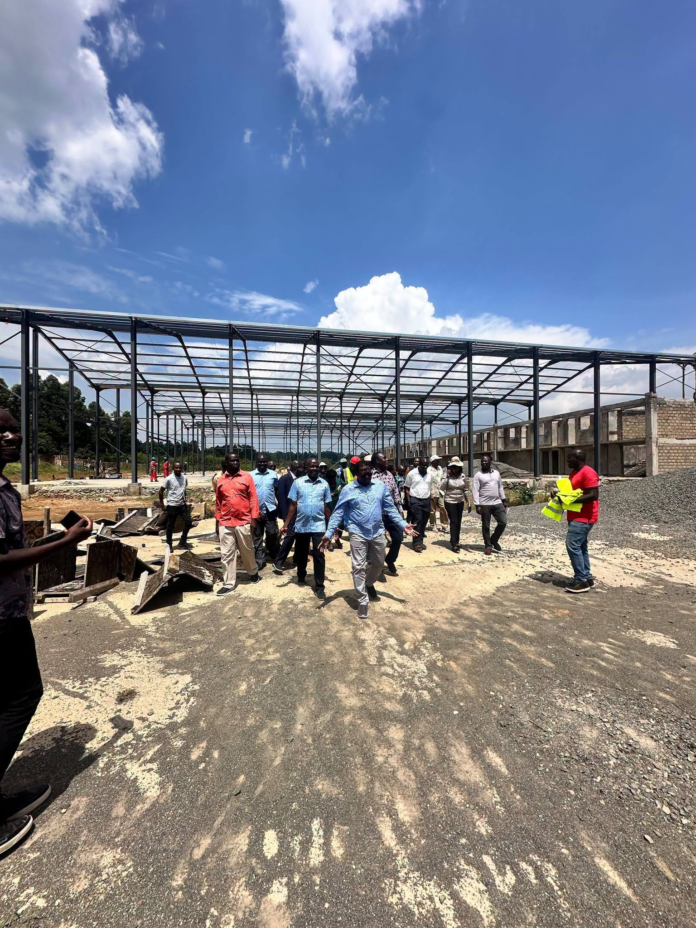
The Committee, during an inspection visit to the site, disputed the 62 per cent completion rate that was given to them by the Quantity Surveyor.
MP Benard Shinali (Ikolomani), the Committee Chairperson, questioned the County Government, which had leased the contracting authority, on what they were basing the release of money against.
“This is an abuse of public resources. We need to give them value for money. When you say you are at 62 per cent and you don’t have a gate, concrete wall, drilled boreholes, we doubt what you are evaluating,” Hon. Shinali lamented.
According to the County CECM for Trade, Energy and Industrialisation, Mr Douglas Sasita, the construction of the CAIP has faced challenges of contractors lacking liquidity; however, for the past one month, she had managed to partner with Zenith Steel and some work had been done.
“In April this year, we had considered terminating the contract; however, the contractor pleaded with us and we gave her a chance. She has promised to complete and hand over this project by 31st December 2026,” he said.
MP Wilberforce Oundo (Funyula), while reacting to the revelation, asked the County Government how the situation reversed.
“If you had not paid the contractor, do you think she would have agreed to your pleas and continued with the work?” he asked.
The Industry PS, Juma Mukhwana, who was also present during the visit, concurred with the Committee’s observations, stating that the project was among the Phase One projects and ought to have been completed by now.
According to the PS, the machinery budget set aside for the facility will now have to be redirected somewhere else.
“The National Government has disbursed its share of KSh250 million fully. The county government was contributing the other KSh250 million towards the project to make it KSh500 million. We did the design and coordination across the counties, and now Bungoma County was the contracting authority. Upon completion, also, this project is to get a budget for equipping machinery. For Bungoma, now the money will have to be diverted somewhere else,” the PS said.
The National Government had committed a total of KSh8.5 billion towards the implementation of the CAIPs programme across 34 counties. The funding has been disbursed over three financial years since FY 2023/24.
In addition, the FY 2026/27 budget allocated KSh2.45 billion towards the operationalisation and equipping of 16 CAIPs, largely targeting projects that had attained higher levels of physical completion.
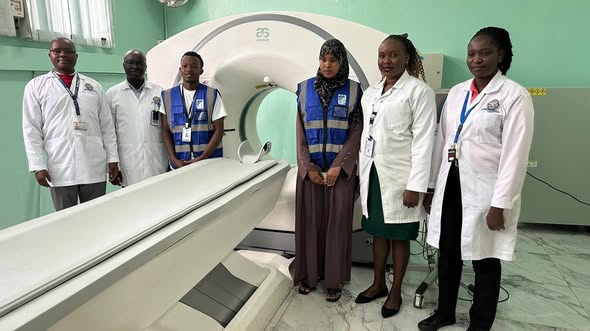
Good news to patients at Moi Teaching and Referral Hospital (MTRH), which has announced the availability of high-quality CT Coronary Angiography services, enabled by the Hospital’s new 128-slice CT scanner.
The Directorate of Radiology & Imaging said the service was currently available at the institution.
CT Coronary Angiography is a non-invasive imaging test that uses specialised CT images to examine the coronary arteries—the blood vessels that supply blood to the heart. It helps doctors identify narrowed or blocked arteries and assess blood flow to the heart, supporting accurate diagnosis and effective patient management.
The service is covered by the Social Health Authority (SHA), enhancing access to advanced cardiac diagnostic services for eligible patients.
The enhancement of this service has been made possible through the National Equipment Support Programme (NESP), a government-supported initiative aimed at strengthening healthcare service delivery through the provision, installation, and maintenance of essential medical equipment.
Through NESP, MTRH continues to benefit from improved access to modern and functional medical equipment, strengthening its diagnostic and treatment capacity, and supporting the efficient delivery of specialised healthcare services.
The availability of CT Coronary Angiography reflects the commitment of the Government, through the Ministry of Health, and the MTRH Hospital Management to strengthening advanced diagnostic services and improving access to quality healthcare.
With the advancement of this service, MTRH further scales up its capacity to provide modern, quality, and accessible diagnostic care to patients requiring specialised cardiac imaging.
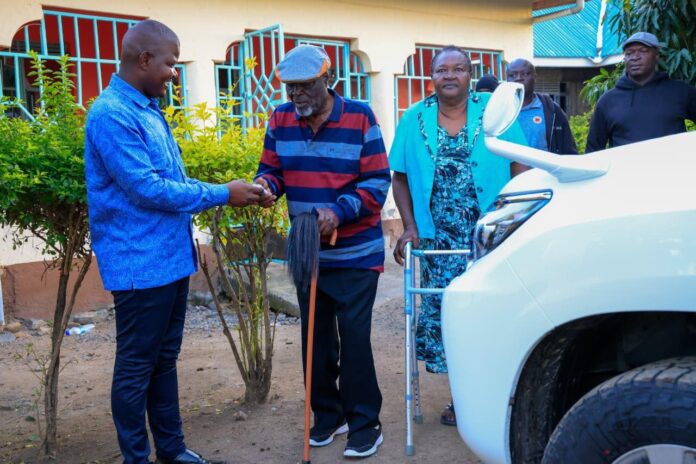
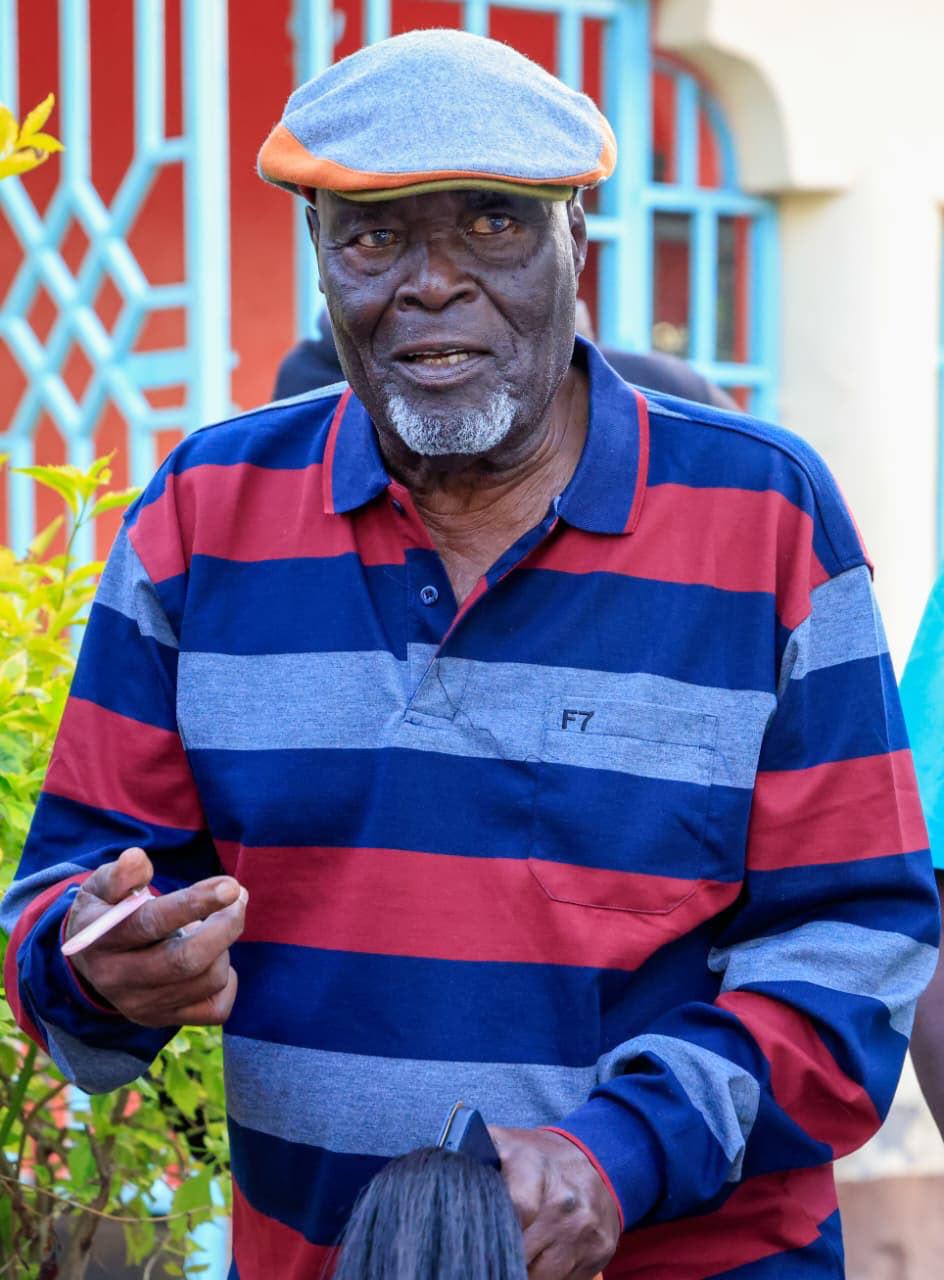
President William Samoei Ruto has fulfilled his pledge to the Luo Council of Elders by delivering a brand-new Toyota Land Cruiser Prado TX to its Chairman, Mzee Odungi Randa.
The delivery comes barely a week after the President made the promise during his extensive four-day development tour of the greater Nyanza region. Mzee Randa met the President together with 15 members of the Council at the Homa Bay State Lodge during the tour, where the pledge was made.
Speaking after receiving the vehicle, Mzee Randa expressed his profound gratitude to the Head of State, stating that the vehicle will significantly enhance his mobility as he executes his mandate of leading the Luo nation across the East African region.
The Chairman further urged the Luo community to fully support President Ruto’s broad-based Government. He noted that the community has been in the opposition for well over 60 years and that the opportune moment to be in Government is now.
He called on the community to speak in one voice, remain firmly within Government, and support the President’s re-election bid in 2027.
“Being in Ruto’s Government is like cultivating during the rainy season, where you will harvest endlessly,” Mzee Randa said.
Mzee Randa also warned against divisions within the community over those who do not support sons and daughters of the region who have been appointed by the President to serve in his Government. He emphasised that the community should support its own who have been given opportunities in various ministries.
He further lauded the President for the numerous development projects his administration has initiated in Nyanza, including infrastructure, energy and blue economy programmes, while appealing for more affirmative development for the region.
The vehicle was officially handed over to the Chairman through the Ministry of Interior and National Administration, under the stewardship of Mr Charles Osako.
We use cookies to ensure that we give you the best experience on our website. If you continue to use this site we will assume that you are happy with it.