It is another season of political drama and madness. A season where politicians do things that, in their right minds, they would never have thought of doing.
It is a season of pretence, lying, coaxing and sweetness to the electorate to whip emotions and win the votes.
It is a season where politicians brand inner pants with their logo, ride bicycles to fetch water and even dive into the river to retrieve bodies of unknown persons. It is a cacophony of unsolicited events. A cocktail of political theatrics. Pestering and posturing.
The Kirinyaga theatrics
In Kirinyaga, it was drama and shock after angry residents protested after a local area politician allegedly bought and branded the panties with his logo.
The panties that were distributed to women received disapproval from the locals, terming them as a lack of respect and disgusting to the residents, and portraying them negatively in the national arena.
Kericho theatrics
In Kericho County, a female aspirant dived into a local river in the area to help retrieve a body of an unidentified person that was discovered in the area.
The female aspirant shocked the residents and onlookers after she dived into the raging river in her clothes.
Residents and onlookers congratulated her for the daring act of bravery, with some already declaring support for her.
Nyandarua drama
In Nyandarua County, a female aspirant rode her bicycle to collect water from a nearby water source for the residents.
The aspirant carried on her bike, per trip, three 20-litre jerricans of water and supplied them to the needy residents.
The three incidents are just a tip of the iceberg of what Kenyans will be witnessing when the 2027 campaign begins in earnest.
For village political consultants, it is another time to harvest, while the carpets will be welcoming mud and dust.
What a risk could the country be putting lactating mothers and women at now that the country suffers a shortage of essential contraceptives and family planning commodities?
The country is currently facing an acute shortage of contraceptives and family planning commodities.
Kenya Medical Supplies Agency has run out of stock of the most essential family planning commodities, and this poses a serious danger to medical service provision.
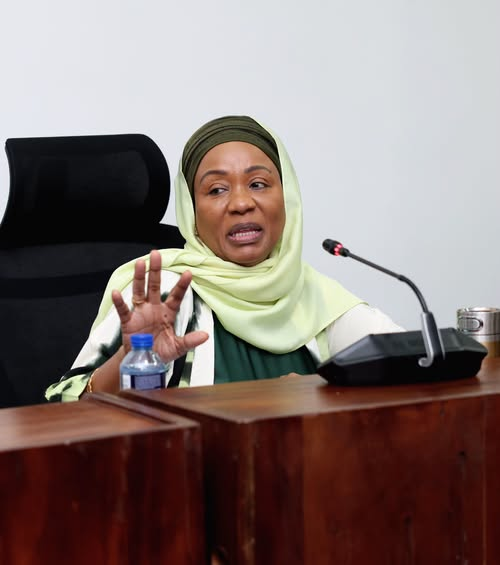
Senator Hamida Alo Kibwana raised the red flag when she sought a statement from the Senate Standing Committee on Health over an acute shortage of contraceptives and family planning commodities across Kenya.
Sen. Hamida told the House that nine of the 13 essential family planning commodities are out of stock at the Kenya Medical Supplies Agency, including injectable and oral contraceptives, with lactating mothers hit hardest by the shortage of progestogen-only pills.
The legislator wants the Committee to establish the current status of contraceptive and family planning stocks at KEMSA and across the 47 counties, including the commodities affected, the causes and duration of the stock-outs, and the counties and health facilities worst hit.
“The crisis has been worsened by outstanding obligations exceeding KSh600 million, and inadequate budgetary allocations, with only KSh500 million earmarked against an estimated requirement of KSh3.8 billion for the 2026/2027 Financial Year,” said Sen. Hamida.
Turning to the financing gap, the Senator sought clarity on the outstanding obligations owed to KEMSA by UNFPA, along with Government commitments under the Kenya-UNFPA matching-funds arrangement and the timelines for settling them.
She further pressed the Ministry of Health and the National Treasury to explain the measures being taken to address the funding shortfall for the 2026/2027 financial year, and the amounts released to date.
Beyond the immediate crisis, the lawmaker asked for the interventions being rolled out to restore supplies for lactating mothers, adolescents, and women in rural and underserved areas who depend on public health facilities.
She also asked for plans to prevent future shortages through improved procurement, financing and supply chain management.
The request has been committed to the Senate Committee on Health for action.
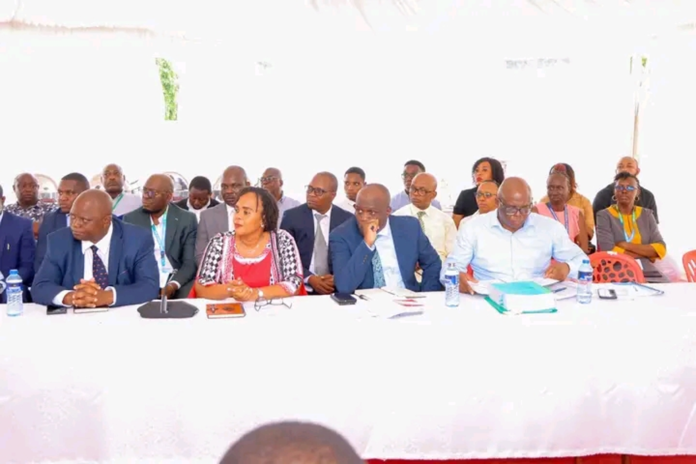
The Senate County Public Accounts and Investments Committee has directed the Controller of Budget not to approve withdrawals by the Kilifi County Government to settle pending bills until the actual amount owed to contractors and suppliers is established.
The directive followed a heated scrutiny of Kilifi’s pending bills on Thursday, September 24, after county officials presented figures that differed significantly from the Sh11.9 billion reported by the Auditor-General.
The committee, chaired by Homa Bay Senator Moses Kajwang, was told that Kilifi’s internal verification process had so far established Sh5.1 billion as legitimate pending bills, while the county government estimated its total outstanding obligations at about Sh7.5 billion.
The conflicting figures prompted senators to question how the county had arrived at the different amounts and how it intended to clear the debts.
Kilifi Chief Officer for Finance Lawrence Mwonzonga told the committee that the county had established a verification committee to scrutinise the pending bills and had verified Sh5.1 billion as legitimate.
He said the county had also stopped taking on new projects as it worked to address the outstanding obligations.
Kajwang Demands Payment Plan
Kajwang questioned the county over the continued accumulation of pending bills and asked officials to provide the committee with the actual figures owed to contractors and suppliers.
He also raised concern over bills that have remained unpaid for years, including obligations dating back to 2015.
The senator then put a direct question to the county officials: “What’s the payment plan?”
Mwonzonga responded that the county had already begun working with the Office of the Controller of Budget to establish its actual pending bills position.
“First, we have launched with the Office of the Controller of Budget our actual pending bills plan amounting to about Sh8 billion. In the budget, what we’ve provided for is Sh3.2 billion for the current financial year,” Mwonzonga said.
He added that the county was preparing to recast its current budget to create room for additional funding towards the pending bills.
“We’re about to recast the current budget so we provide room for an enhancement of what we’ve already allocated, and I’m seeing ourselves further allocating Sh1.5 billion,” he said.
The figures presented by Mwonzonga added another layer to the financial questions facing the county, with the Auditor-General’s Sh11.9 billion figure, the county’s Sh7.5 billion estimate, the Sh5.1 billion verified as legitimate and the approximately Sh8 billion payment plan all emerging during the scrutiny.
The Controller of Budget also told the committee that the county executive had budgeted Sh8.7 billion for pending bills, while the County Assembly had approved Sh3.1 billion, prompting further questions from senators over the discrepancies.
Kajwang questioned how Kilifi could allocate billions towards pending bills when its annual revenue is estimated at about Sh13 billion, describing the financial position as a serious concern.
He also questioned why some legitimate suppliers had waited years for payment despite having already provided goods and services to the county.
“There is no way a service provider who offered a service of providing air tickets to officials of the county, the tickets have been availed, and up to date, such a person should not be paid; that is ridiculous,” Kajwang said, demanding a payment plan for all pending bills.
Deputy Governor Challenged Over Mung’aro’s Absence
The hearing also briefly turned to the absence of Governor Gideon Mung’aro, who had earlier said he was indisposed.
Deputy Governor Flora Chibule, who appeared before the committee, indicated that she had expected the proceedings to be adjourned because the Governor was not present.
Kajwang, however, questioned how the committee could interrogate the county’s multibillion-shilling pending bills through verbal explanations without substantive written responses.
He reminded Chibule that the absence of the Governor did not mean the county government had stopped functioning.
“If the Governor is ill, Kilifi is not ill. If he is absent, Kilifi is not absent,” Kajwang said, pointing to the constitutional role of the Deputy Governor in assuming the functions of the Governor when the Governor is unavailable.
The issue had already been raised earlier in the week after the committee rejected Mung’aro’s request to postpone his appearance, saying his claim of being indisposed was not accompanied by a medical report. Kajwang subsequently directed the Deputy Governor to appear before the committee.
EACC Asked to Probe Pending Bills
The committee also raised concerns over allegations that some contractors were demanding payment for projects that had not been completed, while some county officials could have facilitated questionable claims.
Kajwang directed the Ethics and Anti-Corruption Commission (EACC) to investigate possible collusion between county officials and contractors over payments for works not done or services not rendered.
The concerns followed testimony from Shella MCA Twaher Abdulkarim, who told the committee that a contractor in his ward had constructed an Early Childhood Development classroom at a reported cost of Sh3 million, but had failed to fit a door while demanding full payment.
Abdulkarim said intervention by the County Assembly stopped the payment until the work was completed.
The Senate committee has now directed Kilifi County to verify all pending bills, establish a credible figure, prepare a workable payment plan and ensure legitimate contractors and suppliers are paid for completed works and services.
The scrutiny comes days after suppliers and contractors told the same committee that Kilifi’s unpaid bills had pushed some businesses towards financial distress. On September 21, suppliers reported pending bills of about Sh10.7 billion, with some debts dating back years.
The Senate’s five-day sitting in Kilifi, held under the Senate Mashinani programme, ended on Thursday after committee hearings, public engagements and inspections of county projects.
Suppliers’ pain
One supplier, Salim Mwangoma, a provider of air ticketing services, said that from 2023 to date, the county owes him Sh16 million and has refused to pay.
He said several suppliers were in pain over the county’s non-payment of pending bills.
“Whenever we follow up payment, we are told our vouchers are not there even after they have been prepared. Who is taking our vouchers?” he asked.
Three suspects, including a police constable, have been arrested in connection with the murder of lawyer Mathew Kyalo Mbobu, more than a year after he was gunned down along Magadi Road in Nairobi.
Police Constable Julius Cheruiyot, motorcycle rider Nicholas Lemiso Naula and Noah Kipkirui Langat are currently in custody as detectives intensify investigations into the September 9, 2025, killing.
The arrests mark a major development in a case that had remained unresolved for a year, with Mbobu’s family repeatedly calling for investigators to establish who was behind his death.
The Directorate of Criminal Investigations (DCI) says Cheruiyot has been identified as the suspected gunman following a year-long investigation.
Detectives also recovered a Ceska pistol issued to Cheruiyot, with DCI Director Mohamed Amin saying ballistic examinations established that the firearm matched the weapon used in Mbobu’s killing.
Investigators widen the dragnet
Naula, a boda rider, was arrested in Nairobi’s Central Business District and is accused by investigators of transporting Cheruiyot to and from the scene of the murder.
Langat was also arrested in Nairobi and is being investigated over allegations that he conducted surveillance on Mbobu before the fatal shooting.
With the three suspects now in custody, detectives are pursuing additional leads and seeking to establish whether other people were involved in the killing.
The DCI said the investigation remains active as detectives work to establish the full circumstances surrounding the murder and identify all those who may have played a role.
The latest arrests come after Mbobu’s family marked the first anniversary of his death on September 9, 2026, with relatives and friends gathering at the family home in Mua Hills.
At the time, the family said it was still waiting for a definitive account of the progress of investigations and called on security agencies to intensify efforts to identify those responsible.
Mbobu was attacked on his way home
Mbobu was shot dead on September 9, 2025, as he drove home towards Karen after leaving his office.
According to initial police accounts, two men on a motorcycle followed his vehicle before opening fire and fleeing from the scene. Detectives treated the incident as a targeted killing, although the motive was initially unclear.
An autopsy conducted after the killing established that Mbobu had been shot eight times and died from severe bleeding.
Chief Government Pathologist Dr Johansen Oduor said the bullets caused severe injuries, including damage to Mbobu’s spine, with two bullets recovered from his body.
At the time, detectives examined CCTV footage, mobile phone records and other forensic evidence as they sought to reconstruct the events leading to the shooting.
Investigators also questioned people who had interacted with Mbobu shortly before his death and examined his professional and personal dealings as they pursued possible leads on the motive.
Investigation linked to wider murder probe
The latest investigation has also brought Mbobu’s killing into focus alongside the July 29, 2026, murder of Dr Victoria Nthunya Mutiso in Upper Hill.
According to DCI investigations, the two cases may have a connection involving a property dispute. Investigators are examining the circumstances surrounding the two killings, although the alleged links remain subject to ongoing investigations and court proceedings.
Mbobu had represented the late Professor David Musyimi Ndetei in legal proceedings involving Ndetei’s former wife, Rose Mbithe Mulwa. Mutiso had later married Ndetei.
Several suspects have been arrested in connection with Mutiso’s murder, including members of her family and police officers, while investigators continue to pursue other leads.
The latest arrests represent a significant development in a case that had remained without a publicly identified suspect for a year.
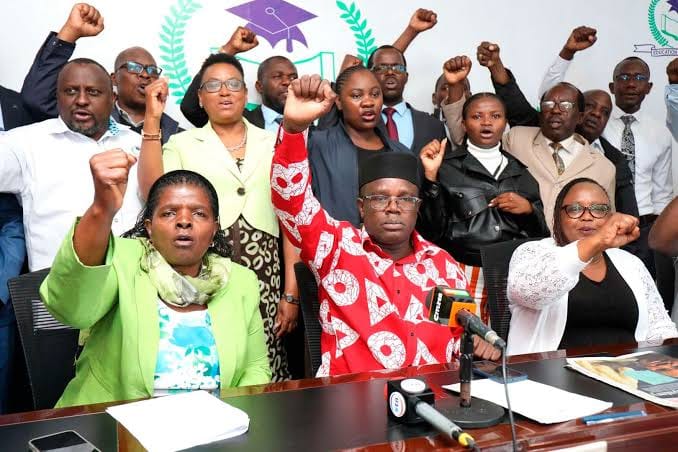
Lecturers in Kenya’s public universities have issued a seven-day strike notice, setting the stage for another disruption of learning over the stalled 2025 to 2029 Collective Bargaining Agreement (CBA).
The Universities Academic Staff Union (UASU) announced on Thursday, September 24, 2026, that its members would down their tools from midnight on Friday, October 2, if the government fails to resolve the outstanding issues surrounding the agreement.
UASU Secretary-General Constantine Wasonga said the decision followed the failure by university councils, the Ministry of Education and the National Treasury to provide the financial commitment required to move negotiations on the new CBA forward.
The union’s latest action comes less than a year after lecturers ended a 49-day nationwide strike following a return-to-work agreement with the government on November 5, 2025.
What lecturers are demanding
At the centre of the current dispute is the 2025 to 2029 CBA, which UASU says has remained unresolved despite commitments made when the previous strike was called off.
The union wants the agreement negotiated, signed, registered and implemented, together with a firm government commitment that its financial obligations will be funded through the National Exchequer.
UASU says the Salaries and Remuneration Commission informed university sector unions on September 21, 2026, that neither the Ministry of Education nor the National Treasury had provided a written commitment on funding the CBA through the National Exchequer.
Wasonga said the lack of that commitment had affected the negotiations because the SRC could not provide the financial parameters required for the process.
“National CBAs cannot be funded by individual universities. National CBA is supposed to be funded from the national exchequer,” Wasonga said.
The union has also opposed any arrangement that would make public universities rely on student fees to meet lecturers’ salaries and CBA obligations.
UASU further wants the proposed Tertiary Education Placement and Funding Bill, 2026, to safeguard the remuneration of academic staff through Exchequer funding. It has also raised concerns over staffing shortages, excessive workloads, the use of part-time lecturers and retirement age provisions.
The 2025 strike and return-to-work agreement
The current dispute follows a lengthy strike that began on September 17, 2025.
Lecturers in public universities walked out after UASU accused the government of failing to settle outstanding financial obligations and begin negotiations for the new 2025 to 2029 CBA.
When the strike began, UASU demanded payment of Sh2.73 billion, settlement of what it said were outstanding arrears from the 2017 to 2021 CBA and negotiations for the 2025 to 2029 agreement.
The arrears issue was contested by the government side. A National Assembly record later stated that while unions claimed Sh7.9 billion remained outstanding from the 2017 to 2021 CBA, SRC maintained that Sh7.2 billion of that amount had already been paid through regular annual salary increments, leaving a balance of Sh624 million, according to its interpretation. The parliamentary record also stated that the 2021 to 2025 CBA had substantially been implemented.
After 49 days of industrial action, the unions and the Ministry of Education reached a return-to-work agreement on November 5, 2025.
Under the agreement, the government committed to paying Sh7.9 billion in arrears in two phases, with Sh3.8 billion scheduled for payment between November and December 2025 and the balance to be offset by July 2026.
The parties also agreed to conclude negotiations on the 2025 to 2029 CBA within 30 days. Lecturers subsequently returned to work.
The agreement was expected to end the immediate dispute and pave the way for negotiations on the new five-year CBA.
However, the agreement has not produced the conclusion of the new CBA, leaving the two sides facing another confrontation less than a year later.
Fresh ultimatum before the strike notice
The latest escalation began on September 18, 2026, when UASU gave the government and the Inter-Public Universities Councils Consultative Forum one month to negotiate, sign, register and implement the 2025 to 2029 CBA.
Wasonga said the union would issue a seven-day strike notice if the agreement was not concluded within the period.
The union said negotiations had stalled partly because it had not received what it considered a substantive financial counter-proposal from the government side.
The September 18 ultimatum therefore became the final opportunity for the parties to resolve the dispute without another industrial action.
That deadline has now been overtaken by the seven-day strike notice issued on September 24.
Unless the outstanding issues are resolved within the notice period, lecturers in public universities are expected to begin the strike at midnight on October 2, 2026.
Running a low-tax economy can broaden the tax base and gradually reduce fiscal deficits. A model that relies more heavily on consumption taxation would allow Kenya to expand revenue collection while reducing excessive dependence on income taxation.
This means Kenya must focus more on manufacturing, distribution, trade and retail. The first step towards making consumption taxation highly collectable is creating designated business environments, standardising business processes and deploying effective digital systems.
We can achieve this while gradually reducing the punitive burden of income tax, where only about 3.5 million Kenyans are carrying the income tax burden for a population of nearly 60 million. This is fundamentally unsustainable. Consumption taxation broadens participation because everyone contributes when they consume, without the complexity of refunds associated with VAT.
A simple, predictable and certain tax code makes it easier for citizens and businesses to understand and meet their obligations. Kenya is already blessed with effective mobile money infrastructure, which can become a key mobiliser of revenue. Paybills and business tills should be legally designated as the primary channels for business transactions, creating traceability and improving revenue collection.
Every business should be registered, and this framework must extend to the smallest trader. Even hawking should operate within a simple, affordable and traceable registration framework. With such leverage, a consumption-based tax regime can take root across the economy.
As more people move into formal employment and the burden of income taxation is reduced, disposable incomes would increase. This could stimulate consumption, expand markets and create more opportunities for businesses and workers.
The elephant in the room, however, is debt. Our natural resources must ultimately become part of the strategy for managing and repaying this debt. At the same time, Kenya needs predictable laws that enforce fiscal discipline.
We must rethink provisions such as Section 50(7)(d) of the PFM Act, which can create incentives for continued borrowing. Debt should never become a business for a privileged elite while the country carries the guarantee.
Kenya can build a stronger revenue base, reduce its fiscal deficit and move towards a surplus within a decade if we fundamentally rethink how we tax, regulate and grow the economy.
Could the former Youth for KANU ’92 and founder of the United Democratic Party (UDP), the late Cyrus Jirongo’s party, be the vehicle to end the decades-long search and actualisation of the elusive unity of the Luhya community in his death?
This is the question which is gaining currency and relevance in the current national and Luhya community political dispensation, with many watching to see if the late Jirongo’s last wish before his death, Luhya unity, can finally be realised.
The takeover of UDP by Sifuna, who is currently a presidential candidate, could be a possible positive nod to achieving Luhya unity, and his presidential bid has united the community into a fold.
But separately, the party leader, Kalonzo Musyoka, could be back to his old hawkish trait, which for the last three decades has determined his political character.
The return of his hawkish tendency has been witnessed in the current battle with Nairobi Senator Edwin Sifuna over the name Ukombozi.
Kalonzo moved and reserved the name Ukombozi and recently rebranded the Azimio La Umoja coalition and unveiled the new alliance, Ukombozi Alliance, while Sifuna was struggling to change the UDP name to Ukombozi, which was rejected by the Registrar of Political Parties.
The hawk tendency
Sifuna, a mentee and the last Secretary-General of Raila Amolo Odinga in the Orange Democratic Movement (ODM), finds himself in a similar situation his boss found himself in 20 years ago.
Raila in 2005 was the lead player in the Orange campaign against the Wako draft constitution and successfully led the anti-constitution campaign. The draft was rejected at the referendum and then President, the late Mwai Kibaki, the proponent of the draft, was humiliated and humbled.
Raila found himself cornered over the battle for the control of ODM-K, which they had registered together through political proxies.
Kalonzo ran away with ODM-K, contested for president, came a poor third but denied Raila ODM victory at the controversial 2007 presidential election.
Kalonzo quickly jumped ship and joined Mwai Kibaki and left Raila and his team protesting the outcome. The protest culminated in the post-election violence and the formation of a coalition government.
Kalonzo landed the Vice-President slot and later teamed up with Raila in 2013 and 2017 as the running mate, in which they lost to Jubilee presidential candidates Uhuru Kenyatta and William Ruto.
Kalonzo has rebranded ODM-K to Wiper Democratic Movement (DWM) and recently rebranded the party again to Wiper Democratic Front (WDP).
“We have rebranded Wiper party front because of the spirit of our young people, which was taken away, some were arrested and others put to cells,” he said.
The battle
Wiper Patriotic Front spokesperson Ndegwa Njiru challenged Nairobi Senator Edwin Sifuna’s allies to prove that they had reserved the name with the Registrar of Political Parties.
Taking to his official X account on the night of Tuesday, September 22, 2026, Njiru dismissed claims that Sifuna’s camp had secured the name, insisting that no reservation had been made by the senator.
“Mr. Sifuna has never reserved the name UKOMBOZI with the Registrar of Political Parties. I challenge anyone with evidence to the contrary to produce it,” Njiru said.
Coincidence
Kalonzo’s announcement on September 21, 2026, that the Azimio La Umoja One Kenya Coalition had rebranded as The Ukombozi Alliance (TUA), coincided with efforts by Sifuna’s allies to establish an Ukombozi-branded political vehicle.
Kalonzo said the coalition had unanimously agreed to adopt the new name as part of a broader restructuring of its political activities.
The Office of the Registrar of Political Parties (ORPP) subsequently rejected a proposed change of name by the United Democratic Party (UDP) to Ukombozi People’s Party (UPP), saying the proposed name resembled The Ukombozi Alliance, which had been reserved by another applicant on July 20, 2026.
The Vehicle
Trans Nzoia Governor George Natembeya, in a recent interview with a local Luhya vernacular radio station, said that Nairobi Senator Sifuna will be the United Democratic Party (UDP) presidential flagbearer.
The party, formally founded by former Lugari Member of Parliament, the late Cyrus Jirongo, is linked to Natembeya.
The Trans Nzoia County boss made the revelation during a radio interview on Mulembe FM.
“Sifuna atawania urais kupitia chama cha UDP,” said Natembeya.
The official unveiling of Sifuna as both the party leader and presidential aspirant is scheduled for the first week of October and will be done by the party’s National Executive Committee at the party headquarters in Nairobi.
“Kila region katika United Opposition iko na chama chake, kwa Mulima ni DCP, Ukambani ni Wiper…pia sisi hapa Western lazima tuwe na regional party,” he added.
Rivalry
The Sifuna-Kalonzo rivalry is in the offing and could be a replay of the 2007 Raila-Kalonzo tiff. The rivalry could be what President William Ruto could be waiting to cash in on.
Will Kalonzo, who is currently third in the opinion poll ranking after Ruto and Sifuna, employ his infamous 2007 game plan to pitia Katikati to be the main single opposition presidential candidate?
Will Kalonzo agree to deputise Sifuna or will Sifuna agree to be Kalonzo’s deputy? Interesting times for the opposition. Have the briefcase opposition parties lined up to grab the droppings and once again land on the Palace table?
Why turning good climate ideas into investable projects may be one of Africa’s most important financing challenges
Imagine a project developer somewhere in Africa with an excellent climate solution. It could be a solar-powered irrigation project for smallholder farmers, a clean-cooking enterprise serving rural households, a waste-to-energy facility, a climate-smart agriculture programme, a community water project or a wetland restoration initiative creating livelihoods while strengthening climate resilience.
The climate problem is real. The communities need the intervention. The environmental and social benefits may be compelling. The organisation has developed a concept note, perhaps even an impressive funding proposal, and is ready to approach investors, climate funds or development partners.
Then the financier begins asking questions.
Where is the feasibility study? Who will pay for the service? What are the projected cash flows? What happens if the local currency depreciates? Who owns the assets? What permits have been secured? What are the project’s major risks? How will climate results be measured? Can the organisation actually deliver a project of this size?
Suddenly, an excellent climate idea discovers that being important is not the same thing as being investable.
This is one of the uncomfortable realities of climate finance in Africa. We frequently speak about the continent’s climate-finance gap, and rightly so. But beneath that financing gap sits another challenge that deserves much more attention: the project bankability gap.
Climate Policy Initiative estimates that African countries require approximately US$190 billion annually to meet climate-investment requirements contained in their current Nationally Determined Contributions. Yet tracked climate-finance flows averaged only about US$43.7 billion per year in 2021 and 2022. This means that less than a quarter of estimated annual climate-finance needs were being met.
Private finance remains particularly limited. Private climate-finance flows to Africa increased significantly compared with earlier years but amounted to only around US$8 billion annually in 2021/22, representing roughly 18% of tracked climate finance on the continent.
There is another revealing statistic. The average tracked climate-finance project in Africa was worth less than US$2 million, significantly smaller than comparable projects in regions such as East Asia, South Asia and Latin America. Among the factors associated with this challenge are restricted access to private capital, high perceived risks, regulatory weaknesses, limited institutional capacity and an insufficient pipeline of investment-ready projects.
Africa therefore does not simply need more money. It needs more projects capable of absorbing, deploying and accounting for that money effectively.
This is where project bankability becomes critical.
Project bankability is sometimes misunderstood as simply demonstrating that a project can make a profit. It is much broader than that. Bankability is fundamentally about whether a financier can have sufficient confidence in the project’s technical, financial, institutional and implementation arrangements to commit capital.
A project does not become bankable because it has an attractive proposal. It does not become bankable because the beneficiaries desperately need it. It does not become bankable because it contributes to the Sustainable Development Goals or because the words green, climate, resilient or sustainable appear in the project title.
A finance-ready project must answer much harder questions.
A financier needs to understand exactly what is being financed, whether the proposed solution is technically feasible, whether there is genuine demand, whether the organisation can implement it, where revenue or repayment capacity will come from where relevant, what could go wrong, how risks will be allocated and managed, how environmental and social safeguards will be addressed, and how climate and development results will be measured.
Bankability therefore sits at the intersection of technical feasibility, financial viability, institutional credibility, climate integrity, risk management and appropriate financing structure.
This distinction matters enormously for African NGOs, MSMEs, community organisations, municipalities and private project developers.
Consider two organisations pursuing almost identical climate projects. The first organisation has produced a beautifully written proposal explaining the climate problem, describing the beneficiaries and demonstrating alignment with national and international development priorities.
The second organisation has done all of that, but it can also present a validated market assessment, technical feasibility analysis, implementation plan, capital and operating expenditure assumptions, realistic financial projections, environmental and social safeguards, regulatory approvals, governance arrangements, a climate-results framework, risk analysis and an appropriate financing strategy.
Both projects may be valuable. Both may deserve support. But the second project gives a financier significantly more confidence.
The difference is not necessarily the quality of the underlying idea. The difference is project preparation.
This is where many potentially transformative African climate projects become stuck.
The importance of project preparation can be seen in the structures being established by African financing institutions themselves. The African Development Bank and its partners have increasingly invested in project-preparation facilities designed specifically to move projects from early concepts to investment-ready opportunities.
The Alliance for Green Infrastructure in Africa, for example, has been structured to mobilise early-stage blended-finance capital for project preparation and development, with the ambition of catalysing billions of dollars in infrastructure investment. The logic is straightforward: projects need to move through preparation and development before substantial capital can reasonably enter.
The pathway is therefore not simply idea to money.
It is more accurately:
Idea → Preparation → Development → Bankability → Financing.
The experience of African project-preparation facilities demonstrates why this matters. Relatively small amounts invested in feasibility work, engineering, financial modelling, environmental assessments, legal structuring and transaction preparation can unlock significantly larger amounts of downstream investment.
This gives African project developers an important lesson: project preparation should not be treated as an unnecessary administrative expense. It is an investment in the project’s ability to attract capital.
But failing to undertake them can be considerably more expensive.
A poorly prepared US$20 million climate project does not become cheaper because the developer avoided spending money on preparation. It simply becomes a poorly prepared US$20 million project that investors are unlikely to finance.
Another major shift is required in the way African project developers think about financing.
Too many organisations prepare projects almost entirely from the perspective of the project developer. The developer asks, “Why is this project important?” The financier also wants to know, “Why should I finance this particular structure?”
The developer asks how many people will benefit. The financier asks whether those benefits can be measured and verified.
The developer asks how much money is needed. The financier asks why that particular amount is required, what it will finance, what assumptions underpin the budget and what will happen if those assumptions change.
The developer sees opportunity. The financier sees both opportunity and risk.
Project bankability connects these two perspectives.
This also means that project developers must become much better at understanding the type of capital they are pursuing. Not every project requires a commercial bank loan. Not every project needs equity investment. Not every climate intervention should be financed through grants.
Some projects may be appropriate for commercial debt. Others may require concessional finance. Some may need grants to fund early-stage preparation. Others may need guarantees to reduce perceived risk, equity to absorb early losses, results-based finance, carbon finance or a blended-finance structure combining several instruments.
Bankability is therefore partly about making the project financeable, but it is equally about finding capital whose risk, return and impact expectations match the characteristics of the project.
This becomes particularly important in adaptation.
Not every climate project will produce direct commercial returns. A wetland restoration project may create enormous economic and ecological value without producing predictable cash flows for a private investor. An early-warning system may save lives and reduce economic losses without generating revenue. Community adaptation, watershed restoration, biodiversity protection and climate-resilient public infrastructure may deliver enormous public benefits but still struggle to meet conventional definitions of commercial bankability.
These projects should not automatically be considered failures.
They may simply require different financing structures.
For this reason, I find it useful to distinguish between project bankability and project fundability.
A commercially oriented clean-cooking company, solar mini-grid, circular-economy enterprise or agricultural processing facility may require a conventional bankability assessment focused strongly on revenues, cash flow, debt-service capacity, investment returns and risk.
A community adaptation project may instead need to demonstrate a compelling climate rationale, measurable adaptation benefits, institutional capacity, value for money, environmental and social safeguards and alignment with the mandate of a climate fund or development partner.
Some projects sit between the two. Their commercial returns may initially be insufficient to attract investors, but concessional finance, guarantees, grants or first-loss capital can improve their risk-return profile and move them closer to bankability.
This is precisely where blended finance becomes important.
The wider financing picture in Africa makes this conversation even more urgent. Africa faces hundreds of billions of dollars in annual financing needs, yet African financial institutions themselves collectively hold trillions of dollars in assets across banks, pension funds, insurance companies, sovereign wealth funds and other institutional investors.
This creates a powerful paradox.
Africa needs capital, but Africa also has capital.
The challenge is not simply finding money. The challenge is creating enough credible investment opportunities capable of attracting it.
Of course, project bankability is not the only reason projects fail to secure finance. Africa continues to face structural constraints including high interest rates, foreign-exchange risk, sovereign risk, regulatory uncertainty, small project sizes and limited domestic capital mobilisation.
Project bankability cannot eliminate these challenges.
But it can prevent project developers from making an already difficult financing environment even more difficult by approaching financiers with projects that have not been adequately prepared.
This is why African organisations should reconsider one of the questions they ask most frequently.
Instead of beginning with:
“Which donor or investor can fund this project?”
they should first ask:
“What would have to be true for a credible financier to confidently say yes to this project?”
That question changes everything.
It shifts attention from proposal writing to project preparation, from funding searches to financing strategy, from compelling stories to credible evidence, from assumptions to financial modelling, from aspirations to implementation readiness and from simply seeking capital to becoming capable of receiving it.
The future of African climate finance will certainly depend on larger international commitments, stronger domestic capital markets, innovative financial instruments and fairer financing conditions.
But part of the solution will also be built project by project.
It will require stronger feasibility analysis, clearer climate rationale, better financial models, stronger institutions, credible risk allocation, stronger monitoring and results systems, better project governance and financing structures designed around the realities of each project.
Africa has no shortage of climate challenges.
It also has no shortage of innovative ideas.
The next frontier is turning far more of those ideas into finance-ready, fundable and bankable projects.
And perhaps before approaching the next investor, development finance institution or climate fund, every project developer should stop and ask one simple question:
Is our project actually finance-ready?
Because finding an investor should not be the first test of a climate project.
Understanding whether the project is ready for investment should be.
Before you approach the next investor or climate fund, find out whether your project is actually finance-ready.
A structured Project Bankability and Fundability Diagnostic can help identify weaknesses in technical feasibility, financial viability, institutional capacity, climate rationale, risk management, financing structure and investment readiness before a project enters formal fundraising or due diligence.
For African project developers, NGOs, MSMEs and institutions, that assessment may be the difference between repeatedly searching for funding and building a project that financiers can seriously consider.
Simon Okola Climate Finance & Project Bankability Consultant Founder & Lead Consultant, Agenda Beyond Borders
Kenya’s former Prime Minister Raila Amolo Odinga may be dead and with only less than a month to his first anniversary, but in his grave he continues to dictate the country’s politics.
On Tuesday, September 22, 2026, former President Uhuru Kenyatta opened a Pandora’s box over the 2022 presidential election result.
A Pandora’s box which is likely to be a double-edged sword and may cut deeper back to Raila’s loss at the last four presidential elections, namely 2007, 2013, 2017 and 2022.
Uhuru’s statement that he believed the late Raila Amolo Odinga won the 2022 presidential election was a powerful admission that Raila could have been rigged out.
Uhuru, then President, was the holder of Kenya’s first-hand raw intelligence, consumer and his statement cannot be taken for granted.
So Uhuru has finally let the cat out of the bag over the series of allegations by Raila and his supporters that he had won all the subsequent general elections, but his ‘victory’ was allegedly stolen and instead adopted the philosophy of accept and move on.
What did former President Uhuru say?
Uhuru said, “We supported Raila as Jubilee and members of the Azimio Coalition and we did all that to make him President.”
Uhuru said he believed Raila won the elections and that truth will finally come out.
“Raila won the election. I am convinced he won the presidential elections. I know that, we know what happened, those who want to know, know the truth,” he said.
Seats
Uhuru said Azimio La Umoja won the majority of MPs, Senators and governors’ seats against President William Ruto’s Kenya Kwanza.
“We had more MPs than the coalition. We had more senators and governors than the other coalition. How did we lose this? We know how it went and we do not want to go that route again,” he said.
We respected the Supreme Court
Uhuru said even if they did not agree with the Supreme Court ruling which upheld Ruto’s victory, he presided over a peaceful transfer of power.
“I will speak my truth. After the election and the Supreme Court gave verdict. We did not reject it and in a broad daylight we gave them instruments of power. There was no violence,” he said.
Uhuru wondered why Ruto and his allies kept on abusing and accusing him for their own failures.
“After four years, they keep on saying Uhuru this and that. Were you elected to talk about Uhuru? If it is not working, you must look for an object to blame and that is Uhuru Kenyatta. Kenyans know so well.”
UDA Reaction
United Democratic Alliance Secretary-General Hassan Omar said Uhuru has never healed from the humiliating defeat that he occasioned Raila at the hands of Ruto, even after employing state machinery.
“President Ruto won the 2022 election decisively and conclusively. For the past four years, Uhuru has constantly drowned in the reality of the loss and, the more devastatingly, the stamp of defeat that there was nothing he could do about it,” he wrote.
Hassan said Uhuru won the 2013 and 2017 General Elections after Ruto mounted a serious campaign for him as his deputy.
“Truth be told, Uhuru would not have even won the 2013 and 2017 elections were it not for the vigorous campaign mounted by Ruto, then as his running mate,” he wrote.
What others say
Former Public Service Cabinet Secretary Moses Kuria wrote on his social media platforms: “I have been involved in all Presidential Elections in the Multi-Party era. This is how I rate them, 1992 – Moi manipulated but won because opposition was divided, 1997 – Moi manipulated but won because opposition was divided, 2002 – Kibaki won free and fair, 2007 – Baba won, 2013 – Baba won, 2017 – Uhuru Kenyatta won. Maraga ruling was on technicalities, 2022 – William Ruto won, Ni hayo tu kwa sasa.”
What the media reported
2017
In 2017, the Supreme Court nullified the election of Uhuru, but he won the repeat election after Raila boycotted the exercise.
Al Jazeera on 6 August 2017 wrote: “Opposition leader Raila Odinga has warned against rigging the result of the general election, just two days before Kenyans cast their votes.
In an interview with Al Jazeera, the former Kenyan prime minister said his party has put in place efforts to stop an alleged plot to tamper with results.
‘There are attempts to manipulate the results,’ Odinga said. ‘The only way Jubilee can win this election is by rigging.
‘They have no other way. We are more than confident that we are going to get a decisive victory on Tuesday.’”
The Star Newspaper on 22 January 2019 wrote: “NASA leader Raila Odinga has noted he is not ‘power-hungry’ but part of a team that will end electoral rigging in Africa.
Raila insisted that the Opposition and its supporters will not allow President Uhuru Kenyatta’s October 26 re-election to stand.
This, he said, is on grounds it sets a bad example for future generations.
‘Raila Odinga is not power-hungry. I want to see democracy properly established in our country. Currently, we have autocracy where elections are just a ritual incumbents do after every five years,’ he said in an interview with Al Jazeera.”**
2013 election
Voice of America wrote: “Kenyan prime minister and presidential candidate Raila Odinga has accused government officials of using their influence to support his rivals. The prime minister’s campaign claimed there is a wider scheme to rig Kenya’s presidential election on March 4.
Speaking to reporters at a Nairobi airport Thursday, Odinga said the head of civil service, Francis Kimemia, has been working behind the scenes to support his political rivals in the Jubilee Coalition.
‘That the current head of public service has basically become an activist of a political party,’ said Odinga. ‘He is the one who is recruiting and funding the campaigns of the other side.’
Odinga’s campaign team has accused Kimemia and other government officials of giving instructions to district officers to rally support for Jubilee, commit electoral fraud and to suppress voter turnout in Odinga strongholds.
The prime minister said if Kimemia wants to be involved in politics, he should quit his position.
Uhuru Kenyatta, the Jubilee coalition’s presidential candidate, has denied all allegations of vote-rigging.”
If anything, Uhuru’s statement has opened the Pandora’s box, and in the 2027 election, the issue is likely to gain significance.
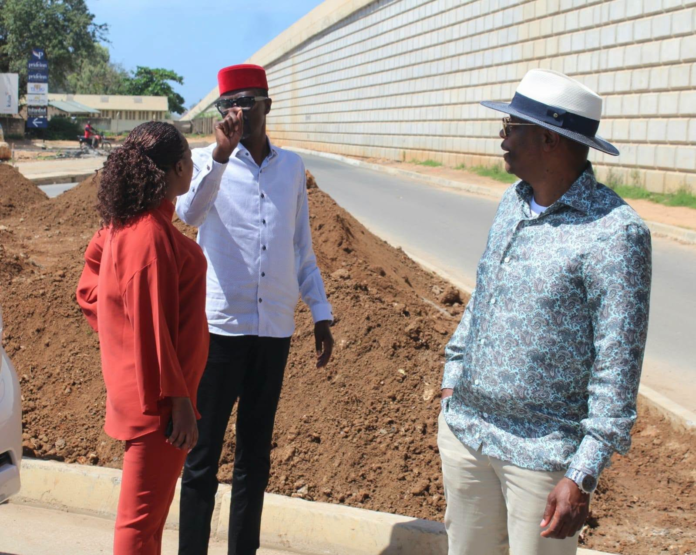
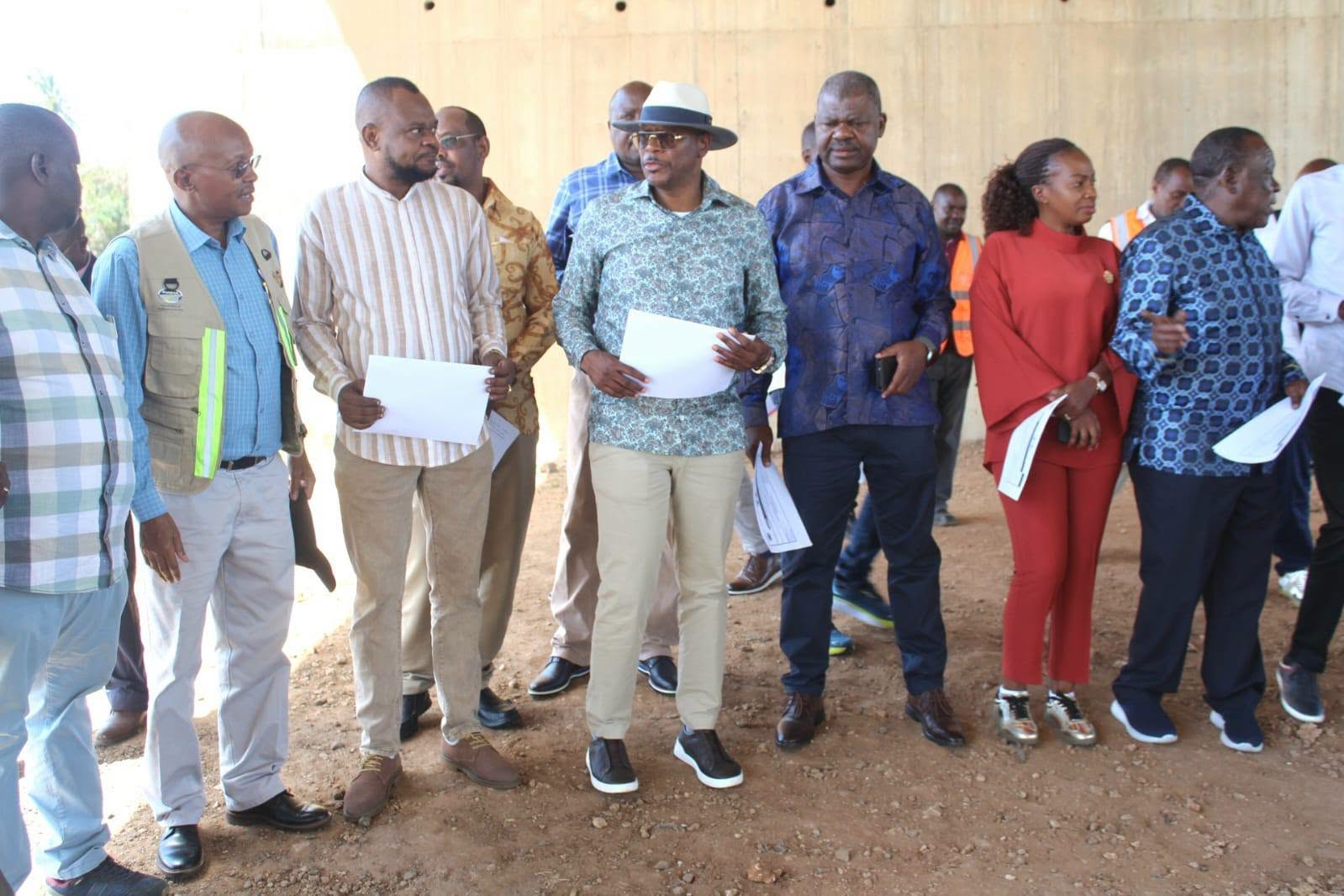
The Departmental Committee on Transport and Infrastructure has queried delays in the construction of the ongoing Mombasa-Mtwapa (A7) Road by the Kenya National Highways Authority (KeNHA).
KeNHA struggled to explain to the Committee why the works had been delayed.
The construction began in November 2022 and was scheduled for completion in November 2025.
The Committee, during its inspection tour of the road to evaluate progress on the Sh8.4 billion project, which currently stands at 55.96 per cent complete, raised concern over the delay.
The Committee, led by George Kariuki, expressed disappointment with the pace of works, noting that both KeNHA and the contractor had not been candid about the project.
In their update to the Committee, KeNHA officials, led by the Director of Development, Eng. Henry Gakuru, attributed the delay to several challenges.
“Honourable Members, we have had problems with land and Project Affected Persons (PAPs) compensation due to inadequate budgetary allocation and delays from responsible public agencies like the National Land Commission.
The ongoing conflict in the Middle East also led to delays in materials, in addition to population concentration along the stretch, which required section-by-section clearance,” he said.
The Committee, however, dismissed the claims, arguing that both KeNHA and the contractor were at the negotiating table during the development and appraisal of the project.
Kimilili MP Didmus Barasa, who is Vice-Chairperson of the Committee, said the issues that had been identified at the planning stage should not be introduced at an advanced stage of the project.
“You were aware that the road was cutting through a highly populated urban area at the time of planning.
You must have been aware of all these when the timelines were given. Now, how sure are you that the project will be completed within one year, that is, by December 2027 as indicated in your report?”Barasa asked.
Mr Badi Twalib, MP for Jomvu in Mombasa County, questioned how a three-year contract, which was still at 55 per cent complete with 40 per cent remaining, would be delivered in one year’s time.
“We are surprised that even engineers from KeNHA are not aware of the progress on some sections of this road, like the Bombolulu Bridge.
We want to see compensation done faster and the project completed as soon as possible to ease traffic on this road. It is a major link road between Mombasa and Malindi, all the way to Lamu,” he said.
The Committee was, however, impressed with the Corporate Social Responsibility (CSR) initiatives undertaken for locals, including training of youth in TVET-related skills and market expansion at Kongowea.
KeNHA assured the Committee that it had already reached an agreement with the contractor to ensure the works are completed by 16 December 2027.
We use cookies to ensure that we give you the best experience on our website. If you continue to use this site we will assume that you are happy with it.