Home Blog Page 9

Why Kenya must change how to fund agriculture

0

Why Kenya must change how to fund agriculture

By Hon Sammy Weya

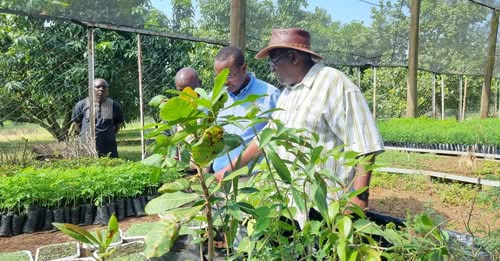
Kenya is fundamentally an agricultural country, yet agriculture has never received the level of guaranteed investment that its importance to our economy, food security and employment deserves.

I believe the law should be changed to require that:

10 per cent of all funds allocated to County Governments should be ring-fenced for agriculture.

The National Government should then match that 10 per cent allocation.

The money should be strictly invested in: Crop farming, livestock development, aquaculture and fisheries, agroforestry and commercial tree farming, irrigation and mechanisation, certified seedlings and farm inputs, agricultural extension services, agro-processing and value addition, storage, cold chains and marketing, women and youth agribusiness, water harvesting and climate-smart agriculture.

WHY?

If we invest seriously in agriculture, we can: Create millions of jobs, increase farmers’ incomes, reduce the cost of food, achieve food security, reduce imports, develop rural industries, create opportunities for our youth, increase exports, protect our environment, lift millions of Kenyans out of poverty.

Agriculture should not be treated as an afterthought in Kenya’s budgets. It should be at the centre of our economic transformation.

Let us demand a 10% County Agriculture Fund + 10% National Government Matching Fund, properly ring-fenced, transparently managed and focused on the farmer.

Invest in the farmer and you invest in Kenya.

Using the current FY 2026/27 figures, we can put a fairly clear number behind your proposal.

The National Treasury’s 2026/27 Budget Policy Statement proposed KSh 420 billion as the equitable share going to the 47 counties. The wider total county allocation, including additional allocations, is about KSh 495.7 billion.

If we use the KSh 420 billion equitable share:

Proposal Calculation Amount per year

County equitable share is KSh 420 billion.

10% ring-fenced for agriculture 10% × 420B KSh 42 billion

National Government matching contribution 1:1 match KSh 42 billion

Total annual agricultural fund 42B + 42B com to KSh 84 billion

So your proposal would create an approximately KSh 84 BILLION PER YEAR national agricultural development fund.

And that’s before considering the additional KSh 75.7 billion in proposed county allocations.

What makes the proposal powerful

KSh 84 billion every year could be deliberately divided among:

Crop production

Coffee, tea and other cash crops

Livestock

Aquaculture

Agroforestry and commercial forestry

Irrigation and water harvesting

Mechanisation

Certified seedlings and inputs

Agro-processing and value addition

Storage and cold-chain infrastructure

Extension services

Youth and women agribusiness

Agricultural exports

Importantly, this would not mean KSh 84 billion simply being handed out as farm subsidies.

The legislation could require the money to be invested in productive agricultural infrastructure, farmers, cooperatives, extension, value addition and agribusiness—with strict reporting and auditing.

The strongest way to present the idea

If Kenya is serious about eliminating poverty, creating jobs, reducing food prices and achieving food security, we must invest in the sector that employs and feeds the nation.

Let us legislate that 10% of County Government equitable-share funds be ring-fenced for agriculture, with the National Government providing a matching 10%.

Based on the current allocation, this could create approximately KSh 84 billion every year for agriculture, aquaculture, agribusiness and agroforestry.

That is an investment—not a handout. Invest KSh 84 billion productively every year and let us build millions of jobs, increase farmer incomes, reduce food costs and transform rural Kenya.

KENYA’S AGRICULTURAL REVOLUTION MUST START NOW

The writer is the Former Alego MP and a farmer

Cane farmers in Nyando belt lament over uncollected harvested canes, fear of huge loss

0

By Reporter

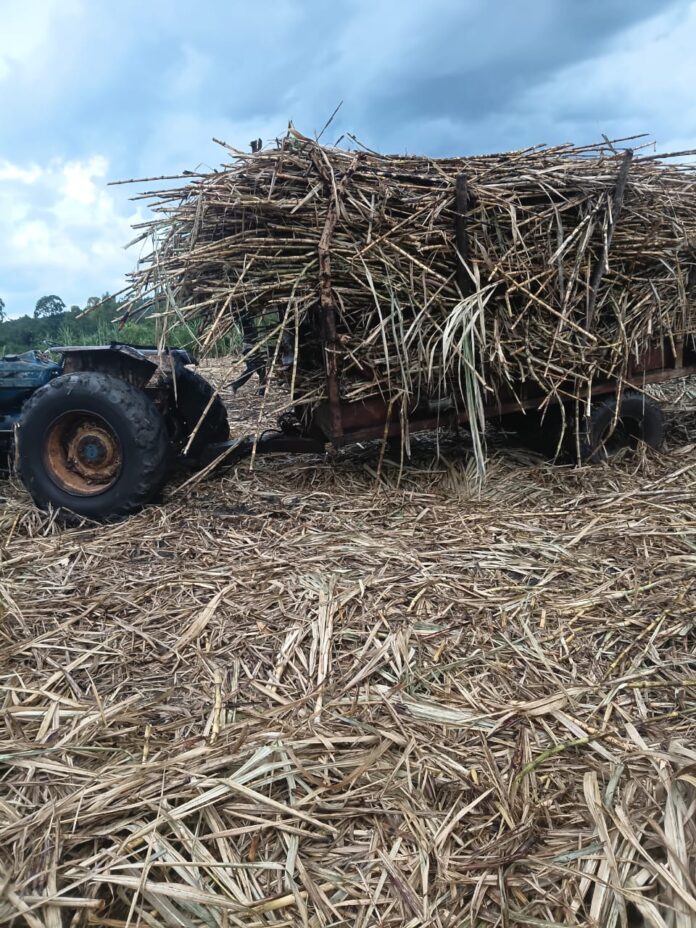
Cane farmers in the Kisumu-Nyando Sugar Belt may incur huge losses after some of the cane harvested two weeks ago may go to waste.

The farmers said the continued delay in collecting harvested cane in the belt would hurt their revenue and lead to huge losses.

They said canes harvested two weeks ago were yet to be collected from the farms by the millers, Kibos Sugar and Allied Industries, Chemelil Sugar Factory, Muhoroni Sugar Factory and West Valley.

“The cane may lose their value and this will impact negatively on the farmers. We appeal to the factories to urgently address the matter,” they said in a statement.

Chairman of Kisumu-Nyando Sugar Belt Cooperative Union, Mr Zedekiah Odhiambo, confirmed the crisis, saying they had scheduled a meeting with the millers.

Odhiambo said the situation could have been influenced by accidental fires during the dry spell, which left several hectares of cane burnt.

“Collection of burnt canes became an emergency and this could have contributed to the slow movement. It is also time the millers invested in transport to address the slow movement,” he said.

He said they had scheduled a meeting next week with the millers to address the crisis and to find out how to collect the already harvested canes.

Despair

Sugarcane farmers, especially in Kisumu County, face massive problems due to the high cost of land preparation and farm inputs such as fertiliser and herbicides.

In addition to the intensive labour needed in terms of weeding, the real problem starts when the cane matures for harvesting.

“First, to get their fields in the harvesting programme, they have to noble local cooperative leaders who only show up at harvest time but are absent during land preparation, weeding,” they said.

The cane-cutting sub-contractors who provide labour demand top-up… a form of bribe to ensure the cane is actually cut.

Then the killer, transporting the cane to the factory, is a nightmare.

There are only a few transport units to cover a wide area, despite sugarcane growing extending to new areas like Seme.

The tractors are very few, and the result is that farmers’ cane can remain in the farm for as long as two to three weeks, drying in the hot sun and losing weight in the process.

“This impoverishes the already overburdened farmers. The problem is exacerbated by the numerous fields which burn, especially during the dry season,” they said.

When the tongue slipped, Honorable Sigei was left cursing, social media apology took over

0

By Anderson Ojwang

The once powerful provincial commissioner whose word was law and revered recently found himself on social media platforms on his knees, cursing his tongue.

The tongue which built, tormented, made and unmade when he was the provincial commissioner and later rode him to Sotik parliamentary seat and subsequently placed him in the House of Honours on Wednesday thrashed him into dishonour at the King’s Palace.

Before the people who elected him, the Honorable Sigei tripped and the tongue slipped, leaving the crowd and President William Ruto, who was also in attendance, baffled.

With nine months to the next year’s General Election and President Ruto in vote hunt, it never occurred to him that in his own backyard of Rift Valley and his own lieutenant in Parliament would publicly mention the word Wantam.

A word which was recently declared forbidden in Homa Bay and provocation to violence, a directive issued by Homa Bay MP Opondo Kaluma.

In the beginning

Sigei said he was excited over the visit and development projects by President Ruto that he was overwhelmed.

“Kidogo nilikuwa na shida ambaye siwezi kuitambua hapa. But wakati niliingia, nilijazwa na furaha tele, mpaka maneno ambayo nilitamka ilikuwa tofauti,” (Shortly, I found myself in a trouble that I cannot explain. When I went to the podium, I was over-excited and spoke words which were contrary,”) he said.

Sigei has apologised to President Ruto after making remarks at a rally in Bomet that were interpreted as endorsing the ‘WANTAM’ slogan associated with the opposition.

The Sotik lawmaker said he had already apologised to the President over the confusion.

He explained that the atmosphere during the rally had contributed to his choice of words, insisting that his intended message was to support Ruto’s re-election.

Sigei further explained the apparent contradiction between his hand gesture and the words he used while addressing the crowd.

The word

Sigei has apologised for his “one term” remark at President William Ruto’s rally in Kamureito, Bomet County, saying he misspoke due to excitement over the President’s visit to his constituency.

Sigei said the intended message was that Ruto deserves another term in office and not an endorsement of the “one term” slogan associated with the opposition.

The MP said he became elated after Ruto visited the area on Thursday to launch the construction of the Kipsonoi-Kamureito-Kapkelei Road, leading to the slip of the tongue.

“We had traversed various areas. I arrived late at the meeting when the event had already started, and there was too much excitement on my part that my tongue slipped,” Sigei said.

He insisted that his support for Ruto serving two terms was well known, saying he had never advocated for the President to serve only one term, either at public functions or during interviews with local radio stations.

I support the president

The MP said he had consistently opposed calls for Ruto to serve only one term, noting that he had previously cautioned his supporters against using the slogan.

“Mimi nimekuwa mstarini mbele, hata niliwaambia watu ya kwamba sitaki kusikia mtu ambaye anasema ‘one term’,” Sigei said.

He described the day as one of celebration following Ruto’s visit to the region and urged leaders and residents not to allow what he termed minor political issues to overshadow development activities.

“Leo ilikuwa siku ya amani, hatutaki mambo madogo ije kuharibu mambo ambaye ni makubwa,” he said.

Sigei thanked Ruto for visiting the area and launching development projects, while reaffirming his support for the President’s bid for a second term.

“Sisi watu wa Sotik tunasema President William Ruto aende term ya pili,” he said.

Sigei said his remarks should therefore not be interpreted as a change in his political position or an endorsement of the opposition campaign for Ruto to serve only one term.

Addressing the press shortly after the event, the first-term lawmaker apologised to the President, saying he remained firmly behind the two-term push.

“On behalf of the people of Sotik, I want to tell the President to forgive me for the slip of the tongue,” he said.

He clarified that the statement, saying the word “one” was not what he intended to say and that he meant to express support for Ruto’s bid to secure another term.

Loyalty pledge

On Friday, former Nairobi PC accompanied the President and waved a two-term salute.

“Today, I joined other leaders alongside H.E. President Dr William Samoei Ruto during the ongoing development tour of Kericho and Bomet Counties.

We toured the ongoing construction of Kapkatet Stadium and visited the Kapkatet Modern Market, assessing key development projects and their progress.

The tour proceeded to Kamureito, where H.E. the President launched the Kipsonoi–Kamureito–Sotik TTI Kapkelei–Makutano Junction Road, a major infrastructure project expected to improve connectivity and spur economic growth in the region.

I assured the President that Sotik and Bomet County are a TUTAM zone, reaffirming our unwavering support and commitment to standing with his development agenda.

The development tour continues. The work continues,” he wrote.

El Niño 2026–27: Africa Has the Forecast. Will the Money Move Before Disaster Strikes?

0

By Olendo Simon Okola

The coming El Niño is not only a weather emergency. It is a test of whether Africa can move climate finance from reacting to disasters to investing before losses occur.

Africa has received the warning. The next question is whether the money will move before the rivers rise, crops are destroyed, roads become impassable and communities are displaced, or whether finance will once again arrive after the damage has already been done.

That question has become urgent. The World Meteorological Organization confirmed on 3 September 2026 that El Niño is firmly established and expected to intensify into a very strong event, with a near-100 per cent likelihood that it will persist through February 2027.

A week later, the US National Oceanic and Atmospheric Administration went further: its Climate Prediction Center now estimates a greater than 90 per cent probability of a very strong El Niño during the Northern Hemisphere autumn and winter of 2026–27. NOAA also gives a 75 per cent chance that the October to December 2026 event could reach a strength exceeding previous El Niño events in its record dating to 1950.

Those are extraordinary numbers. But a strong El Niño does not automatically mean catastrophe everywhere.

The World Meteorological Organization cautions that the severity of local impacts depends on geography, season and other climate drivers, including conditions in the Indian and Atlantic Oceans.

That distinction matters: preparedness must be based on regional and national forecasts, not simply on the label “El Niño.”

What is already clear, however, is that large parts of Africa are entering a period of elevated climate risk.

One El Niño, two African realities

The continent could experience two contrasting climate emergencies at the same time. For the Greater Horn of Africa, the IGAD Climate Prediction and Applications Centre is forecasting an increased likelihood of wetter-than-normal conditions during the October–December 2026 season.

The forecast is particularly striking in southern Ethiopia, central and southern Somalia and north-eastern Kenya, where ICPAC places the probability of enhanced rainfall at 90 per cent.

It also identifies a high probability of seasonal rainfall exceeding 400 millimetres in parts of central Kenya, the Lake Victoria Basin, central and southern Somalia, Burundi, western Rwanda and western Tanzania. In parts of Ethiopia, Kenya and Somalia, the October–December season can account for as much as 70 per cent of annual rainfall.

For western Kenya and the Lake Victoria Basin, this deserves close attention. Rain is not inherently a disaster. Good rains can increase agricultural production, replenish groundwater, restore pasture, improve hydropower prospects and increase water availability.

The danger arises when rainfall intensity overwhelms drainage systems, degraded watersheds, roads, farms, settlements and other vulnerable infrastructure.

Meanwhile, Southern Africa faces almost the opposite risk. The Southern African Development Community’s 2026/27 seasonal outlook favours below-normal rainfall across much of Angola, southern Zambia, Zimbabwe, Mozambique, Namibia, Botswana, most of South Africa, Eswatini and Lesotho during October–December 2026.

Drier conditions are expected to persist into early 2027 across large parts of the region, while above-average temperatures are favoured across most of SADC. Africa could therefore be responding simultaneously to flood risk in the east and drought and heat stress in the south.

This is much more than a weather story. It is a food-security issue, a public-health issue, an infrastructure issue, a fiscal issue—and fundamentally, a climate-finance issue.

Kenya already knows how expensive climate shocks can become. There is a dangerous tendency to regard climate preparedness as an additional cost government must somehow accommodate. The evidence suggests the opposite. Failure to prepare is itself extremely expensive.

Kenya’s Second Nationally Determined Contribution states that climate change and extreme weather are estimated to erode 3–5 per cent of the country’s GDP annually.

In 2023 alone, drought caused estimated direct losses of more than US$650 million. This was followed by the 2024 floods, which caused direct losses estimated at more than US$1.46 billion. Together, the two shocks amounted to roughly 2 per cent of GDP.

The agricultural impact of the 2024 floods illustrates the exposure even more clearly. A government-led recovery assessment estimated approximately KSh34.9 billion in agricultural damage and KSh84.8 billion in production losses.

This matters because Kenya remains highly dependent on climate-sensitive sectors. Agriculture and livestock contributed about 21.2 per cent of GDP in 2022, while smallholder farmers produced approximately 80 per cent of the country’s agricultural output, according to Kenya’s NDC.

When climate shocks hit agriculture, therefore, the consequences do not remain on farms. They move rapidly into food prices, household incomes, employment, manufacturing, public expenditure, trade and poverty.

This is why the coming El Niño should be discussed not only by meteorologists and disaster-response agencies. Finance ministries, county governments, banks, insurers, investors, development partners and climate funds should also be at the table.

Africa’s problem is not only a finance gap

There is another problem that receives far less attention. I call it the forecast-to-finance gap. We are becoming considerably better at predicting climate hazards.

What remains weak is our ability to convert those forecasts into timely financing decisions before losses occur. Think about the conventional disaster-financing cycle.

A flood occurs, damage is assessed, government declares an emergency, humanitarian agencies mobilise, development partners pledge money, recovery plans are prepared. Infrastructure is reconstructed.

In effect, enormous amounts of money are mobilised after assets, businesses and livelihoods have already been destroyed.

The more intelligent sequence would be: forecast → risk identification → finance trigger → anticipatory investment → avoided losses.

That is the transition Africa urgently needs. And the economics support it.

The World Meteorological Organization reports that providing just 24 hours of warning before an impending hazardous event can reduce resulting damage by approximately 30 per cent. Multi-hazard early-warning systems are estimated to generate approximately US$9 in net economic benefits for every US$1 invested. An investment of US$800 million in early-warning systems in developing countries could avoid between US$3 billion and US$16 billion in losses annually.

But forecasting alone is not enough. An early warning that does not trigger financing, evacuation, water storage, drainage clearing, crop protection, insurance payouts or emergency preparedness is simply information.

Early warning becomes climate resilience only when somebody has the authority, resources and financing mechanism to act on it.

The adaptation-finance gap makes this harder

Unfortunately, adaptation remains dramatically underfinanced.

UNEP’s Adaptation Gap Report 2025 estimates that developing countries will require between US$310 billion and US$365 billion every year by 2035 for adaptation. International public adaptation finance to developing countries was only US$26 billion in 2023.

That means estimated adaptation needs are approximately 12 to 14 times current international public flows.

Africa’s position is similarly sobering. Climate Policy Initiative estimates that climate-finance flows to Africa averaged about US$43.7 billion in 2021/22, while only about 23 per cent of the continent’s estimated annual climate-finance needs were being met.

Private finance accounted for just US$8 billion, or approximately 18 per cent of total climate-finance flows.

These figures reveal an important truth. Africa does not only have a shortage of climate finance. It also has a readiness, project-preparation and bankability challenge.

Funding rarely moves simply because a community is vulnerable or because an intervention is environmentally desirable.

Financiers need credible projects.

They need clearly defined climate risks, technically feasible interventions, competent implementing institutions, credible budgets, financial models, environmental and social safeguards, measurable results, monitoring systems, governance arrangements and realistic sustainability strategies.

This creates a cruel paradox: some of the communities facing the greatest climate risks may also have the weakest capacity to package those risks into projects capable of attracting finance. Closing that gap should become part of adaptation policy itself.

Kenya’s own climate-finance numbers make the point

Kenya’s Second NDC estimates that approximately US$56 billion will be required for mitigation and adaptation actions between 2031 and 2035. Of this, around US$17.7 billion is specifically required for adaptation. Kenya expects to mobilise about 19 per cent of the overall NDC financing domestically, leaving approximately US$45.36 billion, or 81 per cent, to depend on international support.

The implication is profound. Kenya will not secure US$45 billion merely by demonstrating that climate change is serious. It will have to develop a large pipeline of credible, investment-ready and fundable projects.

The same applies across Africa. This is where climate-finance readiness becomes as important as climate-finance availability.

So what should finance before El Niño look like? The immediate priority should not be one giant “El Niño project.”

It should be a portfolio of locally targeted investments. In flood-prone locations, financing should support drainage rehabilitation, catchment restoration, wetland protection, climate-resilient roads, river monitoring, water infrastructure and settlement preparedness.

For farmers, funding should enable climate information services, improved seed varieties, water harvesting, soil conservation, disease surveillance, crop and livestock insurance, post-harvest storage and rapid access to working capital after shocks.

For drought-exposed regions, the priority should include water storage, groundwater systems, drought-tolerant crops, livestock protection, index insurance, strategic fodder reserves and efficient irrigation.

And at the institutional level, county governments, community organisations, cooperatives and MSMEs need something less visible but equally important: project-preparation capacity. A community may understand perfectly which river floods every year.

A county government may know exactly which drainage system requires rehabilitation. A farmers’ cooperative may understand its water problem better than any outside consultant. But knowledge of a problem is not the same as having a finance-ready project. This is the missing bridge.

Climate finance must move closer to where climate risk occurs

The coming months also raise a deeper issue about the architecture of climate finance. Too much climate finance remains centralised, slow and administratively demanding. Yet climate impacts are intensely local. They occur on a farm in Homa Bay. At a flooded market in Kisumu. Along a riverbank in Budalangi. At a drying borehole in southern Africa. Inside a small business whose supply chain has collapsed.

National governments and international institutions remain indispensable, but locally led climate action will remain rhetoric unless local institutions can access meaningful resources and build the systems required to manage them. This means strengthening county-level climate-finance pipelines, supporting community institutions to meet fiduciary and safeguard requirements, financing project preparation, improving climate-data systems and developing financing vehicles capable of aggregating many small resilience investments.

It also means expanding pre-arranged finance. Contingency funds, forecast-based financing, insurance, concessional credit, guarantees, grants and blended-finance instruments should increasingly be designed so that agreed climate thresholds can trigger action before an emergency becomes a catastrophe.

El Niño is therefore a governance test

For me, the central question raised by the 2026–27 El Niño is not whether Africa has enough climate information.

We increasingly do. We have satellite observations. We have sophisticated climate models. We have seasonal forecasts. We know vulnerable sectors. We know many vulnerable locations.

And we know many of the interventions that can reduce losses. The harder question is whether our financing and institutional systems can move at the speed of climate risk.

If we receive a credible warning months in advance but wait until communities are under water before resources are released, the failure is no longer simply meteorological. It is institutional. It is financial. It is a failure of preparedness.

Africa must therefore move climate finance beyond the traditional model of financing recovery from yesterday’s disaster towards financing resilience against tomorrow’s known risks.

The 2026–27 El Niño gives governments, climate funds, development banks, insurers, private investors and local institutions an opportunity to demonstrate that this transition is possible.

Because in climate finance, one of the greatest returns on investment is not necessarily something we build.

Sometimes it is the loss that never occurs, the crop that is not destroyed, the business that does not close, the family that does not have to leave its home, and the disaster that never becomes a humanitarian emergency.

Africa has received the forecast.

Now the real test is whether the finance will move before the disaster does.

About the Author

Olendo Simon Okola is a climate-finance consultant and Founder & Lead Consultant at Agenda Beyond Borders (ABB).


Why Jakakimba believes he is the next Suba North MP

0

By Habil Onyango

Suba North MP contender Silas Chepkeres Jakakimba said that despite his chief rival, Hon. Millie Odhiambo, being “an institution,” he looks forward to achieving his biblical David-vs-Goliath victory in the 2027 General Election.

In a YouTube interview with Prof. Herman Manyora, Mr Jakakimba reassured voters that he is the right person to support because his vision is for a Suba North where women and youth have access to economic empowerment opportunities, food and nutritional security, and educational infrastructure initiatives, among others.

“I started campaigns in February 2024, a month after Baba announced his candidacy for the A.U.C. chairmanship. I have been on the ground since then. Two and a half years—solid—I’ve been there,” he told his host, adding that the people had embraced his message well.

“We’ve delivered the right message locally, and I believe it is resonating, as you can see,” he noted.

Jakakimba said he has promoted “healthy politics,” which, fundamentally, he said, reflects the health of his community’s livelihoods.

“The issues that matter—like the unga (flour) question, clean water, support for education infrastructure, and expanding opportunities for women and youth—are what I focus on,” he explained.

The Advocate of the High Court of Kenya and senior partner at SES Law Advocates assured that his leadership would leverage its network and wealth to attract investment and partnerships from both Government and private sectors to advance projects.

“As an MP, you also need to knock on doors and lobby,” he said.

He described Hon. Millie Odhiambo’s leadership as having reached a plateau after serving four consecutive five-year terms as a national parliamentarian.

“You’re elected. Second term. Third term. Fourth term. If there is something Millie has not achieved in these 20 years, I can tell you, she likely won’t,” he stated. “Actually, I don’t think our people will make that mistake again.”

Who are the vultures of ODM Cups and Tents?

0

By Anderson Ojwang

Who are the vultures in the Orange Democratic Movement (ODM) cups and tents planning for the late former Prime Minister Raila Amolo Odinga’s anniversary?

This is the question that may form part of the conversation as we head to the first Raila Odinga anniversary after the ODM Central Committee on Thursday released a programme and events for the occasion.

And Raila’s younger sister and Kisumu Women Representative Ruth Odinga sparked a storm with her post on social media platforms, pointing fingers at vultures in the party planning for the anniversary.

Odinga wrote, “We are heading for 15th October and already vultures of ODM cups and tents are now planning – Raila was an enigma! Wacheni Upuzi!”

Cups and Tents

During the Linda Ground rallies, Ruth Odinga complained of money flowing into ODM that was used to hire tents and hotels, a new concept in the party.

“Where is the money used to fly choppers, procure big tents, and mobilize and brand crowds in ODM colours coming from, yet the same money cannot be sent to the ODM Party bank accounts? That only means one thing: control.

So they must be the ones controlling the show, where they decide who is ‘invited’ to the Linda Ground tents and what they say once they get there. Anything outside the script attracts immediate booing, as was the case with Suba North MP Hon. Millie Odhiambo at the Ciala Resort in Kisumu,” she said then.

Press statement

On Thursday, the ODM Central Committee, after its meeting, released a statement detailing the programme and events to mark Raila’s anniversary.

The ODM leadership christened the month of October as Mwezi wa Baba (Baba’s Month) commemoration.

The statement read in parts, “Ladies and Gentlemen, October marks one year since the demise of the Rt. Hon. Raila Amolo Odinga, the founder of the Orange Democratic Movement (ODM) party. It was a tearful moment; we were all heartbroken. God plucked the best flower from our midst.

The ODM party has dedicated the entire month of October to his memory,”

The party said, in recognition of Raila’s tireless contribution to the country’s democracy and his Pan-Africanism, the party was dedicating the month of October as MWEZI WA BABA with the following activities:

“2nd October 2026 – Candle lighting; Kenyans will be requested to light candles wherever they are, either in organised groups or individually, in remembrance of BABA. This candle-lighting will take place at 6:00 pm across the country,” read the statement.

On 9th October 2026, the statement said the party will hold a major Memorial rally in Kakamega Town, which will bring together supporters from all the Counties of the Western Kenya region, namely Kakamega, Vihiga, Busia, Bungoma and Trans Nzoia.

“From 10th to 15th of October 2026: family-led activities;

This will culminate in the main memorial service at Kang’o Ka Jaramogi in Bondo,” read the statement.

Itinerary

On 17th October 2026 – a memorial rally in Garissa Town.

This will bring together members and supporters from Northern Kenya counties of Garissa, Wajir, Mandera, Isiolo and Marsabit.

On 18th–19th of October 2026 – Memorial activities in the Coastal region.

On 21st October 2026 – Kajiado County memorial activities, 23rd to 25th October 2026 – Turkana County memorial activities and 31st of October 2026 – MWEZI WA BABA memorial rally in Nairobi County.

“We urge all our supporters to rededicate their commitment to BABA’S ideals,” read the statement.

The irony

After the announcement of Raila’s death by President William Ruto, only then Secretary-General Edwin Sifuna went to India to bring the body back to the country.

Unfortunately, while Raila’s body was still airborne, the party’s top organs had met and chosen Dr Oburu Oginga as the interim party leader and he was only made aware of his new role at the Jomo Kenyatta International Airport, where he had gone to receive the body of his younger brother.

Oburu expressed shock but accepted the appointment to become the acting party leader and was recently ratified by the Special Delegates Conference as the party leader.

Oburu in UK for routine medical check-up

Oburu recently travelled to the United Kingdom for a routine medical check-up, days after he was briefly admitted to Nairobi Hospital.

“I am currently in the UK to undergo a thorough, routine medical check-up. This visit follows the direct advice of both my doctors and the party leadership to ensure a comprehensive evaluation of my health, while allowing me a dedicated period of rest and rejuvenation,” Oburu said on Thursday.

Oginga said the temporary step back from party activities was also a strategic opportunity for ODM to demonstrate its institutional strength.

He said Deputy Party Leaders Paul Simba Arati and Abdulswamad Shariff Nassir, together with the National Central Committee and the party secretariat, would oversee the party’s day-to-day operations during his absence.

“As I attend to these personal health routine checks, that naturally come with advancing years, I view taking this step back as a deliberate, strategic moment for our movement,” he said, adding that he had “absolute faith” in the collective leadership of the party to steer the movement effectively.

On September 1, Oginga dismissed reports that he had been seriously ill or readmitted to Nairobi Hospital, saying he had only briefly visited the facility for a general check-up with his doctors before returning home.

“I had only briefly visited the hospital for a general check-up with my doctors and have since returned home,” Oginga said at the time.

He further sought to reassure Kenyans that there was no cause for alarm, saying he would inform the public should he develop any serious health complications.

“Being sick is a normal human experience and should not alarm anyone. The day I am truly sick, I will inform you all, for I am a very transparent person,” he said.

Laini Saba residents want the Senate to intervene over stalled resettlement by Kenya Railways

0

By Reporter

Residents and traders displaced by Kenya Railways projects in Laini Saba, Kibra Constituency, want the Senate to intervene over stalled resettlement programmes, incomplete housing units and inadequate trading facilities.

The residents appeared before the Senate Standing Committee on Roads, Transportation and Housing and said hundreds of affected families and traders were yet to receive the houses and business premises promised under the Resettlement Action Plan (RAP).

Figures presented to the Committee painted a stark picture of the resettlement challenges.

Of the 1,432 residential occupants enumerated in the Laini Saba zone, only 256 had received houses, while 583 of the 833 enumerated business occupants had received stalls.

The petitioners, led by Victor Wamae and Woodley/Kenyatta Golf Course MCA Davidson DNG Ngibuini, told the Committee that some beneficiaries who had received housing units were living in deplorable conditions due to a lack of basic amenities, including water, sewerage, lighting, fencing and functional sanitation facilities.

“They can’t use the toilets because there is no sewer connection. There is no water and so they cannot use the toilets,” said Mr Ngibuini.

The petitioners said the remaining beneficiaries continued to face uncertainty, with some living in temporary or decanting sites and others operating businesses in unsafe and unsuitable locations.

Mr Wamae said some of the houses already handed over to beneficiaries were incomplete, particularly due to the absence of water connections.

*“What happened in the past was that Resettlement Action Plan, as you can see in the document, and Chair, the Kenya Railways houses were built, and the Kenya Railways houses were handed over to the affected persons.

But there’s a serious issue where, if you look at those houses as they are today, the houses are incomplete,” he said.

The petitioners raised concern over the stalled Phase Two construction at Jamhuri, behind the Nairobi City County Inspectorate Trading Centre, saying the project had reportedly run out of funding.

They said traders who had won ballots for houses had not received their units, forcing some to remain at a decanting site in Magade.

Marsabit Senator Mohamed Chute, who chaired the session, pressed the petitioners to provide accurate figures on the number of people affected by the resettlement programme.

Senator Chute warned the petitioners against presenting contradictory figures, saying accurate information was necessary for the Committee to establish the extent of the problem and determine appropriate interventions.

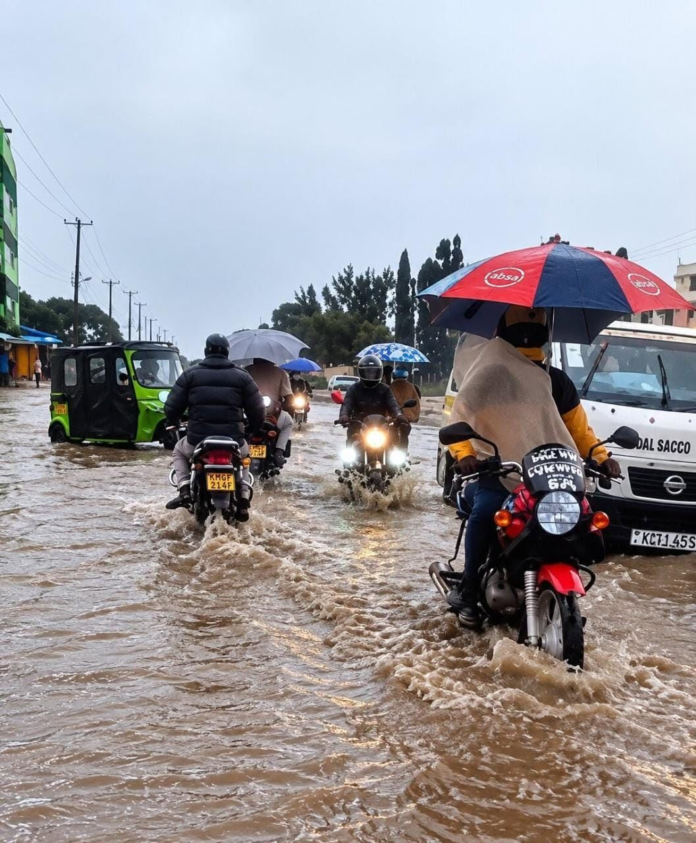
Nominated Senator Peris Tobiko, meanwhile, expressed concern over the safety of affected families, particularly amid forecasts of heavy rainfall.

“Where are you living right now? Considering, of course, the predictions of the meteorological people that there’s going to be rain and a lot of rain. Where are you living? Are you in safe places?” she asked.

Senator Tobiko said the safety of affected families should be prioritised as the Committee considers interventions to address the housing crisis.

She also sought clarification on whether beneficiaries were paying for the houses or whether the units were being provided as part of the resettlement programme.

Nominated Senator Hamida Kibwana sought clarification on the legal basis upon which residents and traders had occupied the railway land.

“The bottom line is the Kenya Railways wanted to get back their land, full stop,” she said, while emphasising the need to distinguish between the legal and humanitarian dimensions of the dispute.

Senator Kibwana asked the petitioners to provide documentation relating to their occupation, including allotment letters, titles and evidence of rent payments.

She also requested a list of ballot holders to enable the Committee to establish those who had been allocated houses and those who had been left out.

She questioned whether traders had been paying rent to the City Council or another authority and called for documentary evidence to establish the status of the affected occupants.

The petitioners asked the Committee to facilitate the release of RAP documents, including enumeration records and details of financial allocations.

They also called for investigations into alleged procurement and contractor irregularities, completion and upgrading of market stalls, compensation for livelihood disruptions and clarification of the legal status of the affected land.

According to the petitioners, some of the stalls constructed under the resettlement programme were too small and poorly located, forcing traders to operate near railway tracks and roads.

They proposed that portions of the railway reserve be considered for organised trading activities during railway rehabilitation, subject to proper planning and legal safeguards.

The residents further raised concerns over flooding, inadequate drainage and the absence of ramps for persons with disabilities.

They also expressed concern over plans to remove a police post serving Woodley and Isabel wards, saying the facility was important to the security of the local community.

The Committee directed the petitioners to submit a comprehensive list of beneficiaries who had received or missed out on houses and stalls.

The petitioners were also directed to provide copies of lease agreements and other relevant records to enable the Committee to compare their information with Kenya Railways’ records.

The comparison is expected to help establish the actual number of beneficiaries, identify those who have been left out and determine any discrepancies in the implementation of the Resettlement Action Plan.

Senator Cheragei questions private revenue collection and sharing arrangement at KICC

0

By Reporter

Questions have emerged over the collection and management of revenue by the Kenyatta International Convention Centre (KICC), particularly the revenue generated from parking, Tower Viewing services, events and other revenue-generating activities.

Nandi Senator Samson Cheragei is questioning the legal basis and transparency of a private revenue-collection and revenue-sharing arrangement entered into by KICC.

He said the arrangement raises concerns regarding compliance with Government requirements on the collection, processing and accountability of public revenue.

Sen. Cheragei now wants the Standing Committee on Finance and Budget to establish the legal basis, scope and approvals underpinning the arrangement.

He wants the committee to also look into the procurement process undertaken by KICC and the contractual and supporting documentation governing the engagement.

The Senator has further questioned why revenue collected by KICC under the arrangement was not processed through the eCitizen platform.

He also questioned whether the National Treasury authorised the operation of any parallel revenue-collection system.

The Senator wants the Committee to disclose the identity of the private entity involved and the terms of its engagement with KICC.

He also wants the Committee to disclose the payment platforms and accounts through which revenue was collected and remitted, as well as the safeguards in place to prevent under-declaration, unauthorised retention, diversion or loss of public funds.

Sen. Cheragei is also seeking a comprehensive account of revenue collected by KICC over the last five financial years from parking, Tower Viewing services, events and other revenue streams, disaggregated by source, and a comparison of revenue collected under the private arrangement with amounts processed through the eCitizen platform.

Further, the Senator wants the Committee to establish whether any discrepancies, revenue losses, delayed remittances or other financial irregularities have occurred since the commencement of the arrangement, the amounts involved and the corrective measures undertaken.

He has also called for information on Government entities that continue to collect revenue outside the eCitizen platform, and the measures being undertaken by the National Treasury to ensure that all public revenue is collected, accounted for and reconciled through approved Government revenue-collection systems.

Ruto’s headache over Mombasa gubernatorial seat as Shabbal vows to run

0

By Anderson Ojwang

The battle for the Mombasa gubernatorial race is turning out to be a headache and a nightmare for President William Ruto as he tries to align his troops to face off against the opposition in the 2027 General Election.

The move by President Ruto to prevail on gubernatorial aspirant Suleman Shabbal not to run did not materialise after the latter declined and vowed to contest for the gubernatorial seat.

**“You remember I told you I told Shabbal, and you will excuse me to say this. I told you that I know you want to run for governor in Mombasa and I told you I am against it.

I say this with tremendous respect to my brother Shabbal, honestly, and I told him, my friend, please, you know we need you in a different space,”** Ruto said.

But Shabbal, in his response in a social media post, said nothing will stop him from contesting for the Mombasa gubernatorial seat.

“President William Ruto is our president and respect him. He is my friend, but Your Excellency, for your advice I kindly request that you forgive me. Let’s meet at the ballot on 10th August 2027,” he said.

President Ruto said Shabbal was better off in a different space and not politics owing to his success as an entrepreneur.

“Forgive me, my brother Shabbal, you are a great entrepreneur and it is not easy to come across people like you who have the acumen, capacity, courage and connection to do the kind of investments going on in this country,” he said.

He said not all successful people can be politicians and urged Shabbal to reconsider his stand.

**“We have so many people who can be politicians and I am one of them and it is not that politicians are lesser human beings.

I am saying, in our country, there is this thing that every successful person thinks there is something in politics,”** he said.

Ruto said the country cannot be grown by politicians alone and that there was need for many more people, serious industrialists, investors, Kenyans who can grow this country.

“You can make a huge contribution to Kenya. Look at what you are doing with this. It will get 10,000 people working. It is better than you going to be disturbed by the MCAs, face demos and humiliations,” he said.

But Shabbal maintained that Mombasa was calling and the welfare of the people was paramount.

**“I look at the welfare of Mombasa, which is more important. Let me tell you in no uncertain terms, in 2027, whether they like it or not, no retreat and about-turn.

What previously occurred to be denied a ticket to MCA because they support Shabbal. You can stay with your tickets, I am still in the race. Whether they like it or not, I am in the race,”** he said.

He said only two things will keep him out of the race, which are God and the people of Mombasa.

“Unless two things happen, one, God gives his verdict or the people of Mombasa say no, but Shabbal is in the race until the end. Change must come. Mombasa is calling and it is not calling Shabbal alone but calling all of us to unite and change Mombasa,” he said.

Dynamics

The Mombasa gubernatorial race has been dominated by the Orange Democratic Movement (ODM), and the death of former party leader Raila Odinga has left the contest open.

The recent fallout in the party has also undermined the party’s grip in the region as the electorate are moving towards the Linda Mwananchi group, the rebel wing in the party.

Shabbal is one of the candidates to beat in the race, having contested for the seat in 2013 and 2017, while in 2022 he stepped down.

In 2013, he lost to the ODM’s Hassan Joho, garnering 94,905 against the victor’s 132,583 votes.

In 2017, Shabbal lost again, getting 69,515 votes against Joho’s 221,177 votes.

Election Results Summary 2017

Winner: Joho Hassan Ali (ODM) — 221,177 votes (64.89%)

Runner-up: Shahbal Suleiman Said Saleh (Jubilee Party / JP) — 69,515 votes (20.39%)

Third place: Hassan Omar Hassan (Wiper Democratic Movement – Kenya / WDM-K) — 12.85% (approx. 43,800+ votes)

2022 results

Orange Democratic Movement (ODM) gubernatorial candidate Abdulswamad Nassir won the Mombasa gubernatorial election after garnering 119,083 votes.

He was followed closely by his main competitor, Hassan Omar of the United Democratic Alliance (UDA), who garnered 98,108 votes.

The problem

The broad-based coalition has two aspirants, UDA Secretary-General Omar Hassan and the incumbent Nassir of ODM.

Nyali MP Ali Mohammed has also expressed interest in the seat and, with Shabbal’s declaration, the battle for the race will be interesting.

Already, Omar has declared that there will be no zoning and is ready to face off with Nassir, while the ODM team wants their stronghold zoned to avoid internal competition.

Nurses Back to Work After 43-Day Strike as Governors Seal Return Deal

0

By Valentine Omondi

Patients across Kenya can now breathe a sigh of relief as nurses return to public hospitals after 43 days of industrial action that disrupted healthcare services, strained medical workers and threatened to trigger a wider health sector strike.

The Kenya National Union of Nurses and Midwives (KNUNM) called off the strike on Wednesday, September 9, after reaching a Return-to-Work Formula with the Council of Governors following a day-long closed-door meeting in Nairobi.

KNUNM Secretary-General Seth Panyako announced the end of the strike during a press briefing after the negotiations, directing nurses to resume duty immediately and within 24 hours at the latest.

“By the powers conferred on me by the Constitution of the Kenya National Union of Nurses and the Constitution of Kenya, I hereby declare that the strike that commenced on the 29th of July 2026 is hereby called off,” Panyako said.

The agreement gives the two sides 45 days to conclude negotiations on the implementation of the 2017 Collective Bargaining Agreement (CBA), which has remained unresolved for years.

Council of Governors Chairperson Ahmed Abdullahi confirmed the agreement during the briefing, saying the dispute had largely been driven by the failure to implement the 2017 CBA.

“We know nurses have been on strike for 43 days. It was because of the non-implementation of the 2017 CBA. We now have a RTWF,” Abdullahi said.

The Council of Governors also committed to coordinate the development of a model career guideline for nursing personnel within the 45-day period.

CBA row sends nurses into six-week nationwide walkout

The strike began on July 29 after nurses walked away from their stations over the failure to implement the 2017 CBA and other outstanding employment grievances.

The union had also raised concerns over the employment of Universal Health Coverage workers on permanent and pensionable terms, career progression and other terms affecting nurses.

The 2017 CBA itself followed a six-month nurses’ strike almost a decade ago, but key provisions remained unresolved, with the government repeatedly citing financial constraints.

As the latest strike dragged on, nurses maintained that they would not return to work until their grievances were addressed.

The dispute eventually moved beyond negotiations, with hundreds of nurses taking their protests to the Council of Governors’ offices in Nairobi on Tuesday, September 8, a day before the breakthrough.

The demonstration came as governors and other officials were under growing pressure to find a solution to the dispute.

Patients bear brunt as public hospitals struggle without nurses

For 43 days, the absence of nurses disrupted healthcare services in public hospitals across the country.

Some facilities faced shortages of essential nursing services while patients were forced to endure delays, seek treatment in private facilities or travel to other areas where services were available.

The crisis also affected dispensaries and health centres in some counties. The Senate discussed the disruption on Tuesday, with Nandi Senator Samson Cherargei warning of a rise in deaths and accusing the Council of Governors and the Salaries and Remuneration Commission of contributing to what he described as a national crisis.

The prolonged strike also placed enormous pressure on doctors and other healthcare workers who remained on duty.

Doctors were increasingly required to deal with responsibilities normally handled by nurses, creating another layer of pressure within a health system already facing staffing shortages.

Doctors threatened fresh strike as nurses’ absence stretched hospitals

The pressure reached a critical point on Tuesday, September 8, when the Kenya Medical Practitioners, Pharmacists and Dentists Union (KMPDU) threatened to join the nurses’ strike.

KMPDU Secretary-General Dr Davji Bhimji Atellah gave the government seven days to resolve the nurses’ grievances, warning that doctors would issue their own strike notice if the dispute remained unresolved.

Atellah said doctors were already overwhelmed by the additional workload created by the nurses’ absence.

“Doctors cannot do the nursing jobs,” he said.

In a post on X, Atellah warned that doctors would not remain silent while the health system deteriorated.

“We will not watch silently as the healthcare system we have dedicated our lives to serving is allowed to deteriorate,” he said.

He added: “When one part of healthcare is compromised, we all suffer. And when we stand together, we protect our patients together.”

The seven-day ultimatum meant the country was potentially facing another health workers’ strike just as the nurses’ industrial action entered its final stages.

The agreement reached on Wednesday has now removed that immediate threat.

Governors offer allowance boost as nurses agree to return

The breakthrough followed an offer by county governments to increase nurses’ allowances.

The Council of Governors offered an increase in the risk allowance to Sh8,000 and an additional Sh5,000 in uniform allowance, translating to a combined Sh13,000 increase.

The Return-to-Work Formula also provides a framework for addressing the outstanding CBA issues within 45 days.

The agreement further provides for the absorption of Universal Health Coverage workers into county employment on permanent and pensionable terms, while the Council of Governors is expected to coordinate the development of career progression guidelines for nurses.

For the Council of Governors, the deal offers an opportunity to restore services in county hospitals after more than six weeks of disruption.

For nurses, however, the 45-day negotiation period will be crucial because the central issues that triggered the strike have not simply disappeared with the return to work.

Nurses return as 45-day countdown begins

The return of nurses is expected to ease pressure on public hospitals, doctors and other healthcare workers while restoring services that had been disrupted for more than six weeks.

Patients who depend on public hospitals will also be watching closely as nurses resume their duties, particularly those who were forced to postpone treatment or seek alternative facilities during the strike.

But Wednesday’s agreement is not the final chapter.

The government, county governments and the nurses’ union now have 45 days to address the outstanding issues under the 2017 CBA and implement the commitments contained in the Return-to-Work Formula.

The success of that process could determine whether the latest deal becomes a lasting solution or another temporary truce in Kenya’s recurring health workers’ labour disputes.

For now, after 43 days away from their stations, the nurses are back, public hospitals are preparing to restore normal services and the threat of a doctors’ strike has been pushed back.